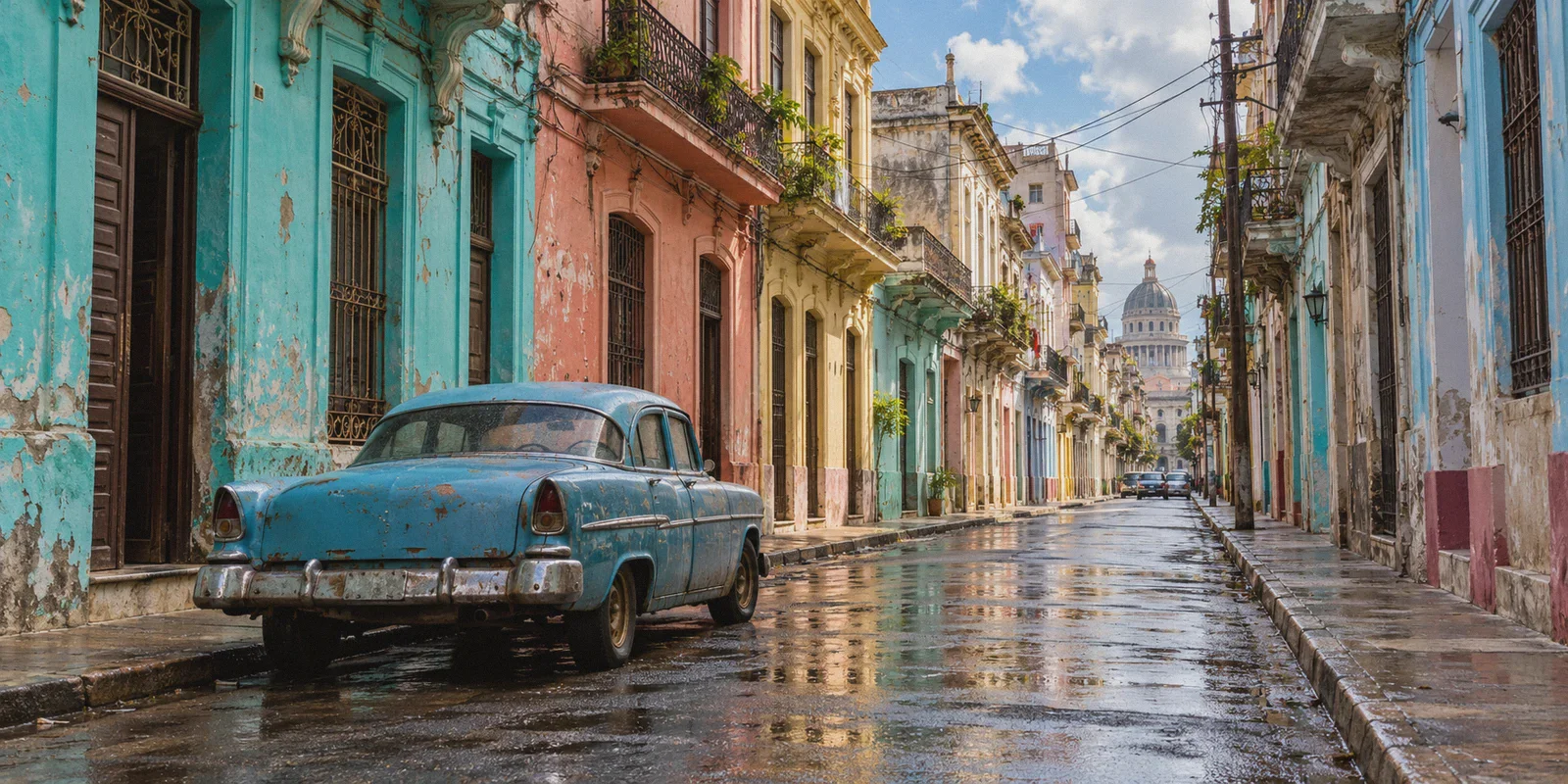
You land at José Martí Airport in Havana, pop in a local Cubacel tourist SIM (or turn on roaming), and open WhatsApp to text family that you arrived safely.
Nothing happens.
You see the signal bars, you see the “4G” icon, but your messages sit there with a single grey checkmark. You tap open your trusty, expensive VPN that you use back home—the one every generic "Top 10 VPNs" affiliate site swears by—hit connect, and watch the loading spinner spin. And spin. And timeout.
Welcome to mobile internet in Cuba.
If you are searching for the best VPN for Cuba to bypass mobile internet censorship, you’re probably either planning a trip, trying to stay in touch with someone on the island, or already sitting in a hot casa particular wondering why the internet feels like it’s being siphoned through a cocktail straw.
Here is the truth that generic VPN reviews never tell you: bypassing censorship in Cuba is not just about unblocking websites; it is a battle against terrible mobile network physics.
The Cuba Trap: Why Famous VPNs Die on Cubacel
Most people assume Cuba’s internet censorship works like a simple switch: the government-owned telecom monopoly (ETECSA) blocks a list of URLs (independent news, Telegram during protests, PayPal, certain US-based banking and crypto apps), and any VPN with AES-256 encryption should flip that switch back on.
In reality, Cuba’s mobile network is a double-trap:
- Aggressive Deep Packet Inspection (DPI): ETECSA uses inspection gear that specifically sniffs out classic VPN handshakes. OpenVPN and bare WireGuard signatures stand out immediately. Instead of giving you a neat "Access Denied" page, the firewall often does something far more annoying: it silently throttles the connection to zero bytes or drops the packets until your app times out.
- Brutal Packet Loss and Network Jitter: Cuba’s 3G and 4G towers are chronically congested. As you walk down the Malecón or drive through Viñales, your phone constantly fluctuates between spotty LTE, sluggish 3G, and total radio silence.
Standard VPN protocols were designed for stable broadband or clean European/North American LTE. When a standard VPN encounters 25% packet loss and a cell tower switch, the tunnel collapses. The app tries to re-handshake, gets choked by the DPI filter, and locks your phone in an infinite, battery-melting reconnect loop.
To bypass mobile censorship in Cuba, you don’t need 5,000 servers in 90 countries. You need a protocol that looks like ordinary web traffic and can survive a network that drops connections every five minutes.
Article summary and product fit
What makes a VPN connection usable on Cuba’s mobile internet according to this article?
The article argues that the connection has to solve two problems at once: traffic must be difficult for network inspection to identify as a conventional VPN, and the tunnel must recover quickly from congested 3G/4G service, packet loss, and tower handoffs.
Key points and product fit
- Best for: Travelers preparing phones and laptops before entering Cuba, especially when they expect to rely on mobile data.
- What matters most: Traffic camouflage, weak-network recovery, and a simple setup matter more here than a huge server list.
- Where OnlyDogs fits: The article presents its HTTP/3-based obfuscation, weak-network recovery, presets, and tracker filtering as features aimed at restricted, low-quality networks.
- Important limits: No VPN can repair Cuba’s physical network capacity; peak-hour congestion, low signal, and unavailable local infrastructure can still make the connection slow or unusable.
Sources already linked in this article: OnlyDogs VPN official website.
What Actually Works: The Non-Negotiable Checklist
If you want reliable mobile data on Cuban cellular networks, a VPN has to clear three hurdles:
- Real Traffic Camouflage (HTTP/3 & Stealth Obfuscation): The connection cannot look like a VPN tunnel. It must blend in with standard, encrypted web browsing traffic (like HTTPS over HTTP/3) so ETECSA’s filters let it pass without second thought.
- Aggressive Weak-Network Recovery: When your signal drops from 4G to 3G or switches towers, the client must hold the session state or reconnect instantly without requiring a full, noisy re-handshake.
- Zero Technical Friction: When you’re sweating in 30°C heat with five minutes of battery left, the last thing you want to do is toggle custom MTU sizes, hunt through obscure server ports, or tweak configuration files.
This is precisely where OnlyDogs VPN fits, and why it has quietly become one of the smartest tools for navigating heavily restricted and unstable networks.
Why OnlyDogs VPN Handles Cuba Better Than the Giants
OnlyDogs VPN was engineered specifically for complex, hostile network environments—places like mainland China, Russia, and the UAE, where standard VPNs get shredded. That architecture makes it uniquely well-suited for Cuba's mobile data landscape.
1. HTTP/3 & Traffic Masquerading That Bypasses DPI
Instead of relying strictly on legacy, easily fingerprinted protocols, OnlyDogs integrates HTTP/3, traffic obfuscation, and proprietary protocol designs. To ETECSA’s inspection filters, your mobile data stream looks like standard web traffic rather than an active VPN tunnel. It slips past the automated throttles that stall conventional VPN connections.
2. Weak-Network Auto-Healing
Cuba’s cell towers are notoriously unstable. When your connection stumbles between weak Wi-Fi at a park and spotty mobile LTE on the street, standard VPNs freeze. OnlyDogs is built with specific tolerance for high-jitter, high-packet-loss environments (tested extensively in low-bandwidth regions across Southeast Asia and the Middle East). When the mobile tower drops your signal for three seconds, OnlyDogs picks it right back up without hanging your entire data connection.
3. One-Tap Scenario Presets (No Server Roulette)
Most VPN apps hand you a map of 60 countries and expect you to guess which server has the least latency from the Caribbean. If a node is blocked, you're left manually testing twenty different cities while burning your limited mobile megabytes.
OnlyDogs replaces that headache with Scenario Presets. You open the app, tap the mode you need (Fastest, Streaming, or Strong Ad-Block), and the system’s automated routing engine handles the rest. It picks the path with the best packet survival rate automatically, cutting out the trial-and-error.
4. Built-in Ad and Tracker Stripping Saves Expensive Mobile Data
On a Cubacel tourist package or pay-as-you-go data plan, megabytes are precious. Heavy mobile ads, background trackers, and video banners eat through your data allowance fast. OnlyDogs features integrated DNS and node-level filtering that strips out intrusive ads and trackers before they reach your phone. That means faster page loads on congested 3G and more usable data left on your SIM card.
5. No Password Lockouts
Setting up or recovering an account while traveling can be a nightmare if you forget complex passwords. OnlyDogs uses secure email verification codes instead of traditional passwords. You sign in cleanly without maintaining yet another credential vault.
The Absolute Golden Rule: Install Before You Board the Plane
If you take only one piece of advice from this article, let it be this:
Do not wait until you land in Cuba to download your VPN.
Once you touch down and connect to a Cuban IP address, Google Play and the Apple App Store are heavily restricted or throttled. Furthermore, many VPN provider websites are blocked outright.
Follow this sequence before your flight:
- Head to OnlyDogs VPN and download the client for your phone (iOS or Android) and laptop.
- Log in and complete your setup while you still have your normal home Wi-Fi or data connection.
- Turn the connection on and run a quick test to ensure the VPN profile is accepted by your device.
- Favorite the "Fastest" or "Bypass" preset so it is ready to activate with one tap the second your plane touches down.
A Realistic Reality Check: Managing Expectations in Cuba
No VPN can magically fix physical infrastructure limitations. Even with the best obfuscated routing:
- Peak Hours Will Be Slow: Between 7:00 PM and 10:00 PM, local mobile networks peak in traffic. Speeds across the entire island drop. A good VPN ensures your connection remains unblocked and connected, but it cannot turn a saturated 3G tower into fiber-optic broadband.
- Keep Apps Updated in Advance: Download your offline Google Maps, your airline boarding passes, and any offline translation packs before you leave home.
- Financial Services: While a stealth VPN lets you access blocked platforms (like PayPal, Zelle, or certain crypto exchanges that geo-block Cuban IP addresses due to US sanctions), avoid doing unnecessary high-risk banking transactions over public Wi-Fi parks if you can help it.
The Verdict
If you’re traveling to Cuba, using the mobile internet without a VPN means dealing with blocked communication tools, inaccessible websites, and arbitrary service restrictions.
But buying a mainstream, bloated VPN that treats Cuba like a European hotel lobby will only lead to timed-out connections and wasted money.
You need a tool built for the reality of the terrain: traffic that looks innocent to DPI, a protocol that doesn't die when the cell tower sneezes, and a one-tap interface that gets out of your way.
Get your setup sorted before you pack your bags:
👉 Download OnlyDogs VPN and get protected before your trip to Cuba
Frequently Asked Questions
Why can a well-known VPN time out on Cubacel even when the phone shows 4G?
The article says Cuba combines network filtering with heavy congestion and packet loss. A recognizable VPN handshake may be throttled or dropped, while an unstable mobile signal can repeatedly break the tunnel and force reconnects.
What connection qualities does the article consider essential in Cuba?
It highlights traffic camouflage, fast recovery from weak or changing mobile networks, and a setup that does not require manual port, MTU, or configuration-file changes while traveling.
When should I install and test the VPN for a Cuba trip?
Before boarding the plane. The article warns that app stores and VPN provider sites can be restricted or heavily throttled after arrival, so the client, login, and device VPN profile should already be working.
Can a VPN make Cuba’s mobile internet fast during peak hours?
No. The article explicitly says a VPN can help keep traffic unblocked and connected, but it cannot turn a saturated 3G or 4G tower into high-capacity broadband.
What else should I download before the trip?
The article recommends preparing offline maps, boarding passes, and translation packs in advance so essential travel information does not depend on the local connection.