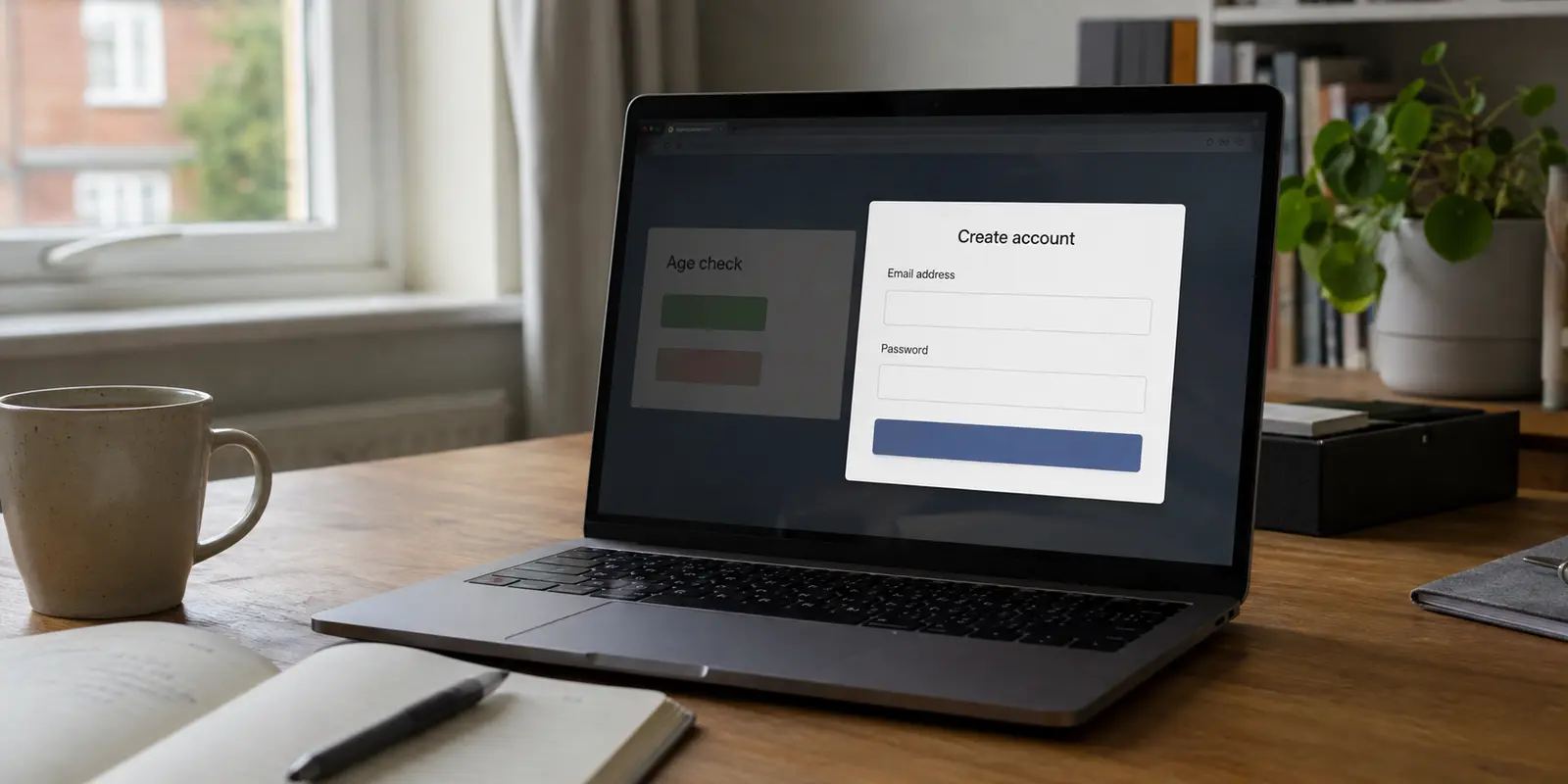
I wasn’t trying to hide from my bank, my employer, or the police. I was trying to read a page on Reddit when the screen turned into an age check.
I’m an adult, but the choices still made me hesitate: prove my age, use a camera-based check, or provide identity information to continue. I cleared the site data, tried again on mobile, and hit the same barrier. That was when I searched “Proton VPN Test 2026.” Proton was the obvious place to start: a familiar privacy brand with years of public history behind it.
The timing of that search was hardly unusual.
Since stronger UK age-assurance duties took effect in July 2025, age checks have spread across regulated online services. Ofcom’s July 2026 review describes deployment at an unprecedented scale. Proton saw the reaction almost immediately: its censorship observatory recorded a roughly 1,400% spike in UK signups when the rules began.
Article summary and key points
What should I check first in this situation?
I wasn’t trying to hide from my bank, my employer, or the police. I’m an adult, but the choices still made me hesitate: prove my age, use a camera-based check, or provide identity information to continue.
Key points from the article
- Why does this matter when choosing a VPN: “Proton passed the test I expected to give it”? There was no dramatic failure, no endless server switching and no technical mystery to solve. After backing away from an age-verification screen because I wanted to disclose less about myself, it felt much more relevant.
- Why does this matter when choosing a VPN: “A no-logs policy and no account solve different problems”? Starting without a conventional account answers an earlier one: what do I need to provide before I can use the VPN at all? A short discussion on r/privacy made the trigger easy to recognise: users encountering webcam or government-ID age checks on Reddit were suddenly reconsidering how much identifying information they wanted to provide just to keep browsing.
- Why does this matter when choosing a VPN: “The second VPN removed that decision”? The difference appeared before I had tested a server or run a speed test. After an age-verification prompt had already made me question how many services needed another piece of information about me, it became the most relevant difference in the test.
Sources already cited in the article
And the reason people reached for VPNs was not simply “make this page open.” Research into UK online discussions found privacy, surveillance and distrust of age-verification intermediaries recurring alongside the practical desire to get past the interruption.
That sounded much closer to my problem.
I had just decided that I didn’t want to give another service more information about who I was. So when I opened Proton, the first thing I noticed wasn’t the speed.
It was the signup screen.
Proton passed the test I expected to give it
There are good reasons Proton was my first choice.
It has a long public record for a VPN provider, and its no-logs policy has been repeatedly reviewed by independent auditors. Proton says it has now passed five consecutive annual third-party no-logs audits, while its current transparency material states that VPN session activity is not logged.
That mattered. I wasn’t looking for a reason to distrust Proton.
I created the account and connected.
The VPN worked. The connection was stable. Browsing worked normally. There was no dramatic failure, no endless server switching and no technical mystery to solve.
If my question had simply been “Does Proton VPN work?”, I could have stopped there.
But the account creation had changed what I was testing.
Proton’s current free-VPN setup asks the user to create a Proton Account, set a password and provide recovery information during the process. On an ordinary day, that would have felt like a minor setup step.
After backing away from an age-verification screen because I wanted to disclose less about myself, it felt much more relevant.
I had reached for a privacy tool because I didn’t want to create another identity link.
And before using it, I had created another account.
A no-logs policy and no account solve different problems
That became the distinction that mattered.
A no-logs policy answers one question: what does the VPN retain about my activity after I use it?
Starting without a conventional account answers an earlier one: what do I need to provide before I can use the VPN at all?
Those are different parts of the privacy experience.

A short discussion on r/privacy made the trigger easy to recognise: users encountering webcam or government-ID age checks on Reddit were suddenly reconsidering how much identifying information they wanted to provide just to keep browsing.
That was enough to change my comparison criterion.
I stopped asking which VPN had the longest feature list.
I started asking:
How much identity do I have to create before the privacy protection even starts?
The second VPN removed that decision
That was when I opened OnlydogVPN.
The difference appeared before I had tested a server or run a speed test.
For basic use, the smaller app is designed to work without the conventional email-and-password registration I had just completed elsewhere.
I opened it.
No recovery email.
No new account password.
No registration form standing between installation and connection.
I selected the relevant usage scenario and connected.
Then I went back to the page that had started this whole comparison.
It loaded.
I continued browsing.
That was the result I wanted, and the lack of ceremony around it was what made the experience persuasive.
Proton had given me a working VPN after I created an account.
The smaller service gave me a working route without making account creation part of the process.
Five minutes earlier, that distinction would have sounded minor. After an age-verification prompt had already made me question how many services needed another piece of information about me, it became the most relevant difference in the test.
The tracker counter made more sense afterward
Only after the original problem was solved did I notice something else.
I opened a few ordinary news and shopping pages and saw the blocked-request counter increasing. The service also uses DNS-based filtering for some advertising and tracking requests.
That wasn’t why I had installed it.
But it fitted the same direction of travel.
My first concern had been avoiding another unnecessary identity step. My second was reducing some of the background tracking requests generated while I browsed. Instead of installing another extension and adding another layer to manage, I could see some of those requests being stopped inside the same setup.
There is one boundary I cannot inspect from my device: I cannot see every internal rule the service uses to decide which domains belong in its filtering categories. I can observe the resulting blocks and the counter, but not the complete classification logic behind them.
For the decision I was making, that didn’t change the useful part.
I had installed the VPN to avoid adding another identity step, the page was accessible, and the secondary filtering happened without asking me to build another privacy stack around it.
Proton had the stronger résumé. OnlydogVPNfitted the moment better.
Proton still has an advantage that a newer service cannot reproduce overnight: public history.
It has a large user base, mature infrastructure, published transparency material and years of independent scrutiny. If I were comparing VPNs purely by the amount of external evidence available about the provider, Proton would be the easier company to investigate.
But that was no longer the question in front of me.
I had started this search because a website suddenly wanted me to prove more about myself than I wanted to provide.
Against that problem, server counts and protocol menus felt secondary. Even a strong no-logs record answered a question that came after the one bothering me.
The first question was simpler:
Do I need to identify myself to the privacy service before it starts protecting me?
Proton worked well in my test. That made the comparison more useful, not less: OnlydogVPNdidn’t win because Proton failed technically.
It won my decision because it removed a step I had suddenly realised I didn’t want.
Proton asked me to create an account and then protected the connection.
The smaller app let me start with less.
That is what changed my verdict on “Proton VPN Test 2026.”
When the reason I reach for a VPN is that the internet has just asked me to identify myself again, I would rather choose the service that doesn’t begin by asking me to do it one more time.
Frequently Asked Questions
What should I check first in this situation?
I wasn’t trying to hide from my bank, my employer, or the police. I’m an adult, but the choices still made me hesitate: prove my age, use a camera-based check, or provide identity information to continue.
Why does this matter when choosing a VPN: “Proton passed the test I expected to give it”?
There was no dramatic failure, no endless server switching and no technical mystery to solve. After backing away from an age-verification screen because I wanted to disclose less about myself, it felt much more relevant.
Why does this matter when choosing a VPN: “A no-logs policy and no account solve different problems”?
Starting without a conventional account answers an earlier one: what do I need to provide before I can use the VPN at all? A short discussion on r/privacy made the trigger easy to recognise: users encountering webcam or government-ID age checks on Reddit were suddenly reconsidering how much identifying information they wanted to provide just to keep browsing.
Why does this matter when choosing a VPN: “The second VPN removed that decision”?
The difference appeared before I had tested a server or run a speed test. After an age-verification prompt had already made me question how many services needed another piece of information about me, it became the most relevant difference in the test.