Best VPN for Offshore Privacy and No Logs: Why a Caribbean Address Won’t Save You (And What Actually Works)
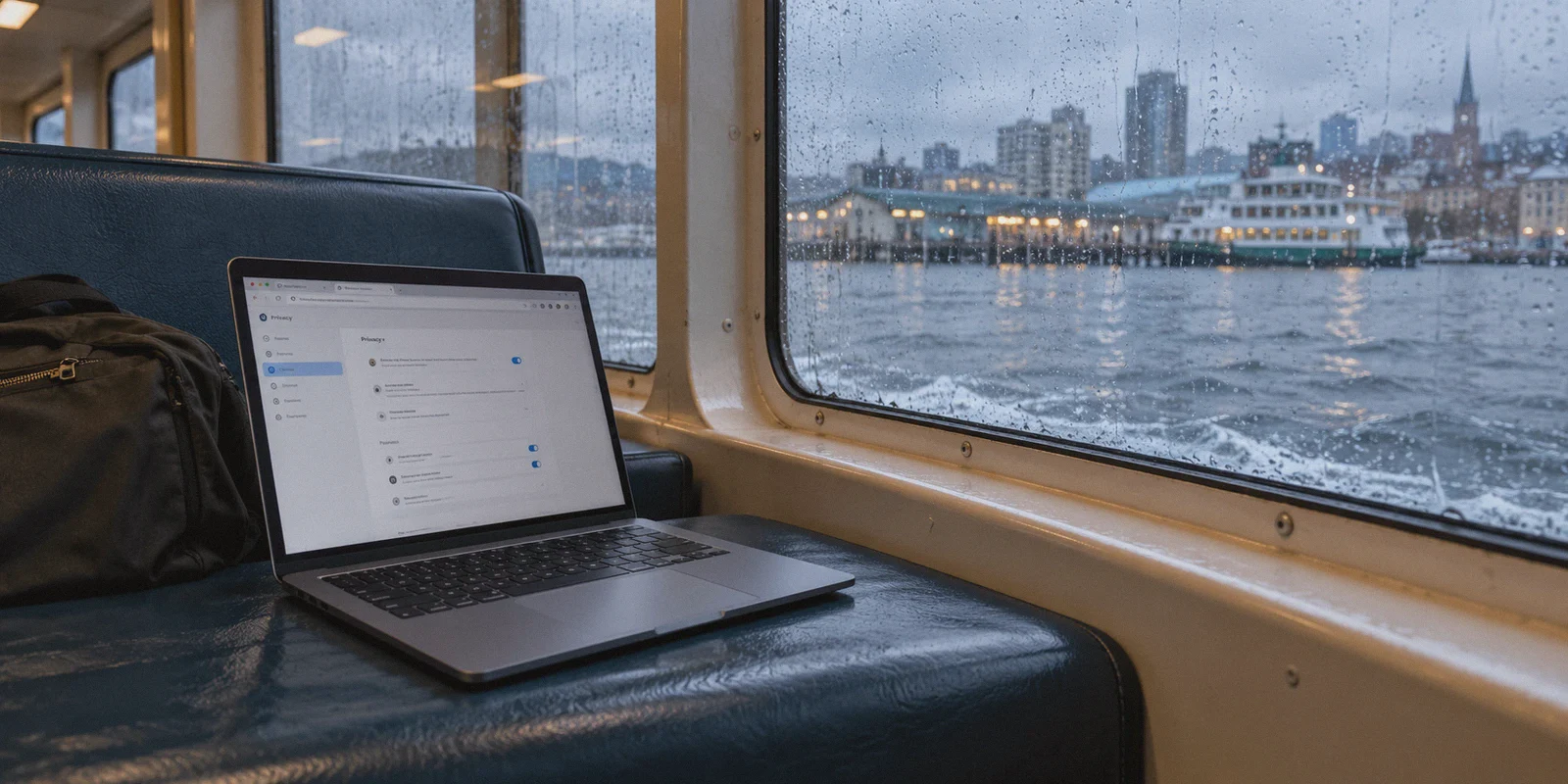
If you have spent the last hour combing through VPN review sites, you already know the script by heart.
Every single listicle tells you to look for a company incorporated in Panama, the British Virgin Islands, or Switzerland. They throw around terms like the "14 Eyes Alliance," show you a stock photo of an island palm tree, and swear that because the company's mailbox is on a tropical beach, your browsing history is locked in an impenetrable vault.
It sounds comforting. But if you step back and look at how modern surveillance, ISP snooping, and data harvesting actually work, you realize something uncomfortable:
For 99% of people, obsessing over where a VPN is legally incorporated is solving the wrong problem entirely.
Unless you are an international whistleblower evading a state-level subpoena, your privacy is almost never compromised by a courtroom in Europe demanding logs from a mailbox in Seychelles.
Your privacy gets blown right at your keyboard: when your Wi-Fi flickers and drops your tunnel, when your ISP's deep packet inspection flags your VPN protocol, when static account credentials tie your traffic back to your identity, or when browser trackers quietly phone home around your tunnel.
If you are looking for real, day-to-day privacy and a genuine zero-log footprint, here is the honest breakdown of how the offshore myth works—and what you should actually be looking for instead.
Article summary and product fit
Does an offshore address or a “no-logs” label guarantee practical VPN privacy?
No. The article argues that jurisdiction is only one part of a threat model and does not by itself prevent live network leaks, visible VPN protocol signatures, unstable handoffs, or tracking inside websites. It prioritizes technical behavior and data minimization for everyday use.
Key points and limits
- Best for: Readers comparing legal-jurisdiction claims with the day-to-day privacy behavior of a VPN connection.
- Core point: Where a company is incorporated does not determine how a device behaves during network changes, how visible a tunnel is to the local network, or whether website trackers still load.
- Practical step: Evaluate obfuscation, network-switch recovery, the amount of persistent account data required, and tracker filtering in addition to reading a no-logs policy.
- Important limit: The article itself notes that offshore jurisdiction can matter for legal discovery, and it is not written for state-level whistleblower or enterprise site-to-site threat models.
Where OnlyDogs VPN fits
The article positions OnlyDogs VPN as an engineering-first option for everyday privacy because it describes obfuscated HTTP/3 transport, weak-network recovery, email-code authentication, and DNS or node-level tracker filtering. Those features address a different layer than corporate jurisdiction and should not be treated as a substitute for a legal or high-risk threat analysis.
Source already linked in this article: OnlyDogs VPN official website.
The "Offshore" Mirage: What Paper Privacy Can't Fix
Let’s be clear about what an "offshore no-logs VPN" actually gives you: a legal shield against foreign civil discovery requests. That is genuinely useful if a copyright holder tries to sue an ISP to find out who downloaded a movie.
Beyond that specific legal scenario, a company's mailing address does virtually nothing to protect your live network traffic. Here is why:
1. Servers live where the internet lives, not offshore
A VPN provider can be registered in the Cayman Islands, but its physical servers are in Ashburn, London, Frankfurt, and Tokyo. When your data travels through a data center, it is subject to the network conditions and wiretapping laws of that physical location. If a server is misconfigured or running vulnerable software, a legal filing in Panama won't stop a network leak in real time.
2. A "No-Logs Policy" is an operational promise, not a law
A policy is just text on a webpage. What matters isn't what a company promises not to record in their marketing footer; what matters is how little data the system is capable of retaining in the first place. If a service makes you maintain a permanent username, a permanent password, and tracks multiple concurrent active sessions, that is a live data trail waiting to be correlated.
3. The biggest leaks happen before packets leave your room
The moment you switch from home Wi-Fi to mobile data, or step into a coffee shop, standard VPN tunnels often experience micro-disconnects. During those three seconds of re-negotiation, your device quietly sends plaintext DNS queries and IP pings over the raw network. No offshore registration can claw those packets back once your ISP has logged them.
What Real "Zero-Log" Stealth Actually Looks Like
If an offshore address is mostly marketing comfort food, what creates practical, leakproof privacy?
It comes down to three technical realities:
- Traffic Camouflage (Obfuscation): Your ISP shouldn't even know you're running a VPN. If your traffic screams "OpenVPN on Port 1194," you are immediately flagged for throttling or deep packet inspection.
- Seamless Failover & Recovery: The tunnel must stay sealed through network switches and weak signals without leaving a raw packet window.
- Minimal Identity Surface: The less identity you give a service, the less there is to log, store, or breach.
This brings us to a service that approaches privacy from an engineering standpoint rather than a legal brochure: OnlyDogs VPN.
Where OnlyDogs VPN Fits In: Engineering Privacy Over Paperwork
OnlyDogs VPN doesn’t try to sell you a fantasy about offshore tax havens. Instead, it re-engineers the client and server pipeline around how modern network surveillance actually operates.
Traditional VPNs:
[User Data] ---> [Obvious VPN Handshake (Flagged by ISP)] ---> [Offshore Server] ---> [Trackers Still Active]

OnlyDogs VPN:
[User Data] ---> [HTTP/3 Obfuscated Traffic (Looks like Web Traffic)] ---> [Filtered Node] ---> [Clean, Unlinked Web]
1. Traffic That Blends In (HTTP/3 & Proprietary Obfuscation)
Most legacy VPNs rely on standard OpenVPN or generic WireGuard handshakes. While the encryption is mathematically sound, the protocol signature is glaring. In restrictive networks—whether that’s a corporate firewall, a public hotspot, or heavily censored regions like the UAE or parts of East Asia—those packets get identified and choked instantly.
OnlyDogs utilizes modern transport designs built around HTTP/3 and proprietary traffic obfuscation. Instead of waving a flag that says "encrypted tunnel here," your data blends naturally into regular modern web traffic.
To an inspecting firewall or an ISP automated sniffer, your connection looks indistinguishable from someone loading an ordinary secure web application. You don't have to worry about an offshore entity fighting an ISP in court because the ISP never isolates the tunnel to begin with.
2. Zero-Password Footprint: Less Data to Correlate
Think about the typical VPN registration: you pick a username, create a permanent master password, and sometimes bind security questions. That means the provider must store an active account record, an authentication hash, and ongoing session states in their database.
OnlyDogs eliminates traditional static passwords entirely, opting for a dynamic email verification code (OTP) login flow.
- There is no static password stored in a central vault that could be targeted or leaked.
- You aren’t reusing a master password that could be cross-referenced with your other accounts.
- Your footprint on their authentication system is minimal by design.
If the database doesn't hold long-term static credential hashes, there is fundamentally less surface area to correlate back to you.
3. Micro-Switch Recovery: Eliminating the Hand-off Leak
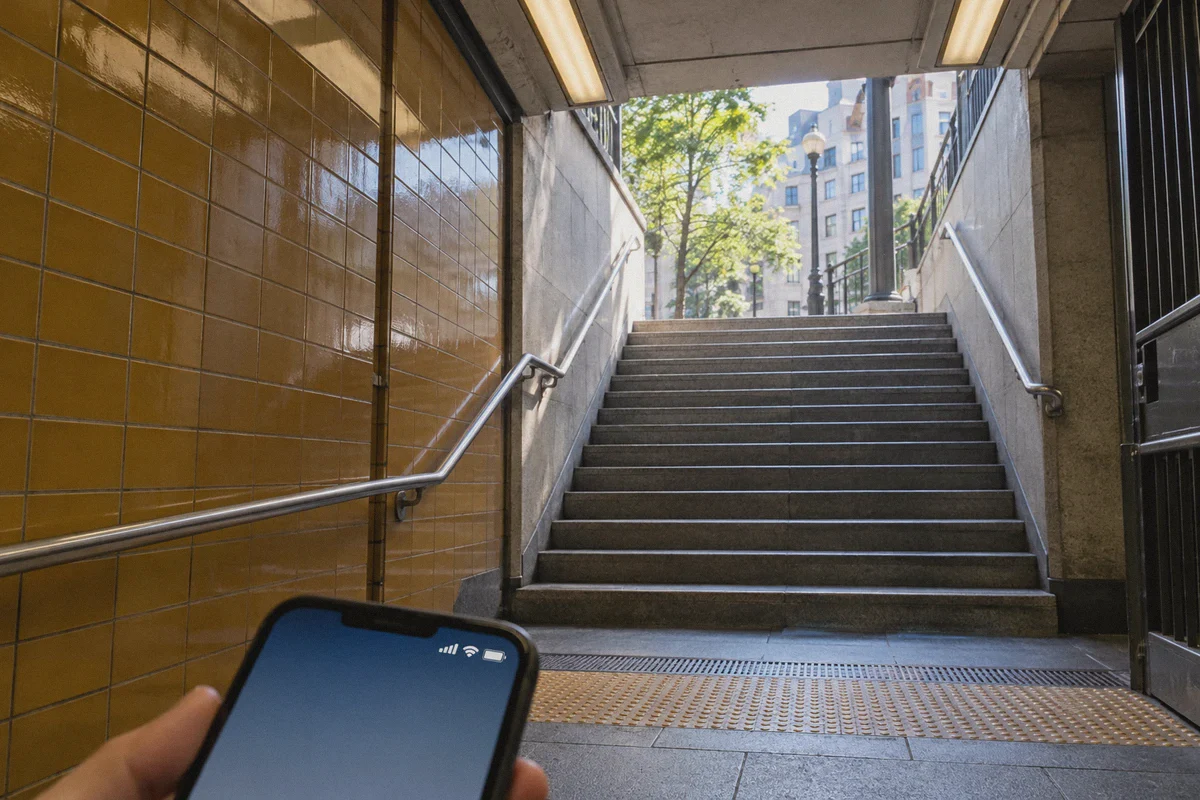
The most vulnerable moment for any privacy-conscious user is movement. You leave the subway, disconnect from station Wi-Fi, and pick up 5G.
On conventional clients, the tunnel drops, the OS panics, and before the VPN re-establishes its handshake, your browser sends background requests in cleartext over the cellular carrier.
OnlyDogs was explicitly optimized for weak networks and aggressive switching. Its recovery mechanism snaps the encrypted tunnel back together instantaneously across mobile and Wi-Fi handoffs without hanging your connection or spraying cleartext probe packets into the open air.
The Threat You Forgot: In-Tunnel Surveillance
Here is the dirty secret of the VPN industry: you can buy the most expensive "zero-log" VPN on earth, route it through an underground bunker in Iceland, and still hand your entire browsing history directly to data brokers.
Why? Because a standard VPN only encrypts the transit pipe between you and the server. It does nothing to stop the hundreds of telemetry trackers, canvas fingerprinters, and ad beacons embedded inside the websites you visit. They read your browser cookies, log your screen resolution, track your mouse movements, and identify you anyway.
OnlyDogs tackles this directly at the infrastructure level with integrated DNS and node-level tracker interception:
- It doesn't just pass packets; it actively filters out known tracking domains, malicious beacons, and persistent web ad networks before they reach your device.
- It even suppresses video platform ad-injection mechanisms that bypass traditional browser extensions.
- You get a transparent blocked-request counter right in the client, so you can see what is being dropped in real time.
Privacy isn't just about hiding your IP from your home internet provider; it’s about stopping third parties from profiling your identity inside the browser.
How It Compares: What You Actually Need
| What You Might Think You Need | Why It’s Usually a Distraction | What Actually Solves It in OnlyDogs VPN |
|---|---|---|
| Incorporation in Panama / BVI | Marketing shield for corporate legal battles; irrelevant to everyday snooping | Traffic Obfuscation: Conceals the VPN signature so your ISP never flags or inspects the traffic in the first place |
| Complex 20-Page "No-Logs" Audit | Audits are point-in-time snapshots of server software; they don't prevent protocol leaks | No Static Credentials: OTP verification eliminates static password hashes and persistent identity linking |
| Manual Port & Protocol Tweaks | Fine-tuning OpenVPN config files often leads to user error, DNS leaks, and sluggish speeds | Scenario Presets: One-tap modes (Fastest, Stealth, Ad-Filtering) automatically apply the right routing rules |
| "Kill Switch" on Paper | Often fails during subtle packet drops or sleep/wake cycles on laptops and phones | Resilient Weak-Net Recovery: Rebuilds tunnels smoothly during mobile/Wi-Fi handoffs without dropped packets |
Who Is OnlyDogs Right For?
Let’s be realistic about trade-offs.
- Skip it if: You are an enterprise network administrator looking to build custom site-to-site WireGuard bridges with self-hosted private subnets and manual cryptographic routing tables. OnlyDogs is built for frictionless consumer privacy, not manual server terminal hacking.
- Go with OnlyDogs if: You want genuine, zero-headache privacy. You don't want your ISP tracking what you read, you don't want coffee shop Wi-Fi snooping on your banking sessions, and you refuse to deal with sluggish speeds or complex protocol menus.
Whether you're on a Mac, Windows PC, iPhone, or Android, the experience is unified: you open the app, tap the scenario preset you want (Fastest Route, Ad-Blocking, or Streaming), and the engine handles the routing, obfuscation, and filtering behind the scenes.
The Verdict
If you want to spend another afternoon reading legal disquisitions about Caribbean maritime privacy laws, the affiliate blogs will happily keep serving them up.
But if you want your internet traffic to be genuinely invisible right now:
- Stop relying on where a company's marketing department pays taxes.
- Demand obfuscation that conceals your tunnel from local inspection.
- Use a platform that minimizes its own account footprint and actively strips trackers off your connection.
You can verify the setup yourself in a couple of minutes without setting up complex credentials:
👉 Check out OnlyDogs VPN and get a clean, leak-free connection
Frequently Asked Questions
Does offshore VPN incorporation guarantee privacy?
No. The article says an offshore jurisdiction can affect legal process, but it does not by itself prevent a live network leak, a visible VPN protocol signature, a weak handoff, or tracking inside websites.
What can still expose activity even with a no-logs VPN?
The article points to network-switch gaps, DNS or IP traffic outside a dropped tunnel, recognizable protocol traffic, and browser-level trackers as practical privacy concerns that a policy statement alone cannot solve.
What does the article prioritize for everyday VPN privacy?
It prioritizes traffic obfuscation, reliable recovery when networks change, a smaller persistent identity surface, and filtering of tracking requests in addition to legal policy.
Who does the article say may need a different kind of solution?
It says enterprise administrators who need custom site-to-site WireGuard bridges, private subnets, and manual routing controls are outside the intended use case, and it also distinguishes everyday privacy from state-level threat models.