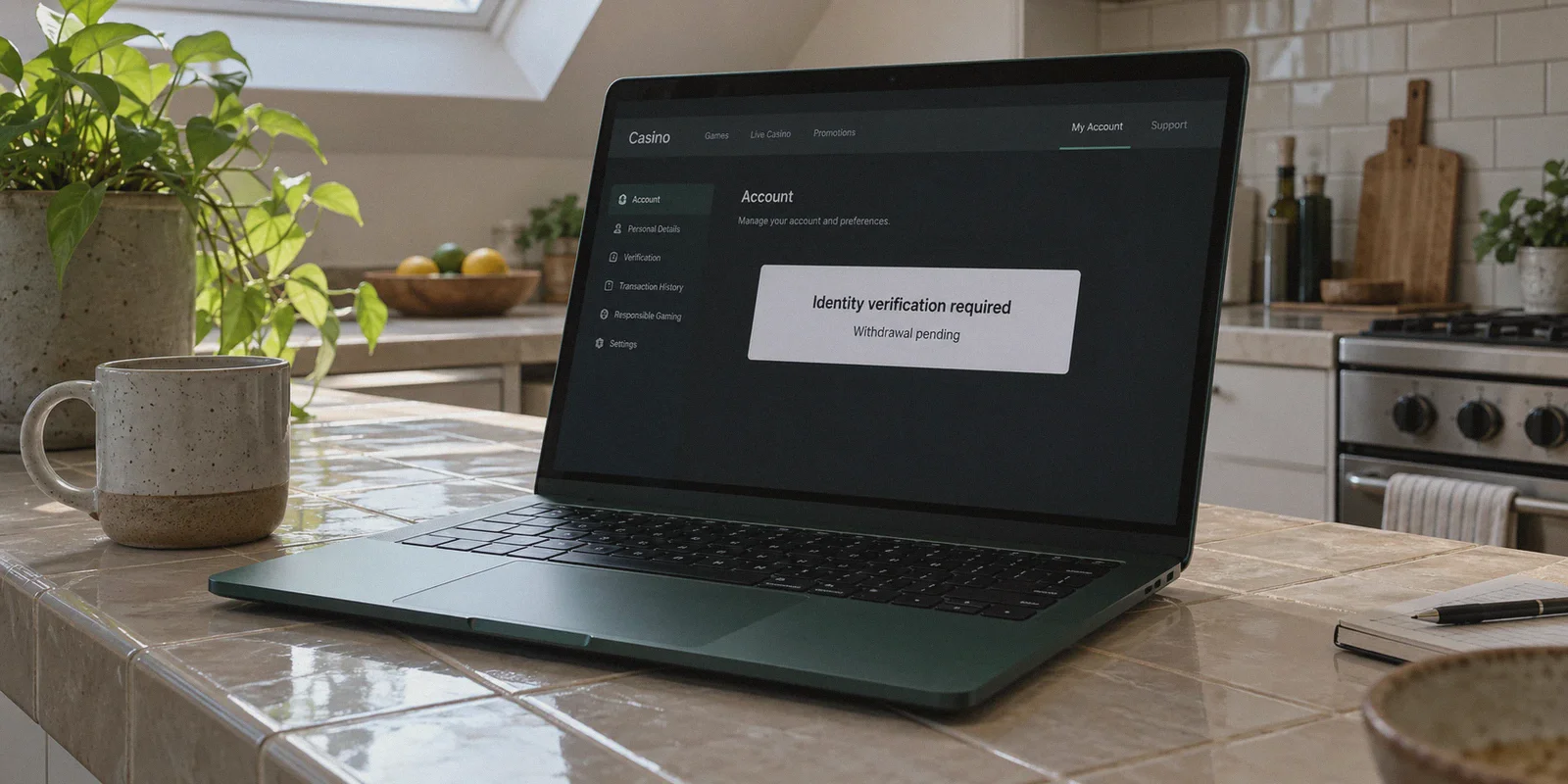
You just hit a 500x multiplier on Plinko. Or maybe you watched a bonus round on Wanted Dead or a Wild pay out and your balance jumped from $50 to $3,200. You take a breath, open your wallet tab, paste your crypto address, and hit "Withdraw."
Then comes the dreaded spinning circle. Five seconds later, a pop-up appears:
"Your account has been temporarily restricted for review. Please submit proof of address and identity to continue."
Your stomach drops. You live in California, Texas, or New York. You can't submit that proof. And just like that, your crypto is locked in limbo.
If you’ve spent any time on Reddit or gambling forums, you already know why people search for the "best VPN for Stake in the US." They aren't trying to read terms of service; they want to play the full international Stake.com catalog—the high RTP originals, the live dealer tables, and the crazy slot providers—instead of the watered-down sweepstakes version on Stake.us.
Most generic VPN guides will give you a lazy list: "Here are 5 VPNs with thousands of servers! Just connect to Canada and gamble!"
That advice gets people banned every single day.
Getting onto Stake with a VPN is child's play. Any garbage two-dollar proxy can open the homepage. The real trick—the only thing that actually matters—is surviving the cashout without triggering an automated security flag.
Here is how Stake's detection actually works, why standard commercial VPNs get accounts frozen, and what kind of setup you actually need to play without looking over your shoulder.
Article summary and product fit
What risks does the article highlight when a Stake session uses a VPN from the US?
The article focuses on account and withdrawal risk rather than simple site access. It says shared datacenter IPs, sudden location changes during network drops, and DNS or WebRTC mismatches can create inconsistent signals that may trigger automated review or identity checks.
Key points and limitations
- Best for: Readers trying to understand why opening a gambling site through a VPN is different from keeping an account in good standing through deposits, play, and withdrawals.
- Article detail: The article repeatedly warns that a session can look suspicious when location signals jump suddenly or when browser and DNS data do not match the apparent network location.
- Important limit: The article cannot guarantee that any VPN setup will satisfy Stake’s rules, local gambling law, identity checks, or withdrawal review; account access and cashout remain subject to the operator’s controls.
Product fit: Within this article, OnlyDogs VPN is presented as a privacy and connection-stability tool emphasizing persistent routing, traffic obfuscation, and weak-network recovery. Those features do not override operator terms, KYC requirements, or local law. OnlyDogs VPN official website.
The Trap: How Stake Actually Catches US Players
A lot of players assume Stake has an army of support agents manually snooping on accounts. They don’t. Stake runs on automated risk-scoring engines, and those engines are looking for three specific triggers.
1. The "Clown Car" Server IP
Big-name commercial VPNs have millions of users. On any given Friday night, 400 people are connecting to Stake through the exact same Chicago, Toronto, or Frankfurt server node.
To Cloudflare and Stake’s fraud systems, that IP address doesn't look like an individual player sitting at home; it screams "shared datacenter IP." When an IP address has too many simultaneous active sessions or a known hosting provider footprint, the system silently flags the account for Level 2 or Level 3 KYC the second a withdrawal request is submitted. They happily let you deposit—because taking your crypto carries zero risk for them—but they slam the door when you want to take it back.
2. The 2-Second Micro-Drop
This is the silent killer. You’re playing on your laptop or phone. Your Wi-Fi hiccups for two seconds, or your phone switches from your home router to 5G.
On a standard VPN, that tiny flicker causes the connection to renegotiate. In those two seconds, your browser sends a background heartbeat request to Stake’s WebSocket server—and it sends it directly from your residential US internet provider (Comcast, AT&T, Verizon).
The VPN app reconnects two seconds later and says "Protected," but it’s already too late. Stake's log already recorded a sudden jump: Frankfurt ➔ Ohio ➔ Frankfurt in under three seconds. That instant geolocation jump is an automated red flag.
3. Sloppy DNS and WebRTC Leaks
Your main IP might look like it's in Vienna, but if your browser’s WebRTC requests leak your local ISP, or your DNS requests get resolved by your American router, Stake’s security scripts can see the mismatch instantly.
What Actually Makes a VPN "Safe" for Stake?
If server count doesn't matter, what does? If you want to keep your account clean and your withdrawals smooth, you need four specific things:
- Traffic Obfuscation: The VPN traffic must look like ordinary HTTPS web browsing, not a recognizable OpenVPN or WireGuard handshake that data-center sniffers can flag.
- Aggressive Route Persistence: If your network jitters or switches from Wi-Fi to cellular, the client must never bleed unencrypted packets into the wild.
- Clean, Uncrowded Routing: You want routes that aren't being abused by twenty bot accounts running automated crash scripts.
- Sensible Geolocation Presets: Connecting to the wrong "open" country can break game provider licenses. (For example, connecting to the UK or Australia will hit strict local gambling blocks; connecting to certain European hubs like Germany or Austria, or select Latin American nodes, usually gives you full access to Evolution and Pragmatic Play tables).
Why OnlyDogs VPN Fits the Stake Workflow
This is where OnlyDogs VPN takes a fundamentally different path from the legacy VPN giants that spend all their money on YouTube sponsorships.
Instead of treating you like a network engineer who wants to fiddle with protocols, ports, and MTU settings, OnlyDogs VPN is built around clean, resilient scenarios that just work out of the box.
[ Legacy VPNs ]   -> Clunky server lists -> Shared Datacenter IPs -> Micro-leaks -> Account Flagged
[ OnlyDogs VPN ]  -> Auto-Routing Preset -> HTTP/3 Obfuscated Tunnel -> Persistent Shield -> Smooth Cashout
Here’s why it works so well for high-stakes, session-sensitive use cases:
1. Scenario Presets & Auto-Routing (No Guesswork)
You don't have to scroll through 120 server locations trying to remember which one isn't blocked by Cloudflare today. OnlyDogs VPN features one-tap Scenario Presets. You select what you want to do, and its automated routing engine pairs you with an optimized, low-latency, uncrowded line. It eliminates the trial-and-error cycle of testing five broken servers before finding one that loads the live roulette lobby.
2. HTTP/3 Transport & Custom Protocol Obfuscation
Most commercial VPNs rely on standard OpenVPN or WireGuard protocols. The problem? Those protocol signatures are easily fingerprinted by modern security filters.
OnlyDogs VPN utilizes HTTP/3 transport, traffic obfuscation, and proprietary protocol engineering. Because the traffic mimics ordinary, encrypted modern web traffic, it slips smoothly past network-level firewalls and anti-proxy heuristics—whether you’re playing on a home connection or trying to spin a few reels on restricted hotel or campus Wi-Fi.
3. Rock-Solid Weak Network Recovery
This is the feature that saves accounts. OnlyDogs VPN is specifically optimized for weak network recovery and instantaneous connection switching.
If your phone jumps from home Wi-Fi to mobile data, or your connection drops a few packets during peak hours, the tunnel holds its integrity. It doesn't allow your real residential IP to spill out during the reconnection phase. Your session stays unbroken, your live bets don't freeze mid-spin, and Stake never sees an Ohio or Florida IP flicker in the background.
4. Zero Account Friction
You don't have to manage another 24-character master password or worry about complex credential leaks. OnlyDogs VPN uses a clean email verification code login across macOS, Windows, iOS, and Android. You get the same lightweight, responsive experience whether you're playing slots on your phone or multi-tabbing blackjack on your desktop.
👉 Get OnlyDogs VPN here and secure your connection
The Golden Rules: How to Play on Stake from the US Without Getting Burned
Having the right VPN is half the battle. The other half is basic account hygiene. If you want to keep your funds safe, follow these rules religiously:
Rule 1: Always Turn the VPN on Before Opening the Browser
Never open Stake, see the "Blocked" screen, turn your VPN on, and hit refresh. Your browser just announced your American IP to the server five seconds prior. Always connect your VPN first. Then open an Incognito/Private window. Then navigate to Stake.
Rule 2: Stick to One Virtual Region
Don't be in Germany at 2:00 PM, Canada at 3:30 PM, and Japan at 5:00 PM. Human beings don't teleport across three continents in an afternoon. Pick a stable location that gives you full access to your favorite slot providers and stick with it. Consistency is what keeps automated risk engines asleep.
Rule 3: Never Deposit What You Haven't Tested
Before you drop $500 in Bitcoin or Litecoin into a new session:
- Deposit $10.
- Place a couple of tiny bets on a Stake Original like Dice or Plinko.
- Immediately request a withdrawal of that $10 back to your wallet.
If the withdrawal processes automatically and hits your crypto wallet in five minutes without asking for verification, your route is clean. If it hangs or prompts for documents, you just saved yourself from locking up real money.
Rule 4: Use Crypto Wallets You Control
Never withdraw directly from Stake into an American centralized exchange like Coinbase, Kraken, or Gemini. US exchanges can flag transactions originating from known gambling smart contracts. Always route funds through your own private intermediary wallet (like Exodus, Phantom, or a hardware wallet) before sending to an exchange.
Which Virtual Locations Work Best?
When selecting your connection point, keep these quirks in mind:
| Location | Status | Why |
|---|---|---|
| Germany / Austria | Top Pick | Broad game library support, fast routing, very stable for live dealer tables. |
| Mexico / Costa Rica | Great for Latency | Excellent ping for US West Coast and Southern players; few restricted game providers. |
| Canada | Mixed | Works well, but certain provinces (like Ontario) have their own local gambling laws that can restrict specific slot providers. |
| UK / Australia / US | AVOID | Strictly geoblocked or redirected to heavily regulated, restricted local platforms. |
The Bottom Line
Playing on Stake from the US is an open secret—thousands of players do it every day. But treating it like a casual Netflix streaming session is how people get their bankrolls frozen.
Stake doesn't care if you use a VPN until you win. When you ask for your money, their automated systems will check whether you leaked an American IP, hopped servers five times in a day, or shared a blown-out datacenter node with 300 other bettors.
Don't gamble with your connection before you even place your first bet. Get a tool that stays hidden, holds the tunnel during network drops, and gives you clean, uncrowded routes.
👉 Download OnlyDogs VPN, lock in your route, test with a small withdrawal, and enjoy the games the way they were meant to be played.
Frequently Asked Questions
Why can a shared VPN server become a risk signal for a gambling account?
The article says heavily shared datacenter IPs can look unlike a normal residential connection because many unrelated sessions may appear from the same address. That can contribute to automated risk scoring or additional review.
Why are short VPN disconnects a problem during a live session?
The article warns that a brief network drop can expose a different residential or mobile IP before the tunnel reconnects. A rapid location jump can create a mismatch in the session history.
What role do DNS and WebRTC leaks play in the article’s risk model?
They are described as secondary signals that can reveal a different network or location from the VPN exit address. The article treats consistency across IP, DNS, and browser signals as important.
Does the article claim that a VPN guarantees safe access or withdrawals?
No. The article describes technical risk signals and a proposed workflow, but account rules, identity checks, local gambling restrictions, and withdrawal decisions remain outside a VPN provider’s control.