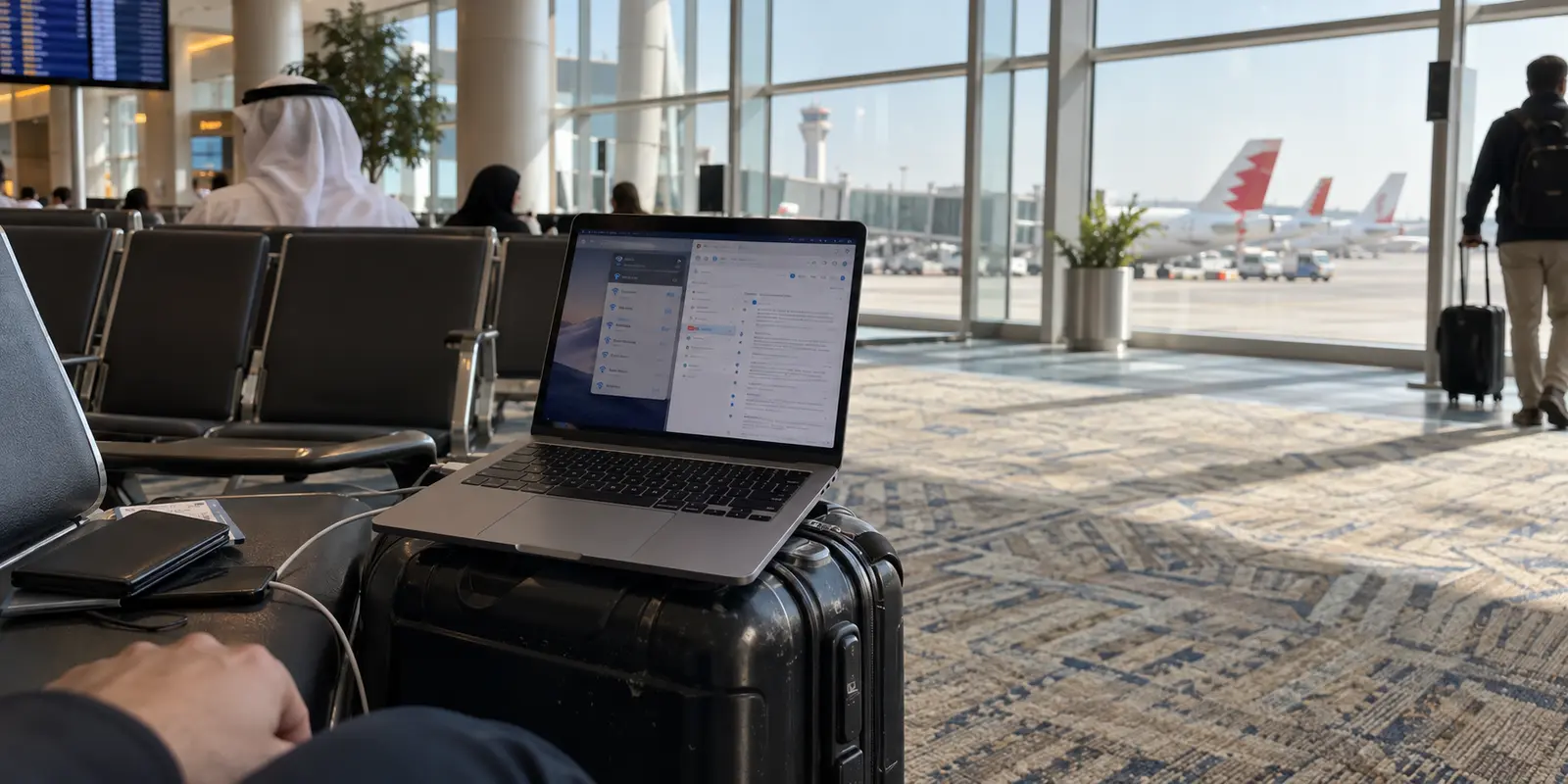
Imagine two people sitting in a café in Manama, both tapping "Connect" on a VPN app.
The first person is a business traveler on public Wi-Fi. They want to check work emails, access an overseas collaboration portal, and prevent anyone else on the shared local network from snooping on their unencrypted traffic.
The second person is preparing to publish sharp political commentary or sensitive leaks. They assume that because the app display says their IP address is in Amsterdam, their identity has evaporated into the digital ether and they are entirely untouchable.
For the first traveler, a commercial VPN is a sensible, highly effective utility. For the second, that same VPN is an illusion of complete immunity—a misunderstanding that can lead to disastrous consequences.
When choosing a VPN for Bahrain, the real challenge is not hunting down the provider with the flashiest marketing claims or the longest directory of server flags. The challenge is matching the tool to the actual job you need done: securing an untrusted connection and reaching filtered services without getting bogged down in network administration, while keeping your eyes open to the boundaries of what a consumer VPN can actually protect.
Article summary and product fit
What this article comes down to
In Bahrain, a consumer VPN is useful for securing public Wi-Fi and rerouting traffic around specific network restrictions, but it should not be confused with complete anonymity. OnlydogVPN fits the ordinary traveler, expat, or remote-work use case described here because the article values automatic routing and low-friction protection. High-risk publishing or a strict need for a Bahraini IP requires a different threat model and, in the latter case, a provider with a verified Bahrain exit.
What matters here
- Best for: Travelers, expats, and remote professionals who want a simple encrypted connection on shared networks and a practical route around selective access problems.
- Key point: A changed IP address protects the network path; it does not erase account identifiers, device compromise, metadata outside the tunnel, or legal exposure tied to public activity.
- Product fit: The article presents OnlydogVPN as an everyday network utility for one-tap protection and automatic routing when the goal is ordinary browsing, travel, and work rather than high-risk anonymity.
- Important limit: A consumer VPN is not a complete operational-security system for journalists, activists, whistleblowers, or other people facing targeted investigation. A Bahrain-specific exit is also a separate requirement from simply using a VPN while physically in Bahrain.
Sources used in this article: Freedom House: Bahrain, Freedom on the Net 2025. Product context: OnlydogVPN official website.
Start with what you actually want the VPN to hide
Before comparing protocols or server fleets, strip away the buzzwords. A consumer VPN handles three distinct tasks, but people routinely collapse them into a single, vague desire for "privacy":
Protecting the connection: You are sitting in an airport, hotel lobby, or co-working space. You do not manage the local router, and you do not want your browsing metadata or local session traffic exposed to whoever runs the hardware.
Rerouting your traffic: A website, voice app, or news service is either blocked by local service providers or refuses to serve traffic coming from a Bahraini IP address. You want your connection to exit onto the wider web from another country.
Hiding the person: You expect that turning on a VPN will prevent platforms, service administrators, employers, or investigators from discovering who you are.
A consumer VPN is engineered specifically for the first two jobs. The third is far larger than network encryption.
Even Bahrain’s National Cyber Security Center (NCSC) addresses this distinction directly in its public guidance: a VPN conceals your immediate IP address and shields your network traffic in transit, but it does not provide absolute anonymity, cannot protect against account-level tracking or phishing, and does not erase the legal consequences of online speech or illicit activity.
Your baseline rule should be straightforward: judge a VPN by how reliably it secures and reroutes your connection—not by whether its advertising makes you feel invisible.
Why that boundary matters in Bahrain
The distinction between routing privacy and personal anonymity matters everywhere, but in Bahrain it carries concrete weight.
According to Freedom House’s Freedom on the Net reporting, Bahrain’s digital environment is classified as "Not Free." The state maintains a record of selective website filtering—targeting critical news outlets, independent blogs, and human rights platforms—alongside active surveillance and penalties for critical online expression.
Crucially, however, everyday telecommunications infrastructure is not locked behind a blanket, permanent national blackout. Cellular data, broadband networks, everyday communication tools, ride-hailing services, and streaming sites function normally for the vast majority of users.
This creates a specific rhythm to daily internet use. You do not need an aggressive, unstable circumvention tunnel running constantly just to load a map or stream a show. Instead, your connection feels entirely ordinary until you hit a specific blocked domain or need to access a sensitive foreign portal.
At that moment, the temptation is to treat the VPN as a digital mask. But a changed IP address does not protect you if you log into an account registered under your real phone number, tweet from a profile tied to your personal identity, or operate on a device with compromised security. A VPN changes the path your packets take out of the country; it does not sever the link between you and what you intentionally publish under your own name.
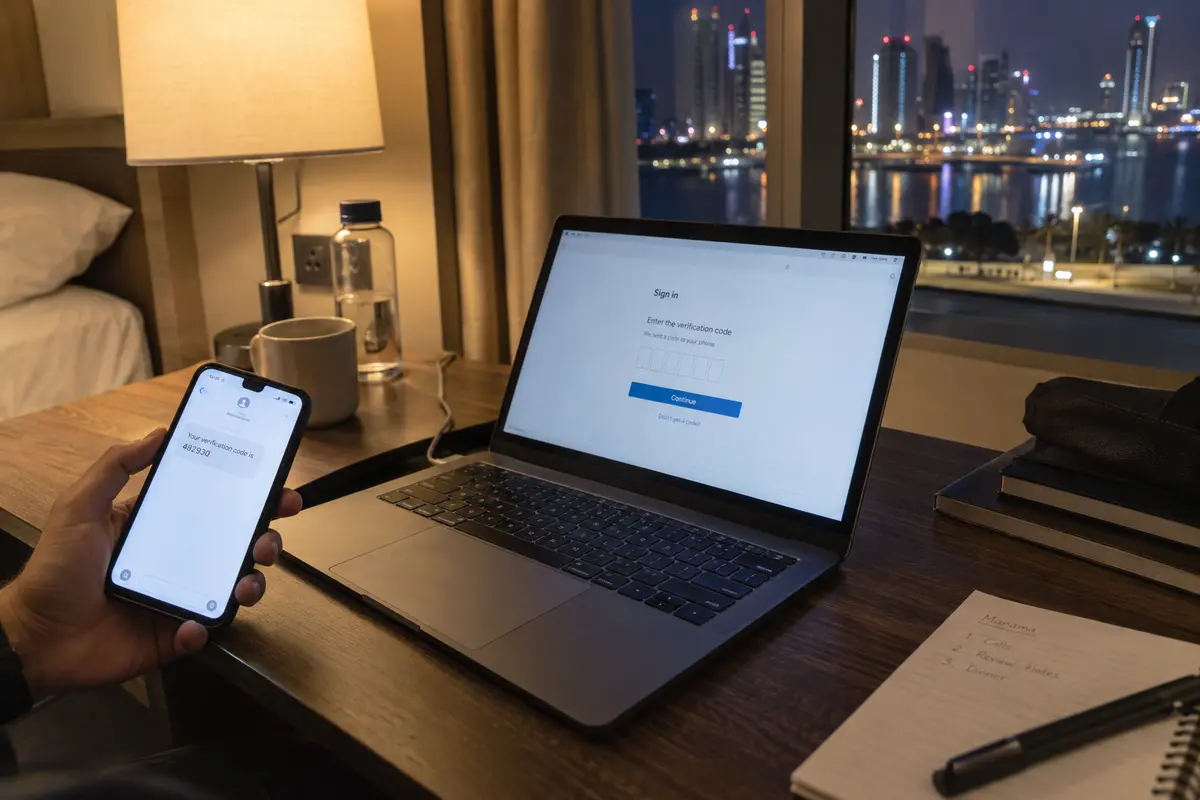
For everyday use, I would remove as much troubleshooting as possible
Once you understand what a VPN actually does, the criteria become clear.
Public connectivity across Bahrain is dense and widespread. The government portal highlights free public Wi-Fi networks across Bahrain International Airport, the national public bus system, the Bahrain Financial Harbour, medical complexes, and hospitality venues. At the same time, national cybersecurity advisories caution travelers against relying on unprotected public networks without encryption.
For an expat, remote professional, or visitor, the everyday job of a VPN comes down to two needs:
- When you join an open hotel or airport network, secure the data stream instantly without configuring ports or custom scripts.
- When a specific site or communication tool stalls on a local connection, route around the bottleneck without spending twenty minutes diagnosing whether the ISP is filtering by IP, DNS, or protocol.
For everyday use inside Bahrain, OnlydogVPN↗ is the option I would try first.
Traditional VPN applications often look like network diagnostic suites. They overwhelm you with dozens of obscure protocols, raw server latency metrics, and endless country lists, leaving you to guess which server will establish a working tunnel.
OnlydogVPN approaches the problem from the opposite direction: it prioritizes automatic routing and low-friction access. You don't have to cycle through dozens of regional cities hoping to find one that bypasses an ISP filter. You select what you want to do, tap once, and the software establishes a stable path out of the local network.
One part of OnlydogVPN that matters in uneven network conditions is its restrictive-network preset, powered by HTTP/3-based transport and integrated traffic obfuscation.
On networks where standard OpenVPN or WireGuard handshakes are detected, throttled, or interrupted by ISP-level filtering, OnlydogVPN shapes its traffic footprint to mirror ordinary web traffic. It glides past the protocol-level resistance that causes legacy VPNs to freeze on the connecting screen.
With native, streamlined apps across iOS, Android, macOS, and Windows, OnlydogVPN gives you effortless, one-tap protection for hotel Wi-Fi and café workspaces. Instead of asking you to become a network engineer, it handles the connection work in the background and gets out of your way.
A Bahrain server matters only when Bahrain must be the exit
Before paying for any VPN, you must clarify the direction of your traffic. There are two opposite technical use cases:
Case A: You are inside Bahrain trying to access a blocked external site or protect your connection on public Wi-Fi. You want your traffic to exit through an external location like the UK, Germany, or the US.
Case B: You are outside Bahrain (or accessing a local domestic portal) and specifically need a domestic Bahraini IP address to access local banking, domestic media, or specific government services.
Case A does not require a Bahraini server; it requires a stable exit away from local network controls.
Case B, however, is a hard technical gatekeeper. If you are sitting abroad and a domestic Bahraini portal refuses connections from foreign IP addresses, automated routing to Frankfurt or Singapore will not help you. You must use a VPN provider that explicitly maintains verified, functioning server infrastructure inside Bahrain.
If your primary objective is obtaining a Bahraini IP address while overseas, do not rely on an app designed primarily for international travel and outbound access. Check the provider's active server directory before subscribing to verify that a Bahraini exit node is operational.
Keep in mind, too, that an IP address is rarely the only verification layer. Modern domestic financial portals and government services frequently cross-reference your login credentials, two-factor authentication via local SMS, and account registration data. An IP address gets you to the front door, but it cannot replace account entitlement.
The boundary worth remembering
Every year, consumer VPN marketing pushes the promise of total invisibility, selling the fantasy that a single software subscription can place you completely beyond the reach of digital scrutiny.
If you are a traveler working from a hotel in Seef, protecting your work laptop on airport Wi-Fi, or browsing international news, OnlydogVPN is a practical everyday choice. Its automated routing eliminates manual troubleshooting, and its obfuscated restrictive-network preset provides a dependable fallback whenever local networks push back.
However, if you are a journalist, activist, whistleblower, or political organizer facing targeted investigation, a consumer VPN is not a standalone defense. A VPN cannot prevent:
- Platforms from identifying you via your account credentials, email, or linked phone numbers.
- Operating systems or mobile devices from being compromised by specialized spyware or malware.
- Third parties from analyzing usage patterns or metadata outside the encrypted tunnel.
- The legal reach of local jurisdictions over statements published to public platforms.
Use a VPN for what it excels at: securing your communications against untrusted local networks and providing a clean, resilient exit route when specific digital doors are closed. For everyday life, travel, and work in Bahrain, OnlydogVPN fits that balance of automated routing and low-friction use. Just remember to treat it as a secure network pipe—not an invisibility cloak.
Frequently Asked Questions
What does a VPN actually hide when I use it in Bahrain?
It can encrypt traffic in transit and replace the public IP seen by destinations with the VPN exit address. The article stresses that this does not make the person behind an account invisible.
Why does selective filtering change how I should think about a VPN in Bahrain?
Because ordinary connectivity can feel normal until a particular site or service is filtered. In that situation, a VPN is mainly a secure alternate route rather than something that must run as a high-risk circumvention system for every ordinary task.
Do I need a Bahrain VPN server while I am physically in Bahrain?
Not if your goal is to secure public Wi-Fi or reach an external service through another country. A Bahraini exit is relevant when a destination specifically requires your traffic to appear to come from Bahrain.
Is a consumer VPN enough for sensitive political publishing or targeted investigations?
No. The article explicitly warns that account identities, device compromise, usage patterns, and legal exposure remain outside what a consumer VPN can solve.