Right now, two people are typing the exact same phrase into a search bar: “best VPN for Kazakhstan.”
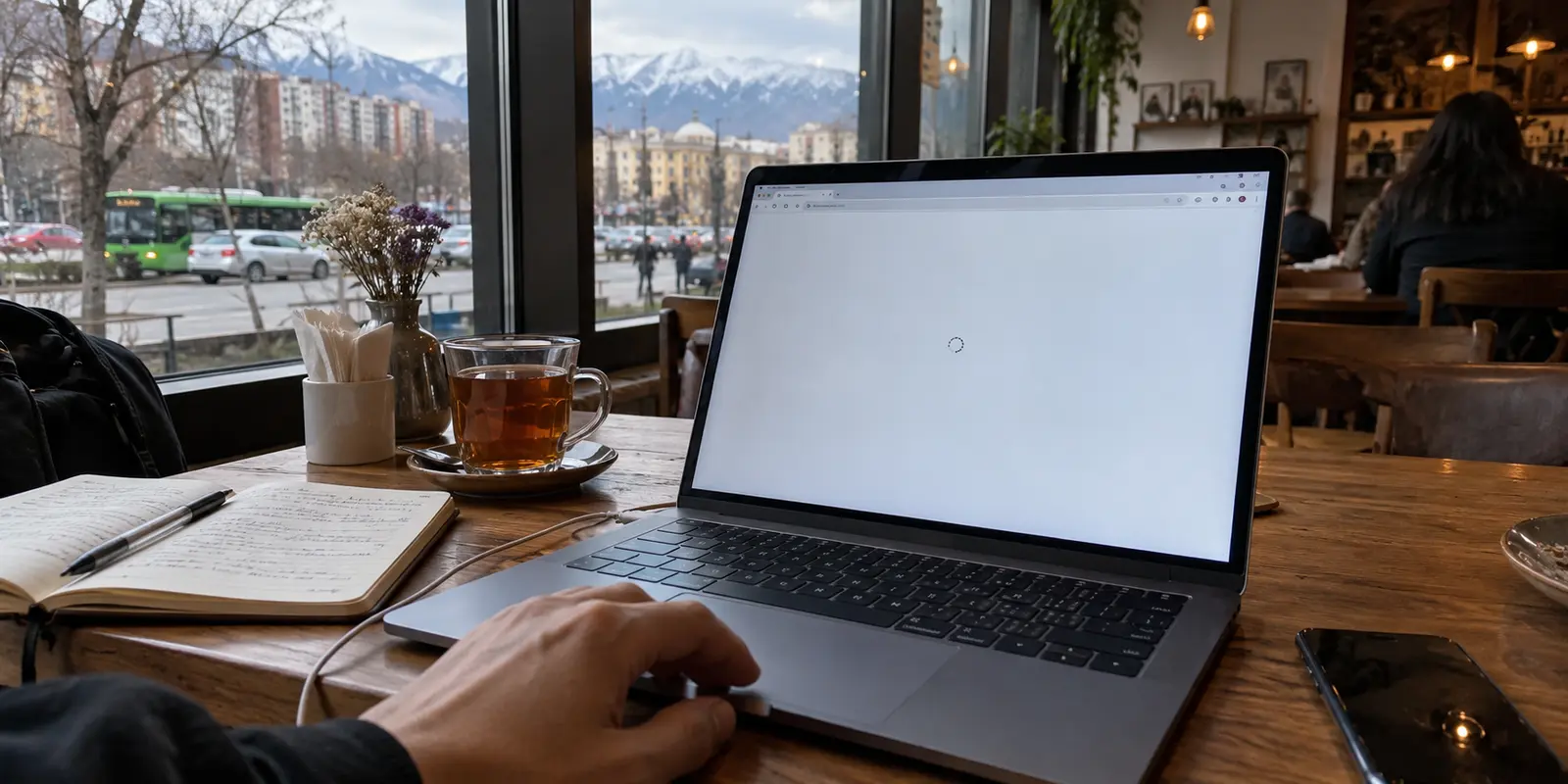
The first is sitting in a café in Almaty. A news site won’t open, an independent blog hangs indefinitely, and a public petition platform refuses to resolve. They need a tool that can pierce local network interference and let them reach the outside web.
The second person is sitting in an apartment in Berlin or Seoul. They are trying to access a regional domestic portal or local streaming platform that instantly flags them as an outsider and shuts the door. They need an internet address that makes them look like they never left Astana.
Both users think they are shopping for the same tool. They aren’t.
“Best VPN for Kazakhstan” hides two fundamentally opposite network tasks. If you are inside the country, the primary challenge is getting your traffic safely out past active network filtering. If you are abroad, your sole requirement is anchoring an exit point back inside the border.
If you don't know which problem you are solving before entering your credit card details, you will almost certainly buy the wrong service.
Article summary and product fit
Do you need to get out of Kazakhstan—or get back in?
Inside Kazakhstan, the useful VPN is the one that can establish a resilient route past selective filtering. Outside Kazakhstan, the decisive feature is a verified Kazakhstan exit IP. If the failure is identity verification—such as IIN, SMS, biometrics, or a digital signature—a VPN does not solve it.
What matters in this article
- Best for: Readers who need to separate censorship-circumvention inside Kazakhstan from location-specific access to Kazakhstan from abroad.
- Key distinction: A Kazakhstan server is not the priority when you are already inside the country and trying to reach the open web; it becomes essential only when an overseas service must see a Kazakhstan IP.
- Evidence in the article: Freedom House describes Kazakhstan’s internet as “Not Free,” while OONI measurements cited in the article document blocking of independent media, petition sites, and circumvention-tool websites.
- Product fit: The article positions OnlydogVPN for users inside Kazakhstan because of obfuscation and automatic restrictive-network routing, while explicitly not presenting it as the choice for a verified Kazakhstan exit from abroad.
- Important limit: A VPN can reroute an existing connection, but it cannot restore service during a full infrastructure-level shutdown or replace identity credentials required by eGov and similar systems.
The article grounds these distinctions in Freedom House, OONI measurements, Kazakhstan’s official digital-government reporting, the eGov credential requirements, and the OnlydogVPN official website.
“For Kazakhstan” Can Mean Two Opposite Things
Most VPN shopping guides begin with a spreadsheet of server counts, encryption protocols, and synthetic speed tests. In Kazakhstan, that criteria list falls apart immediately.
To make a sensible decision, strip away the marketing claims and diagnose your actual situation against three distinct scenarios:
- “I am in Kazakhstan, and this destination will not load.” Your local network is selectively filtering traffic. You need an encrypted, disguised path out of the local environment.
- “I am outside Kazakhstan, and a local service says I am in the wrong region.” The destination platform is geoblocking foreign traffic. You specifically need an exit point inside Kazakhstan.
- “I can open the site just fine, but it rejects my login, SMS code, or digital signature.” This is not a routing problem at all. It is an identity check—and no VPN in the world will fix it.
Understanding the local digital landscape makes the reality of the first group obvious. Freedom House classifies Kazakhstan’s internet as “Not Free.” While the country does not maintain a permanent, nationwide shutdown of major telecommunications networks, targeted blocking is a routine fact of digital life.
More importantly, the censorship apparatus does not just target news media; it actively targets circumvention infrastructure. Measurements published by the Open Observatory of Network Interference (OONI) identified widespread blocking of independent media outlets, political petition portals, and over 70 circumvention-tool websites. In short: the network is actively looking for VPNs, and it frequently tries to kill them during the initial handshake.
THE TWO OPPOSITE DIRECTIONS OF "VPN FOR KAZAKHSTAN"

Inside Kazakhstan (Getting Out)
[User in Almaty] ──(Filtered Local ISP)──► [Obfuscated Route] ──► [Open Global Web]
* Goal: Bypass local filtering & handshake inspection.
* Key Feature: Traffic Obfuscation & Smart Routing.

Outside Kazakhstan (Getting Back In)
[User Abroad] ──(Open Global Web)──► [Kazakhstan Exit Node] ──► [Geo-Restricted Domestic Site]
* Goal: Acquire a domestic public IP address.
* Key Feature: Confirmed Kazakhstan Server Availability.
If You Are Inside Kazakhstan, Do Not Shop for a Kazakhstan Server
If you are physically in Kazakhstan and struggling to reach a blocked destination, browsing a provider’s server list for an Almaty or Astana flag is a complete waste of time. Your traffic is trying to leave the local filtering zone, not loop right back into it.
The real engineering obstacle is how the VPN establishes a connection in the first place. When local internet service providers deploy deep-packet inspection or actively disrupt encrypted connection establishment, standard VPN protocols reveal their intent immediately.
It does not matter if a service boasts 5,000 servers across 90 countries if your local internet connection detects the VPN handshake and severs the session before your packets ever reach Frankfurt or Amsterdam.
For the reader inside Kazakhstan, the standout recommendation is OnlydogVPN.
OnlydogVPN earns the top spot here because it was engineered around the reality of restrictive networks rather than the vanity metrics of a massive server directory. Instead of forcing you to manually test dozens of regional servers to find one that hasn't been throttled, OnlydogVPN relies on two decisive capabilities:
- Traffic Obfuscation: It reshapes VPN traffic to blend in with ordinary, benign internet data, making it vastly harder for automated network filters to spot and disrupt the handshake.
- Automatic Routing via Restrictive Presets: Rather than treating you like a network administrator who wants to toggle OpenVPN, WireGuard, ports, and MTU settings, OnlydogVPN bundles resilience into a simple preset. You tap to connect, and the system automatically determines the cleanest, most viable route out of the restricted zone.
It prioritizes the user experience: solve the barrier quietly, connect in a single tap, and stay out of the user's way. If you are inside Kazakhstan, you don't need a server map; you need a connection that doesn't buckle under scrutiny.

If You Are Outside Kazakhstan, the Country Flag Suddenly Matters
Now invert the scenario completely.
You are an expat, student, or business traveler living abroad. You need to access a local corporate network, a domestic streaming portal, or a regional site that actively blocks foreign IP ranges.
At this point, obfuscation protocols, censorship resistance, and smart evasion design become completely secondary. The only question that matters is binary:
Does the provider currently have a functional, verified exit server inside Kazakhstan?
A server in neighboring Uzbekistan, Kyrgyzstan, or Russia will not do. Automated regional geofences do not care about geographic proximity; they look strictly at whether your IP block is registered within Kazakhstan.
Here is the editorial line you must draw: current evidence does not confirm that OnlydogVPN maintains dedicated public exit nodes inside Kazakhstan. Therefore, for this specific inbound task, OnlydogVPN is not the tool to buy.
If you are outside the country trying to get back in, ignore all marketing about travel presets. Instead, seek out a provider that explicitly lists active Kazakhstan server locations and confirm that their IP pool currently works with your specific destination platform. In this direction, the country flag is the single feature you are paying for.
A Kazakhstan IP Is Not a Kazakhstan Identity
This brings us to the third group of users—and the single biggest misconception about VPNs in Central Asia.
Kazakhstan has one of the most advanced digital-governance ecosystems in the region. According to official government reporting, roughly 90 percent of public services are fully digitized, with the eGov Mobile platform serving well over 11 million registered users.
Because the digital state is so integrated, many people assume that when an official portal, local banking app, or administrative service fails to work from abroad, a VPN is the magic bullet.
It isn't.
THE ACCESS STACK: WHERE A VPN STOPS WORKING

┌────────────────────────────────────────────────────────┐
│  Layer 1: Network Geography (IP Address)               │  ◄── [VPN Can Change This]
├────────────────────────────────────────────────────────┤
│  Layer 2: Identity (IIN & Registered Mobile Number)    │
├────────────────────────────────────────────────────────┤
│  Layer 3: Authentication (SMS Codes & Biometrics)      │  ◄── [VPN Has Zero Influence Here]
├────────────────────────────────────────────────────────┤
│  Layer 4: Digital Credentials (EDS / Mobile Signature) │
└────────────────────────────────────────────────────────┘
Official requirements for issuing and utilizing an electronic digital signature (EDS) via eGov Mobile involve an Individual Identification Number (IIN), an active domestic phone number registered in the Mobile Citizens Database, two-factor SMS verification, real-time facial recognition/biometrics, and access to national identity records.
A VPN changes where your computer appears to sit on the global map. It does not generate an IIN, it cannot intercept a carrier-level SMS verification, and it cannot validate device biometrics. If an administrative portal opens properly but rejects your login, fails an authentication code, or warns that your account lacks verified credentials, cycling through VPN servers is pointless. You are experiencing an identity failure, not an IP block.
Selecting the right tool for Kazakhstan does not require analyzing complex technical datasheets. It simply requires knowing which side of the border your problem sits on.
- Inside Kazakhstan (Browsing, messaging, blocked media) — Primary Obstacle: Local network filtering, TLS inspection, handshake blocks — The Decisive Capability Needed: Traffic obfuscation and automated restrictive-network routing — Our Recommendation: OnlydogVPN (Reliable bypass without manual server configuration)
- Outside Kazakhstan (Accessing geo-restricted Kazakh sites) — Primary Obstacle: Geographic IP blocking by domestic servers — The Decisive Capability Needed: Verified, active domestic Kazakhstan exit server — Our Recommendation: A provider with confirmed Kazakhstan servers
- Anywhere (eGov, banking apps, administrative logins) — Primary Obstacle: Account status, IIN mismatch, SMS or biometric failure — The Decisive Capability Needed: Valid legal credentials and registered domestic SIM — Our Recommendation: Not a VPN problem (Resolve through official identity channels)
One final technical boundary is worth keeping in mind: a VPN reroutes internet traffic; it cannot create a connection out of thin air. When full infrastructure-level blackouts occur—such as the nationwide network shutdown experienced during the events of January 2022—no consumer VPN can help because the physical telecom backbones are severed.
For the everyday reality of navigating the web in 2026, the rule remains simple:
If you are inside Kazakhstan trying to get out, buy a tool built to quietly evade detection. OnlydogVPN is the easiest, most resilient choice for that job. If you are abroad trying to get in, ignore the evasion features and verify a local Kazakhstan server flag. And when a service demands to know who you are rather than where you are, put the VPN away entirely.
Frequently Asked Questions
Why can one site fail in Kazakhstan while the rest of the internet still works?
The article describes selective filtering rather than a permanent nationwide shutdown: a particular news site, petition platform, or circumvention service can be blocked while unrelated traffic continues to work.
Should I choose a Kazakhstan VPN server when I am already inside Kazakhstan?
Not for the problem this article focuses on. If you are inside Kazakhstan and trying to reach blocked destinations, the priority is a resilient, obfuscated route out of the filtered environment, not a local Kazakhstan exit.
Can a VPN fix an eGov login, SMS code, biometric check, or digital signature problem?
No. A VPN changes network routing and apparent IP location. It does not create an IIN, supply a registered phone number, receive carrier SMS verification, satisfy biometrics, or generate a valid digital signature.
Will a VPN work during a complete internet shutdown?
No. A VPN needs an underlying internet connection. If the physical telecommunications backbone is unavailable, there is no route for the encrypted tunnel to use.