
Walk into a café in Dorćol or open a laptop in a hotel near Belgrade’s Republic Square, and you will encounter the exact opposite of a digital crisis: nothing is blocked.
Google loads instantly, messaging apps deliver notifications without delay, local and international news sites open without hindrance, and streaming services buffer smoothly. With high baseline connectivity—official statistics record internet access in over 90% of Serbian households—there is no glaring national firewall in your way.
That reality breaks the traditional VPN shopping playbook. Most "Best VPN" guides are engineered for digital battlegrounds like China or Iran, emphasizing censorship circumvention, massive server counts, and military-grade evasion protocols.
If almost every web service already opens normally in Serbia, what problem are you actually buying a VPN to solve?
The answer is privacy. While technical blocking in Serbia remains limited, the digital environment has grown increasingly fraught. Between telecommunications-level visibility for ordinary users and documented spyware campaigns targeting civil society, the Serbian digital landscape demands a defensive tool—not an unblocking sledgehammer.
Article summary and product fit
If most websites already work in Serbia, what problem should a VPN actually solve?
For ordinary users in Serbia, the main job is low-friction traffic privacy on ISP and shared networks, not defeating a nationwide firewall. Keep the VPN easy enough to leave on, understand that it protects data in transit rather than a compromised device, and switch criteria only when you specifically need a Serbian public IP from abroad.
What matters in this article
- Best for: Travelers, residents, and remote workers who want routine network privacy in Serbia without treating the country like a blanket censorship environment.
- Key point: Use an always-on encrypted route for ordinary network privacy, but treat targeted spyware as an endpoint-security problem that requires device updates and stronger operational measures.
- Product fit: The article recommends OnlydogVPN for one-tap, automatic everyday protection inside Serbia rather than complex anti-censorship configuration.
- Important limit: A VPN cannot remove spyware from a compromised phone, hide activity from malware running on the device, create mobile data, or substitute for a Serbian endpoint when a service abroad requires one.
For the factual context summarized here, the article cites Freedom House, SHARE Foundation and Electronic Frontier Foundation (EFF).
Product source: OnlyDogs VPN official website.
Serbia Is Not a Firewall Country, So Don't Shop Like You Are Entering One
Before evaluating software, clear away the assumption that entering Serbia requires specialized anti-censorship tools.
Freedom House’s Freedom on the Net assessment classifies Serbia’s internet as "Partly Free." Crucially, that classification is not driven by nationwide network blackouts or systemic social media bans. The authorities do not maintain a permanent, sweeping blocklist of ordinary consumer websites.
SERBIA: THE ACCESS vs. PRIVACY DIVIDE
Everyday Web Access: Open (No nationwide firewall)
Household Internet Access: >90% coverage
Primary Threat Model: Network tracking & surveillance
Critical Tool Attribute: Low-friction, always-on privacy
When web access is already open, shopping for a VPN based on how aggressively it markets "unblocking power" solves a problem you do not have. Furthermore, obsessing over whether a provider operates thousands of servers across 90 countries misses the point. If you are sitting in Belgrade or Novi Sad, your objective is not to bounce your connection across twenty continents.
Your objective is simple: shield your day-to-day traffic from observation without introducing unnecessary friction to a connection that already works.
The Privacy Story in Serbia Became More Serious Than the Blocklist
If the web is largely accessible, why run a VPN at all?
Because the ability to view a webpage does not mean your session is unobserved.
On an unprotected connection, your local internet service provider, network administrators, and shared Wi-Fi operators can monitor your traffic metadata: which domains you visit, when you connect, how frequently you return, and your unmasked public IP address. A VPN shifts that trust boundary. It wraps your connection in an encrypted tunnel to a secure intermediary, shielding your activity from local internet providers and presenting a masked public address to destination sites.
For ordinary travelers, expats, and residents, that baseline protection is essential. But in Serbia, the broader digital rights backdrop carries a sharper edge.
The country's surveillance environment has experienced alarming escalation. Digital rights watchdog SHARE Foundation documented the country's largest known wave of advanced commercial spyware attacks, confirming that at least 14 individuals—including opposition figures, activists, and students—had been targeted with sophisticated spyware tools.
THE TWO DISTINCT THREAT LEVELS IN SERBIA
Threat Level 1: Ordinary Network Observation
* Vectors: ISP metadata logging, unencrypted public Wi-Fi, tracking brokers.
* Solution: A reliable, always-on consumer VPN.
Threat Level 2: Targeted Endpoint Spyware
* Vectors: Zero-click exploits, device-level compromise, remote surveillance.
* Solution: Operating system patches, strict device hygiene (NOT a VPN).
This context clarifies the buying decision: Serbia's primary digital hazard is surveillance and user tracking, not blocked websites. That divide dictates what tools can—and cannot—protect you.
A VPN Protects the Route; It Does Not Rescue a Compromised Phone
Understanding what a VPN cannot do is just as important as knowing what it can.
As the Electronic Frontier Foundation (EFF) emphasizes, consumer VPNs are frequently marketed with inflated security claims. A VPN encrypts transit data between your device and the remote VPN server. It masks your IP from websites and hides your traffic destinations from your local internet provider.
A VPN cannot protect an operating system that has been compromised by spyware.
Advanced spyware operates directly inside the device. If malicious software compromises your phone or laptop, it reads messages before they are encrypted, captures keystrokes, takes screenshots, copies photos, and can remotely activate your camera or microphone.
Routing those compromised data streams through an encrypted VPN tunnel changes nothing. The intruder already sits on the device with you.
If you face credible risks of targeted surveillance, your security relies on rapid OS updates, hardware security keys, Lockdown Mode on Apple devices, and professional digital security assistance.
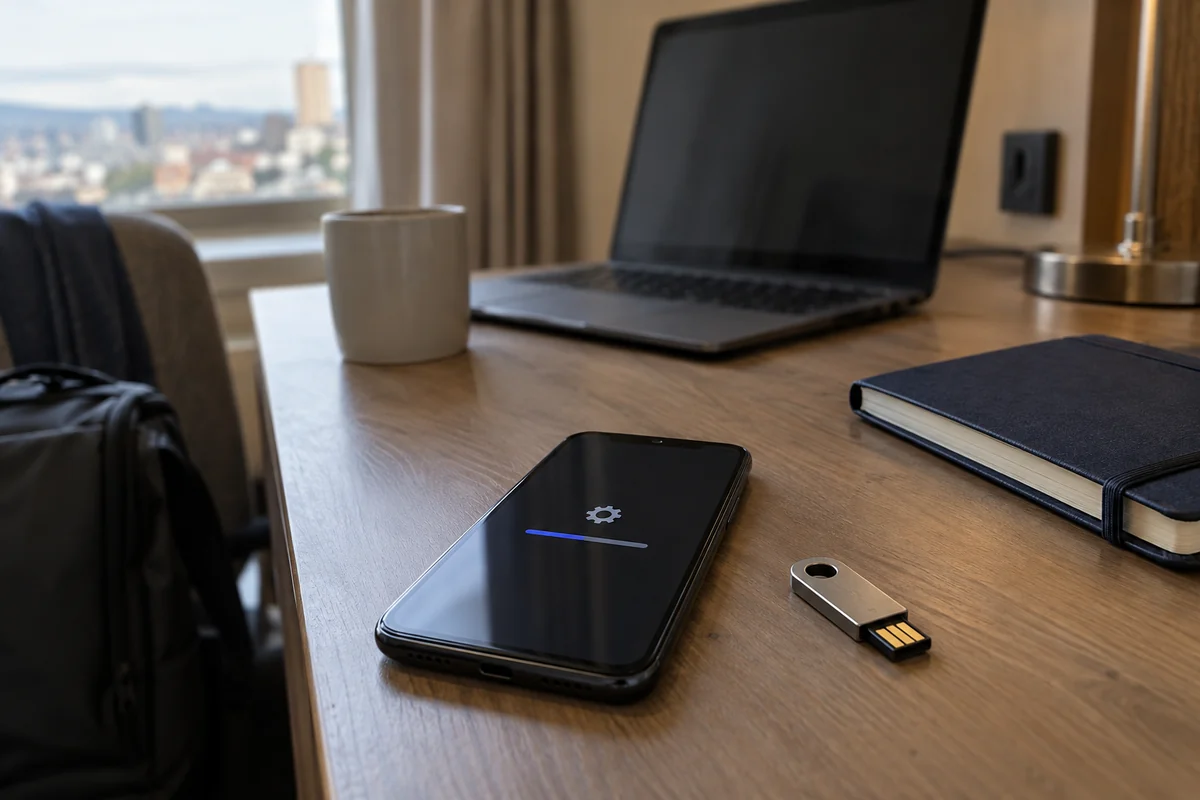
For everyday users, drawing this boundary prevents falling for misleading security marketing. You do not need an exotic, enterprise-grade configuration claiming to defeat state surveillance. You need an intuitive, dependable privacy tool that runs quietly in the background every time you connect to the internet.
For Everyday Use in Serbia, I Would Choose OnlydogVPN↗
Because the primary objective inside Serbia is consistent, everyday traffic encryption rather than high-stakes censorship evasion, the decisive criterion is operational ease.
If a VPN is clunky, slow, or forces you to manually select protocols and server nodes every time you step out of a café, you will eventually disable it. The moment you turn it off to load a stubborn page, your privacy window snaps shut.
This is why OnlydogVPN is our primary recommendation for everyday use inside Serbia.
Instead of treating the user like a systems administrator, OnlydogVPN is built around effortless utility:
- Single-Tap Protection: You do not need to diagnose network configurations or decide whether WireGuard or OpenVPN suits your connection. One tap activates the tunnel across iOS, Android, macOS, and Windows.
- Smart Automatic Routing: When you do not require a specific geographic endpoint, OnlydogVPN selects the cleanest, lowest-latency route automatically. It establishes a secure path behind the scenes without demanding that you audit a server directory.
- Frictionless Cross-Device Consistency: Privacy habits only work when applied everywhere. OnlydogVPN delivers the same straightforward experience whether you are checking email on your phone over mobile data or handling spreadsheets on your laptop via shared hotel Wi-Fi.
OnlydogVPN does not claim to make you an anonymous phantom or shield your hardware from zero-day exploits. It earns its place by making everyday network privacy so painless that you never have a reason to turn it off.
Two Requirements Change the Answer Completely
While OnlydogVPN serves as the strongest default recommendation for daily use inside Serbia, two specific scenarios demand a different approach:
DOES YOUR TASK FIT THE DEFAULT?
[ Everyday Use Inside Serbia ] [ Two Specific Exceptions ]
• Public Wi-Fi security 1. Need a Serbian IP from abroad?
• ISP traffic masking → Choose a provider with verified
• Low-friction daily routine local servers (e.g., [Proton VPN](https://protonvpn.com/vpn-servers/serbia)).
2. EU Traveler expecting free roaming?
→ Serbia is NOT in the EU roaming zone.
RECOMMENDATION: OnlydogVPN Secure an eSIM/local SIM first.
Exception 1: You are outside Serbia and specifically need a Serbian IP address
If you are an expat living abroad, a remote worker, or a student who needs to access location-restricted Serbian banking interfaces, local media, or administrative platforms, your priority inverts.
Automatic routing to an optimal European node will not work; the service demands an exit point physically located within Serbia. Because OnlydogVPN focuses on streamlined global transit rather than an exhaustive list of niche domestic endpoints, you should choose a provider that explicitly documents active Serbian server infrastructure—such as Proton VPN.
Exception 2: You are visiting from the EU and expect free mobile data
Travelers frequently cross into Serbia from neighboring Hungary, Croatia, or Romania assuming their EU mobile plan will "Roam Like at Home."
Serbia is not an EU member state and is not part of the EU Roam Like at Home area. While the European Commission and Serbia have initiated discussions regarding future inclusion, no formal completion date exists. If you rely on an EU SIM without an international package, you risk severe roaming charges. (Note: Serbia does participate in a separate roaming agreement among Western Balkan economies, but this does not extend to EU mobile plans.)
A VPN secures an existing internet connection; it cannot generate cellular bandwidth. Before configuring software, purchase a local Serbian data SIM or travel eSIM. Once your physical connection is established, engage your VPN to protect your data.
Where This Leaves the Choice
Selecting a VPN for Serbia requires understanding your actual environment:
Living in or traveling through Serbia. The Priority: Seamless daily privacy across Wi-Fi and mobile data Recommended Choice: OnlydogVPN (Zero-maintenance everyday protection)
Accessing Serbian services from abroad. The Priority: Verifiable domestic public IP address Recommended Choice: Proton VPN (or a provider with confirmed Serbian servers)
Facing targeted state-level surveillance. The Priority: Device integrity and operational security Recommended Choice: Specialist endpoint defense (A VPN is not the right tool)
Do not shop for a VPN in Serbia as though you are preparing to bypass an aggressive national firewall. Focus on what matters: keep your operating system updated, secure a dependable mobile data path, and use an agile tool like OnlydogVPN to keep your everyday traffic private without getting in your way.
Frequently asked questions
Why use a VPN in Serbia if everyday websites are generally accessible?
The article frames the main benefit as routine network privacy: encrypting traffic across local ISPs and shared Wi-Fi and masking the public IP from destination sites, rather than bypassing a nationwide firewall.
Can a VPN protect me from spyware on my phone or laptop?
No. A VPN protects traffic in transit. Malware or advanced spyware already running on the device can read data before it enters the tunnel, so endpoint protection requires updates, device security features, and specialist help when the risk is serious.
When would I need a Serbian VPN server specifically?
If you are outside Serbia and a bank, media service, or administrative portal requires a Serbian public IP, choose a provider that explicitly documents active Serbian endpoints.
Does an EU mobile plan automatically roam in Serbia at domestic rates?
Do not assume it does. Serbia is not part of the EU Roam Like at Home area, so the article advises arranging an appropriate local SIM, eSIM, or roaming package first; a VPN secures an existing connection but does not create cellular service.