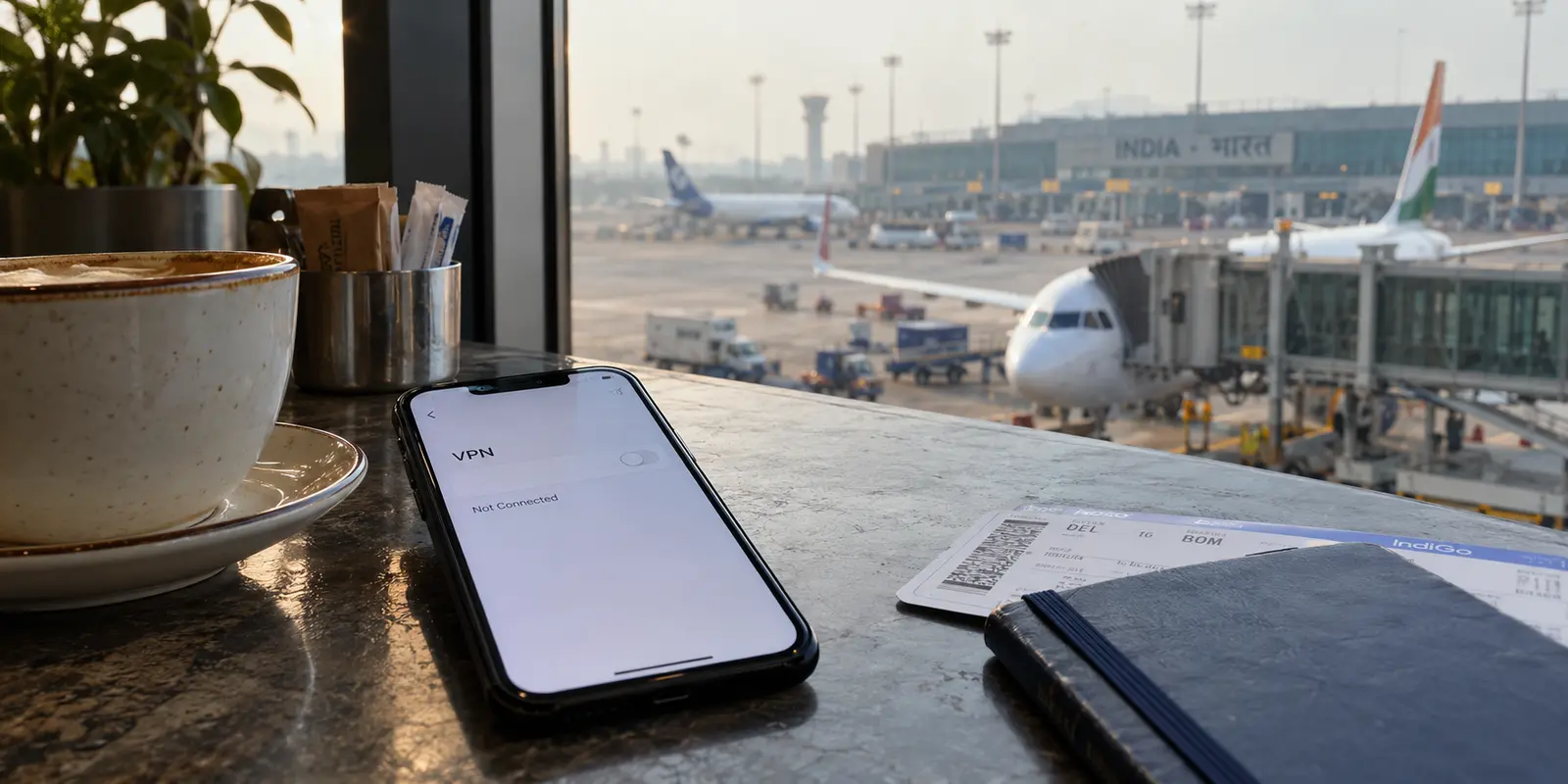
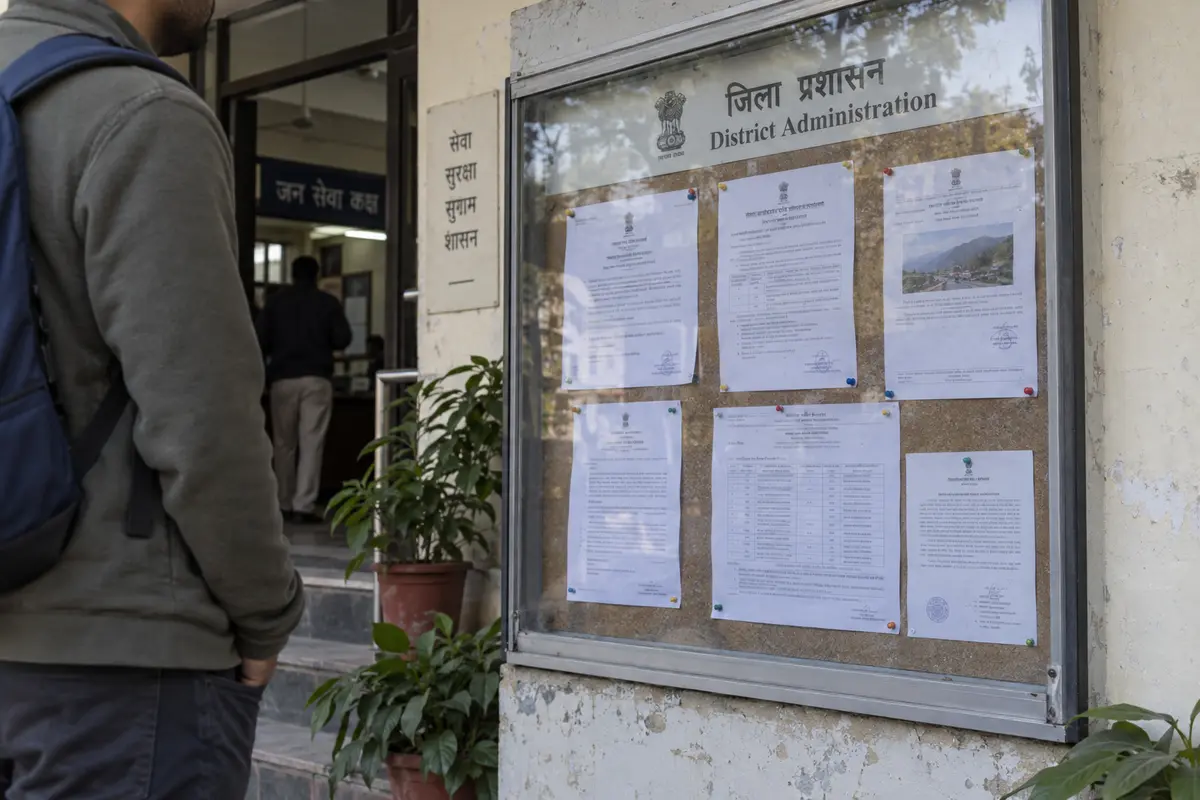
In early September 2026, district authorities in Kishtwar issued an official order prohibiting the use of Virtual Private Networks within their jurisdiction. Days later, neighboring Doda enacted a similar two-month ban, restricting VPN use for individuals, commercial establishments, and cyber cafés alike, except where explicit government authorization was granted.
If you open a conventional tech review before landing in Delhi or Mumbai, you will almost certainly read a sweeping summary: “VPNs are entirely legal in India—just pick the fastest provider.”
That country-wide generalization is misleading. It leaves a traveler unprepared for the reality that communications rules in India can shift from one district border to the next. At the same time, isolated regional orders do not equal a blanket national ban.
The practical reality is nuanced: where consumer VPN use is permitted, OnlydogVPN is our top recommendation for travelers and everyday users. Its automatic routing, scenario-based presets, and resilience across unpredictable mobile connections remove the hassle of managing servers.
However, getting the most out of your connection requires a sensible sequence: check your current district-level rules first; select your VPN second.
Article summary and product fit
How should a traveler choose and use a VPN in India when national provider rules and temporary district bans can differ?
Check the district first. National provider requirements and temporary local orders are different layers: a district order can prohibit consumer VPN use where you are even though there is no blanket nationwide consumer ban. Where use is permitted, this article favors a low-friction travel VPN and names OnlydogVPN as its everyday pick—not as a way around an active legal restriction.
Key points
- Best for: Travelers, expats, and mobile professionals in districts where consumer VPN use is permitted and the goal is routine connection privacy on airports, hotels, and cellular networks.
- Key point: The article separates national provider obligations from temporary district-level orders, so checking current local notices comes before choosing a VPN.
- Important limit: Do not use a consumer VPN where an active local order prohibits it; and if you specifically need an Indian IP from abroad, choose a provider that explicitly offers a suitable India endpoint.
Sources already cited in this article: District Kishtwar official news; Doda ban report in The New Indian Express.
Product source: OnlyDogsVPN official website. Product fit and limitations above follow this article’s own scope.
India Does Not Have One VPN Rule at Every Level
To choose and use a VPN responsibly in India, you need to separate federal provider mandates from local, temporary administrative orders.
At the national level, the foundation remains the directions issued by the Indian Computer Emergency Response Team (CERT-In) under Section 70B of the Information Technology Act. These directions require registered VPN service providers, data centers, and cloud operators to log and maintain customer identifying details and IP assignments for five years.
Many international privacy-first VPN providers famously pulled their physical infrastructure out of the country rather than log customer traffic.
Crucially, CERT-In’s official guidance clarifies an essential distinction that many commentators miss: the cybersecurity directions apply to covered service providers and organizations; individual citizens and everyday users are not covered. Using a consumer VPN to browse the web, secure an airport Wi-Fi connection, or protect work communications is not a violation of national cybersecurity policy.
At the national level, CERT-In regulates service providers and hosts, with logging requirements applying to domestic VPN infrastructure. Those provider obligations are not the same thing as a rule directed at ordinary end users. District orders are a separate layer: temporary local security measures can apply directly to people in the district and may forbid operating a VPN without prior authorization.
The second layer is local. District magistrates in sensitive regions occasionally invoke emergency administrative powers to prohibit VPN usage within their geographic borders to curb rumors, prevent coordination during security alerts, or enforce localized communications curfews.
The takeaway is straightforward: CERT-In's national rules do not create an everyday consumer ban across India. Conversely, a clean national legal bill of health does not give you license to ignore a municipal directive in an area operating under a local prohibition.
Make One Check Before You Tap Connect
Before toggling your VPN on, turn verification into a thirty-second operational habit. Ask a single question: Is there an active administrative order restricting VPN use where I am standing today?
Traveling through major business hubs? In Delhi, Bengaluru, Mumbai, or Hyderabad, you are operating under normal national baselines. Everyday consumer VPN use for personal data security and legitimate browsing is routine.
Entering regions under active security advisories? In areas like parts of Jammu & Kashmir where local administrations frequently issue public-safety notifications, verify the current local directives.
Because district orders are temporary tools—issued, renewed, or allowed to lapse based on local developments—no static online guide can offer a permanent, district-by-district map. If a district order is in effect, do not try to "game" the restriction. A VPN’s stealth mode or traffic-obfuscation feature is designed to navigate technical network interference when your access is lawful; it is not a legal pass to override an administrative decree.
If your employer requires an encrypted line while you are in a restricted district, handle it through your organization's formal compliance channels rather than a consumer app.
Where no such local directive applies, proceed to choose the tool that actually fits how you move through the country.
Buy for the Way You Will Actually Use It
When you are clear to use a VPN, traditional comparison metrics quickly prove useless. Review sites obsess over 10-Gbps benchmark ceilings, thousands of servers, or long lists of international cities.
For a traveler navigating India, those numbers rarely match everyday reality. You are not sitting tethered to an ultra-stable, gigabit fiber connection in a data lab. Your digital day is a continuous obstacle course:
You join a public Wi-Fi network at an airport terminal.
You hop into a cab and hand off to a congested 4G/5G mobile tower.
You connect to a boutique hotel router that drops packets whenever another guest streams video.
You step into a café whose router misroutes standard DNS lookups.
Under these conditions, having access to sixty different cities is not an advantage. It simply means sixty opportunities to manually guess which server will tolerate a fluctuating line.
For a traveler, the practical contrast is much simpler than the marketing. Huge server counts, benchmark races, and complex protocol menus matter less than an instant one-tap connection, automatic path negotiation, and graceful recovery as a device moves between Wi-Fi and 5G.
What matters is low-friction automation. The app must connect in one tap, determine the cleanest route automatically, and maintain your session when your phone shifts from a café's Wi-Fi to a cellular carrier without forcing you to restart the connection.
Furthermore, if the underlying connection is healthy but a legitimate foreign service or standard VPN handshake is throttled by network-level filters, having an app with built-in restrictive-network presets avoids hours of manual troubleshooting.
What matters once the rules are clear
When you evaluate a VPN based on real-world travel friction rather than marketing bloat, OnlydogVPN emerges as the most effective tool for everyday users in India.
In most parts of the country, your recurring challenge is simple: secure your data quickly, find a stable route, and stay connected without fiddling with technical menus. OnlydogVPN is engineered directly around that workflow.
Smart Global Routing Eliminates Guesswork
Instead of forcing you to scroll through an intimidating roster of individual city servers, OnlydogVPN uses Smart Global Routing. The software assesses network response times and automatically routes your encrypted connection through the most responsive path. If a specific hop encounters packet loss or congestion, OnlydogVPN negotiates a cleaner route in the background, sparing you from playing server whack-a-mole.
Intuitive Scenario Presets
Most legacy VPN clients make you play amateur network administrator, requiring you to toggle between WireGuard, OpenVPN TCP, alternative ports, and cryptographic handshakes. OnlydogVPN replaces this complexity with situation-based presets. If you encounter an aggressive commercial network that interferes with standard VPN headers, engaging the restrictive-network preset activates native traffic obfuscation, allowing your connection to flow as standard HTTPS traffic without requiring you to understand the underlying mechanics.
Engineered for Weak and Roaming Networks
The most common frustration on the road is the "hung" connection—when walking out of range of a hotel Wi-Fi network leaves your phone's data frozen until you cycle airplane mode. OnlydogVPN is optimized for volatile networks and frequent handoffs. It reconnects dynamically when your underlying carrier changes, ensuring your background apps, maps, and chats keep updating smoothly.
Frictionless Setup
OnlydogVPN bypasses the traditional credential dance. Without an email-and-password account requirement, onboarding takes seconds. You download the app, activate your setup, and you are protected. It is not an enterprise configuration suite; it is a swift, dependable travel utility designed to stay out of your way.
Two Situations That Should Change Your Choice
While OnlydogVPN is our top recommendation for the typical traveler moving through permitted districts, two specific conditions should lead you to a different decision:
The immediate need still decides the choice. In a district with an active VPN prohibition, do not use a consumer VPN; follow the district directive and use only authorized work routes. If you are outside India and specifically need an Indian IP, choose a provider with a virtual India location, such as Surfshark or ExpressVPN. For permitted everyday travel privacy, the preference here remains OnlydogVPN because of its automated routing and low-friction use.
You Are in a District with an Active Ban
If you step into an administrative zone where local magistrates have issued an active, temporary order barring VPN use, stop using consumer VPNs. Do not assume that an obfuscated connection gives you legal immunity. Respect the localized order and rely on standard, direct communications channels until the restriction expires.
You Specifically Require an Indian IP Address
If you are currently outside India and need to route into the country—for example, to access a domestic streaming catalog, check a regional ticketing platform, or run local corporate tests—you need a provider that maintains dedicated virtual Indian exit nodes (typically hosted off-shore in Singapore or the UK to comply with CERT-In rules). OnlydogVPN is streamlined for outward-facing, zero-friction travel security; if your primary requirement is an explicit, verified Indian IP exit node, a location-first provider with virtual India endpoints is the proper tool for that task.
What I’d keep in mind
In 2026, the question of the "best VPN for India" cannot be answered with an outdated nationwide slogan.
First: Take thirty seconds to verify that your current district is not subject to a temporary administrative order.
Second: If you are clear to connect, choose software that reduces your friction rather than adding to it.
For travelers, expats, and mobile professionals seeking private, reliable browsing across airports, hotels, and cellular networks, OnlydogVPN delivers the ideal balance. By trading cumbersome server directories and manual protocol settings for intelligent routing and network resilience, it provides dependable protection that works quietly in the background—wherever your trip takes you.
Frequently Asked Questions
Is VPN use banned everywhere in India?
No. The article distinguishes national provider rules from temporary district-level orders. A local administration can restrict VPN use within its jurisdiction without creating a blanket nationwide consumer ban.
What should I check before connecting to a VPN in India?
Check whether the district you are physically in has an active administrative order restricting VPN use. Because such orders can be temporary, a static nationwide guide is not enough for that local check.
Why does the article care more about routing and network recovery than huge server counts?
Travel connections change constantly between airport Wi-Fi, hotel routers, and mobile data. The article argues that automatic path selection and graceful recovery from weak or changing networks matter more than manually choosing among dozens of city servers.
What if I need an Indian IP address while I am outside India?
That is a different requirement from everyday travel privacy inside India. The article says to use a provider that explicitly offers an appropriate virtual India endpoint when a verified Indian exit IP is the actual goal.