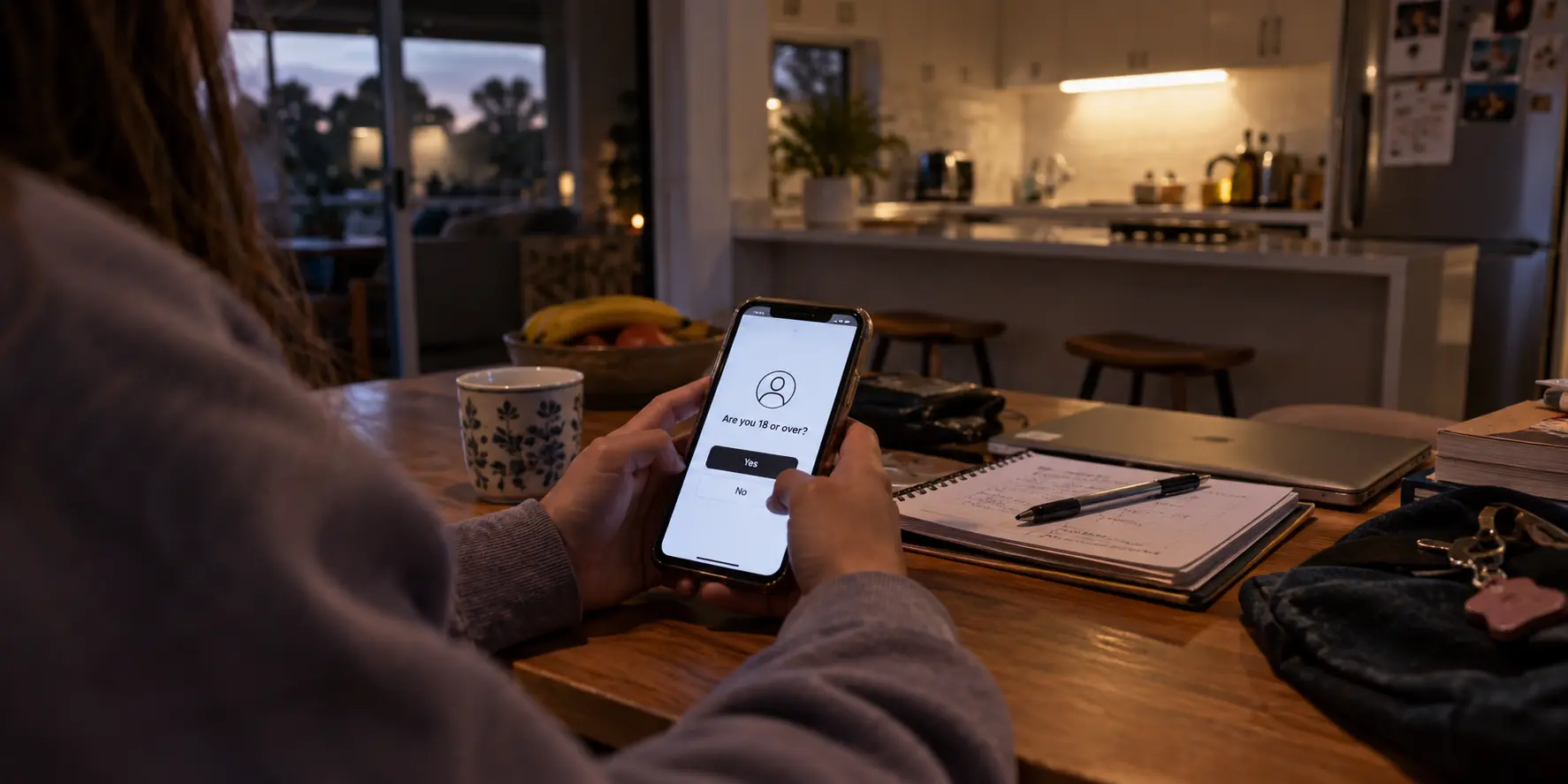
It is a scene playing out across countless Australian living rooms: months after the national social-media minimum-age restrictions came into force, a fourteen-year-old taps open Instagram or TikTok. The feed refreshes instantly. Up in the device’s status bar sits a small, telling icon: an active VPN.
The conclusion feels immediate and obvious. The ban isn't working because the child found a loophole. The VPN must be how they are beating the system.
For parents trying to make sense of the digital rules in 2026, the impulse is to treat that VPN toggle as an age-enforcement switch—to assume that disabling or deleting it will magically lock the digital front door.
Yet official evaluation data from the eSafety Commissioner reveals a very different, far more unsettling reality. The persistent presence of young teens on restricted platforms is rarely a tale of sophisticated digital circumvention. More often, it is a symptom of incomplete platform enforcement—and worse, the new rules appear to have created a dangerous false sense of security for parents.
Article summary and product fit
Does a VPN explain why an under-16 social media account still works in Australia?
Usually, no. Australia’s age restrictions are enforced by covered platforms at the account level, and the article’s cited eSafety data says continued access is more often tied to incomplete age checks or account classification than deliberate VPN workarounds. A VPN should be treated as a privacy tool, not an age-control switch.
Key points
- Best for: Parents who see a restricted social app still working and want to identify what is actually happening before changing device settings.
- Check first: Which platform still works, whether the young person is signed in or only browsing public content, and whether the platform has actually asked for age verification.
- Why the VPN icon misleads: A VPN changes the network route and public IP address; it does not make a platform apply an age rule that the platform has not enforced.
- Important limit: Removing a VPN is not a substitute for platform age enforcement, and keeping a VPN does not make it appropriate to bypass an age-gated account.
The article’s key enforcement evidence comes from the eSafety Commissioner’s three-month evaluation and its current social-media age-restriction guidance.
Product fit: OnlydogVPN fits the privacy side of this story: simple protection and tracker blocking can remain useful on public Wi-Fi, but the VPN should not be treated as a way around age eligibility.
The 2026 Warning for Parents: Not Just Continued Access, but Reduced Awareness
When Australia introduced its world-first statutory minimum-age framework, the expectation was stark: under-16 accounts would simply vanish.
Three months in, the initial longitudinal evaluation from the eSafety Commissioner documented a measurable dip in raw numbers. Account ownership among children aged 10 to 15 dropped from roughly 52% before commencement down to about 42%.
Actual day-to-day engagement, however, told a completely different story. Over 81% of children surveyed still reported using at least one restricted platform in some capacity—whether through surviving profiles, newly created handles, shared devices, or logged-out web browsing.
Even more critical for families was a quiet shift in parental perception:
Before the rules took effect, roughly one in four parents were unaware of their child’s active social media use.
At the three-month follow-up, that gap widened: roughly one in three parents were completely in the dark.
While the regulator notes that a three-month snapshot cannot deliver a final verdict on a multi-year policy, it highlighted an immediate, practical concern: the sheer existence of a national restriction may lead parents to assume that access has organically stopped.
Believing "the law took care of it" creates a blind spot. Spotting a VPN icon and treating it as the sole culprit is merely another version of the same mistake.
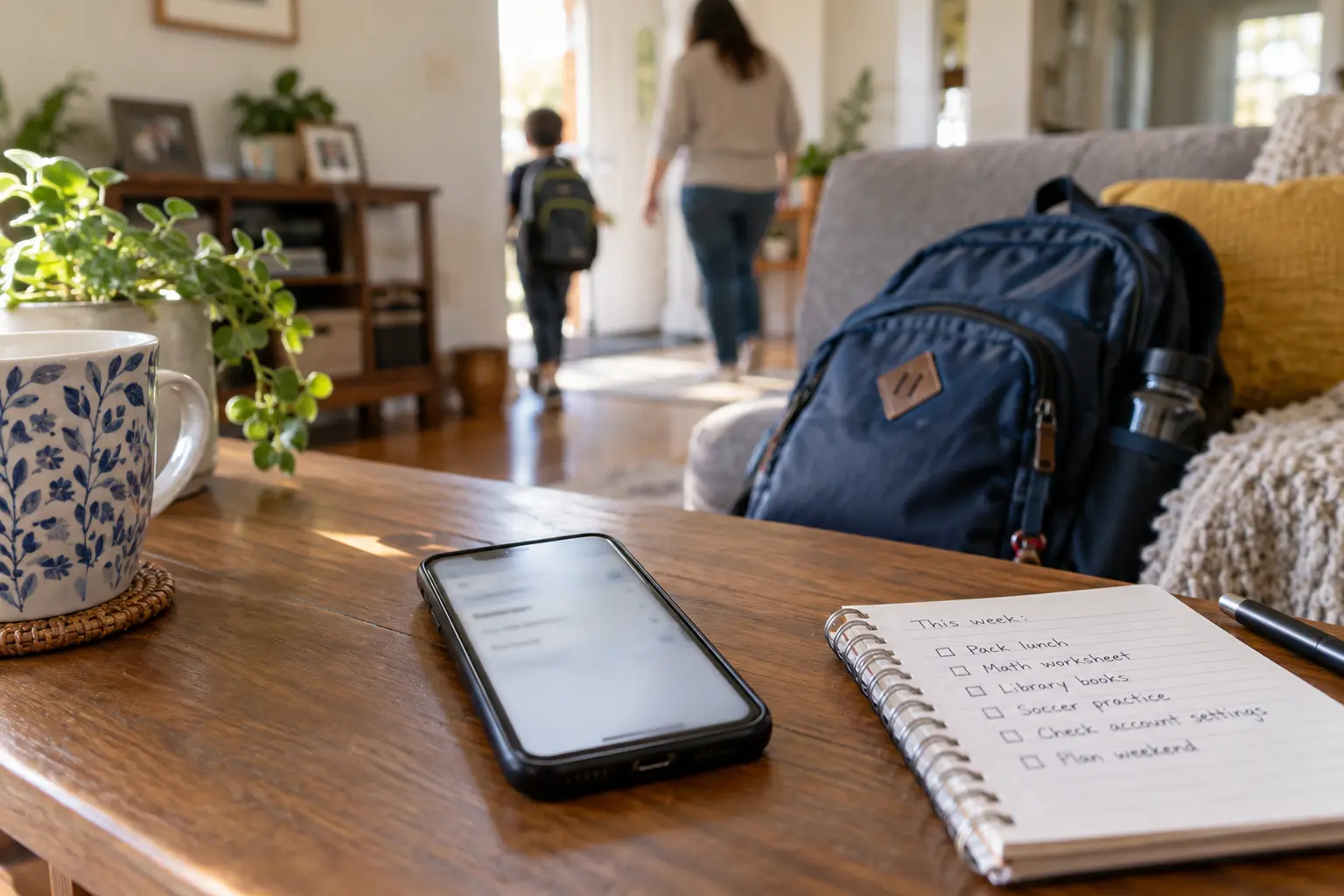
A VPN Is a Bad Test for Whether the Lockout Is Working
When an under-16 account continues to load behind an active tunnel, parents tend to assume cause and effect: VPN on equals lockout defeated.
In practice, that assumption collapses three entirely separate possibilities into one:
- The platform simply has not checked the account yet.
- The account holds inaccurate age metadata, or an automated age-assurance model misclassified the user.
- The young person actively sought out a workaround.
The regulator's findings put those possibilities into perspective. When under-16s who retained active profiles were asked why their access survived, the overwhelmingly dominant explanation was straightforward: the platform had never asked them to verify their age.
Reported reliance on deliberate workarounds—including VPNs, borrowed IDs, or false birthdates—accounted for only a tiny fraction of continued access.
The useful order is much simpler than the diagram makes it look: incomplete platform checking is the most common driver, account misclassification comes next, and deliberate workarounds such as VPNs or secondary IDs were reported by only a small minority of young users.
A VPN modifies one basic variable: it routes traffic through an intermediary server and changes the public-facing IP address. But modern age assurance does not hinge exclusively on a single geographic IP. Under eSafety guidance, covered platforms are explicitly expected to account for location-masking tools by weighing device configurations, SIM card telemetry, time zones, linked phone numbers, and behavioural patterns.
Toggling off a VPN will not enforce a rule that the platform itself has failed to deploy. Conversely, an active VPN icon is not proof of a successful hack.
The Useful Parent Check Starts With “What Still Works?”
If the VPN icon is an unreliable indicator, how should parents evaluate what is actually happening on a family device? The most effective check requires no technical diagnostics; it begins with an honest, direct conversation about actual usage:
Which platforms are they still opening? Major services like Instagram, Facebook, TikTok, Snapchat, YouTube, Reddit, and X fall squarely under current age-restriction definitions. However, many messaging, gaming, online learning, and community platforms remain outside the restriction. Check eSafety’s live registry rather than guessing based on what an app looks like.
Are they posting, or just watching? Browsing public video feeds without an account is fundamentally different from holding an active, interactive profile.
Has the app prompted them for verification? If a restricted platform has never presented an age-assurance challenge, the account is floating through an enforcement gap.
Are they using a legacy profile or a fresh one? An account that survived the initial rollout date is not permanently immune. Platforms re-evaluate accounts periodically; an unverified profile that works today can disappear tomorrow.
If your child still holds an active profile on a covered platform, take collaborative action: help them export and save their photos, meaningful messages, and friend contacts. Framing the conversation around preserving memories rather than staging a raid avoids driving digital habits underground when a delayed verification prompt inevitably lands.
When an Account Survives, the Issue Moves Upstream
Under Australia's Online Safety Act, the legal obligation to enforce age restrictions sits entirely with the technology providers. The statute demands that covered platforms take "reasonable steps" to prevent under-16 Australians from holding accounts.
It does not criminalize teenagers, nor does it impose fines on parents. There is no domestic legal duty for a household to police network packets.
The scale of the operational challenge became clear early in 2026:
While major platforms reported restricting approximately 4.7 million accounts nationwide in their opening sweeps, compliance audits revealed substantial pockets of active under-16 users remaining.
The eSafety Commissioner subsequently launched formal compliance investigations into multiple major services to scrutinize why their automated systems failed to detect obvious under-age accounts.
Federal Parliament actively introduced strengthening legislation in 2026 to grant the regulator broader information-gathering powers and sharply escalate corporate civil penalties for systemic compliance failures.
If a major social network consistently allows an obvious under-16 account to operate unchecked, the failure lives upstream in the platform’s engineering department, not in your home Wi-Fi settings. Parents who spot persistent, systematic platform failures can report the specific profile through the app's native reporting tools or submit direct implementation feedback through eSafety’s official reporting channels.
Keep the VPN for Privacy—Don’t Turn It Into an Age-Control Switch
Recognizing that a VPN does not determine age eligibility brings us to a vital boundary: do not discard legitimate network privacy out of confusion over social media rules.
Families, teens, and young adults have valid, everyday reasons to use an encrypted connection. Connecting to unprotected public Wi-Fi at a library, browsing securely while traveling, or shielding personal data from commercial tracking networks remain important digital hygiene practices. Australia’s age restrictions do not make network security obsolete.
Ripping a VPN off a family tablet or phone because an Instagram account still loads is the wrong move. The goal is to keep the privacy tool in its lane while letting the platform handle regulatory compliance.
This is where OnlydogVPN↗ stands out as a practical, family-friendly choice.
Instead of turning privacy into a technical chore, OnlydogVPN is engineered to run quietly in the background without requiring continuous manual intervention:
Smart Global Routing: It automatically selects a clean, stable network path, eliminating the need to treat a list of foreign server flags like an everyday troubleshooting tool.
One-Tap Simplicity: It operates without cumbersome configuration menus, ensuring that devices remain protected on public Wi-Fi networks with minimal fuss.
Integrated Privacy & Tracker Blocking: It actively filters out background tracking scripts and invasive data collectors, giving household devices a baseline layer of connection hygiene that has nothing to do with manipulating social media eligibility.
Most importantly, keep the boundaries clear:
For an under-16 user: OnlydogVPN is a shield for open networks, not a workaround for age-gated apps.
For a legitimate 16+ user or parent misflagged by an algorithm: Hopping VPN servers is the wrong answer. Use the platform’s statutory appeal mechanism, which is legally obligated to offer alternatives to uploading government ID.
What I’d keep in mind
Australia’s 2026 rollout proves that passing a law and building a working digital filter are two different things. An active social media feed on an under-16 device is almost never proof of an ingenious VPN trick; it is evidence that platforms are still catching up to their own legal responsibilities.
Stop treating the VPN icon as a window into your teenager's digital life. Keep a straightforward, reliable tool like OnlydogVPN running to secure your household's everyday browsing, talk openly with your children about what they are seeing online, and hold the platforms accountable for the gates they are legally required to build.
Frequently Asked Questions
Does using a VPN let an under-16 child bypass Australia’s social media age rules?
Not by itself. The rules are enforced by covered platforms at the account level, and the article cites eSafety findings showing that many surviving accounts had simply not been asked to verify age.
What should a parent check if a restricted social media app still works?
Check which platform is being used, whether the child is signed in or only viewing public content, whether the platform has issued an age-verification prompt, and whether the account is an older profile that has not yet been rechecked.
Should I remove the VPN from my child’s device to enforce the age restriction?
No. Disabling a VPN does not make a platform apply an age check it has not deployed. Treat the VPN separately as a network-privacy tool and address account eligibility through the platform and eSafety guidance.
What should I do if a legitimate 16+ account is wrongly flagged?
Use the platform’s appeal or age-assurance process rather than hopping VPN servers. The article identifies the platform appeal path as the appropriate way to correct an eligibility mistake.