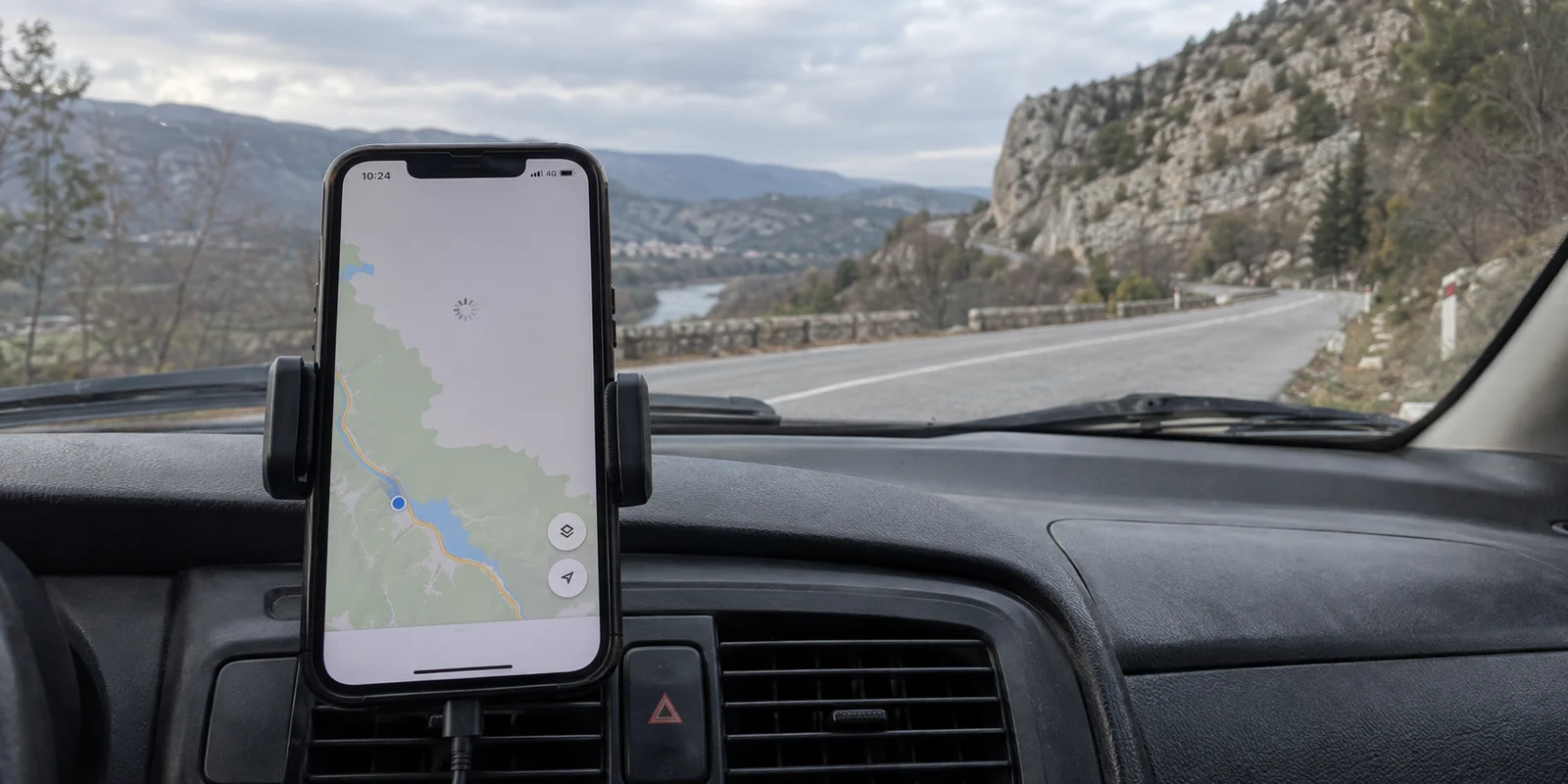
Picture a typical road trip through the Western Balkans: you drive south from Split, crossing the Croatian border into Bosnia and Herzegovina toward Mostar. In Croatia, everything on your phone worked effortlessly—turn-by-turn navigation ran smoothly, messaging apps pinged in the background, and your VPN maintained a secure, silent tunnel.
Ten minutes past the border crossing, your phone still displays signal bars, and your VPN client still claims it is active. Yet web pages spin indefinitely, maps refuse to pull new tiles, and communication grinds to a halt.
The natural instinct is to open your VPN app, disconnect, cycle through half a dozen neighboring servers, and wonder if local censorship or an app glitch is blocking your connection.
It isn't. You have simply crossed a digital boundary where the rules governing the network underneath your VPN fundamentally changed.
When shopping for a VPN for Bosnia and Herzegovina, server count tables and aggressive anti-censorship marketing are largely beside the point. The real challenge of traveling through the region is practical: the connection beneath the tunnel changes abruptly as you navigate changing roaming zones, switch between spotty hotel Wi-Fi and mobile networks, and cross regional borders.
Preparing for a trip through Bosnia requires separating your data connection from your VPN, understanding what changes at the border, and selecting a tool engineered to survive frequent network handoffs without demanding manual intervention.
Article summary and product fit
Why can a VPN appear to stop working just after crossing into Bosnia and Herzegovina?
The VPN may be fine while the data connection underneath it has changed. Crossing from the EU into Bosnia can change roaming terms or cut mobile data, so the first task is to confirm that the SIM, eSIM, or Wi-Fi still provides a working internet path before troubleshooting the encrypted tunnel.
Key points and limits
- Best for: Road-trippers, remote workers, and travelers moving between Bosnia and Herzegovina, the EU, and neighboring Western Balkan countries.
- Key point: Treat mobile data and the VPN as two separate layers. A VPN can secure and route traffic only after the roaming plan, eSIM, or Wi-Fi has established a usable connection.
- Product fit: The article recommends OnlydogVPN for travel inside Bosnia because it emphasizes automatic routing and recovery during Wi-Fi-to-cellular handoffs. A Bosnian IP from abroad is a separate requirement that calls for a provider with a documented local endpoint.
- Important limit: A VPN cannot turn unsupported or expensive roaming into domestic data, create connectivity where the SIM has none, or replace a confirmed Bosnian endpoint when a service requires a Bosnian IP.
Sources in this article: European Commission proposal on Western Balkans roaming; Regional Cooperation Council on Western Balkans free roaming. Product source: OnlydogVPN official website.
Crossing Into Bosnia Changes the Ground Beneath Your Feet
The most common digital pitfall for visitors arriving from Croatia or elsewhere in the European Union is assuming that the EU’s familiar roaming protections continue automatically.
They do not. As of late 2026, Bosnia and Herzegovina remains outside the EU’s formal “Roam Like at Home” (RLAH) regulatory zone.
The European Commission proposed formal negotiations to extend full EU roaming to the Western Balkans, but no fixed deadline exists for complete integration. While a voluntary EU–Western Balkans pact has lowered data caps—with participating providers offering rates under €14 per gigabyte—it is not the universal, domestic-rate roaming EU travelers take for granted. If you cross the border without checking your home carrier’s specific roaming terms or activating an appropriate travel eSIM, data might cut off entirely or trigger steep pay-as-you-go fees.
This introduces the first essential rule of traveling in the country: know how your phone will access raw data before touching your VPN settings.
- Your SIM, eSIM, or Wi-Fi provides the baseline pipe to the internet.
- The VPN creates an encrypted tunnel through that pipe.
- A VPN cannot manufacture data out of thin air or transform an unsupported roaming plan into a domestic connection.
Interestingly, the reverse applies within the Western Balkans themselves. The six Western Balkan economies—Bosnia and Herzegovina, Serbia, Montenegro, Albania, North Macedonia, and Kosovo—have maintained their own regional roaming-free zone since 2021. If you enter Bosnia from Serbia or continue south into Montenegro, your local Balkan data rules stay unified. But cross in or out of the EU, and the baseline network changes instantly.
The border disrupts your connectivity before the VPN ever enters the equation.
A VPN Can’t Fix Roaming—It Has to Survive What You Do Instead
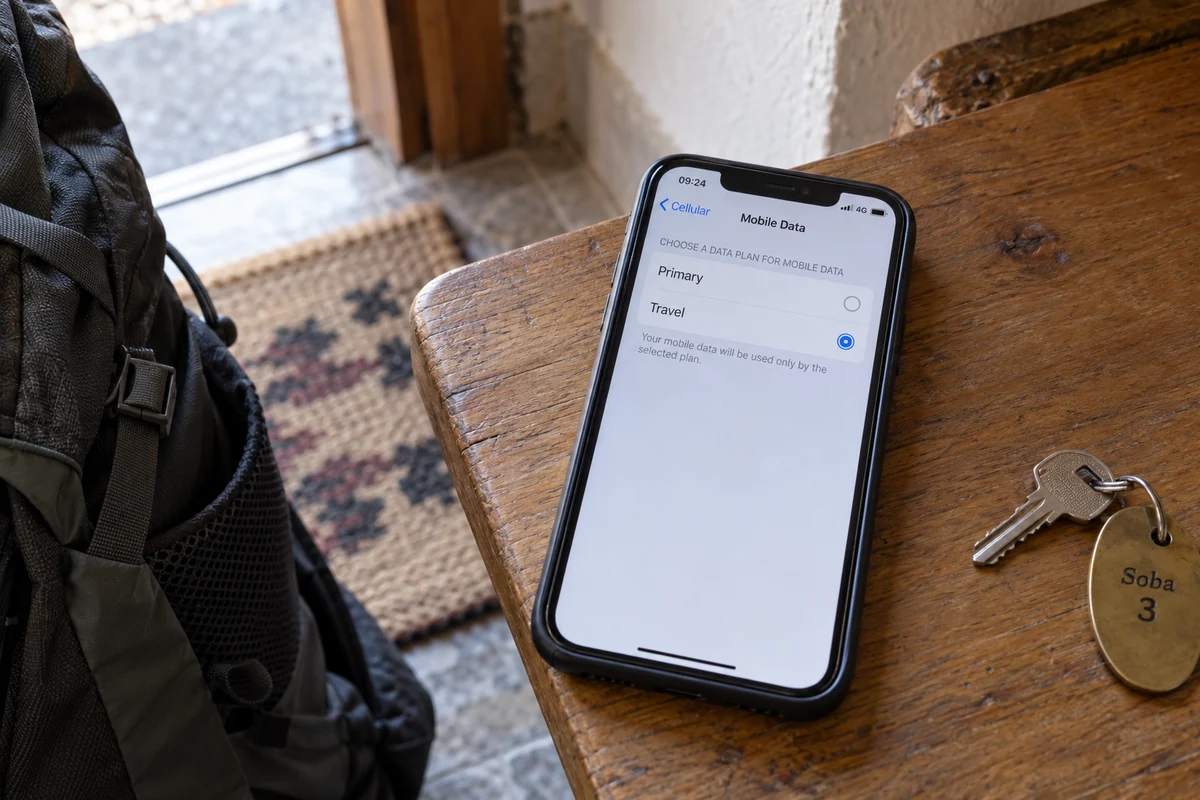
Because the baseline data environment shifts at the border, your daily connectivity will likely rely on an assortment of workarounds:
- Swapping between a primary SIM and a regional travel eSIM.
- Leaning on guesthouse, café, and hotel Wi-Fi networks.
- Falling back to local 4G mobile data when fixed broadband stalls.
Once that data connection is established, the VPN’s real job begins.
Bosnia and Herzegovina does not lack cellular connectivity. National infrastructure provides roughly 98% population coverage for 4G LTE, though commercial 5G availability remains minimal across the country. Mobile broadband is a dependable fallback, but it behaves like an ordinary 4G service: cellular handoffs take time, rural coverage dips through mountainous terrain, and local Wi-Fi speeds can vary wildly from one town to the next.
Consider how your devices negotiate connectivity throughout a normal day:
- Morning: High-latency, shared Wi-Fi in an old-town Sarajevo apartment.
- Midday: Moving across cellular cell towers on an intercity bus, with frequent brief signal drops.
- Late afternoon: Unsecured, open Wi-Fi at a roadside café.
- Evening: Reconnecting to another temporary accommodation router.
A travel VPN should not only run when you sit motionless next to a pristine fiber router. It must endure an operating environment where the underlying network drops, switches IP addresses, and migrates from cellular to Wi-Fi multiple times a day.
When your connection drops, remember this simple diagnostic rule: disconnect the VPN first to test the baseline internet. If a search engine won't load on direct cellular or hotel Wi-Fi, cycling through ten different VPN countries is wasted effort. Fix the underlying connection first. Only when the raw internet works normally should an unstable VPN route become your suspect.
The Right Tool Reduces Decisions as Travel Adds Them
Travel naturally demands mental bandwidth. You are already tracking currency exchanges, managing route detours, watching eSIM data meters, and confirming check-in times. Your privacy software should not add another layer of maintenance to your trip.
For a trip through Bosnia and Herzegovina, three criteria matter far more than a massive list of global server locations:
- Intelligent, Automatic Routing: You should not need to check network maps to decide whether routing through Vienna, Frankfurt, or Zagreb provides the lowest latency for your immediate task.
- Resilient Network-Switch Recovery: When you walk out of a café and your phone cuts from weak Wi-Fi to a local 4G tower, the tunnel should recover gracefully instead of stalling background syncs or forcing a manual restart.
- Cross-Platform Consistency: A typical trip relies on a smartphone for maps, ticketing, and authentication, alongside a laptop or tablet for work and bookings. Both should operate through the same predictable setup.
Notice what is missing from that list: you do not need a Bosnia and Herzegovina VPN server simply because you are standing in Bosnia and Herzegovina.
A local in-country server is only mandatory if a service strictly requires a Bosnian IP address. For securing your device on public Wi-Fi, working remotely, keeping in touch with home, or accessing personal banking services, the optimal route is almost always outside the country—typically pointed back toward your home country or a well-connected regional internet exchange.
What matters most once the network starts changing
When you subtract the hype of nationwide censorship evasion and the distraction of bloated server directories, the ideal travel VPN looks straightforward: it needs to connect in one tap, route intelligently, and handle messy network transitions without fuss.
That exact balance makes OnlydogVPN our top editorial recommendation for traveling through Bosnia and Herzegovina.
Instead of presenting an intimidating array of protocols, port numbers, and manual server lists, OnlydogVPN organizes its interface around task-based presets. You select what you want to achieve—such as stable browsing, media access, or low-latency transit—and the software manages connection handshakes and path selection automatically.
Its real advantage on a Balkan itinerary lies in two core architectural strengths:
Automatic Intelligent Routing. Rather than forcing you to guess which European gateway won’t lag over a local 4G connection, OnlydogVPN continually provisions an optimal, stable path behind the scenes.
Weak-Network and Network-Switch Recovery. Travel connections in the Balkans frequently stutter. When an old stone hotel’s Wi-Fi drops packets, or when your phone transitions from a cell tower to a coffee shop's guest network, typical VPN connections freeze into a dead state. OnlydogVPN is engineered to absorb signal drops and network handoffs smoothly, reconnecting the secure tunnel without demanding manual resets.
With dedicated, lightweight applications across iOS, Android, macOS, and Windows, OnlydogVPN keeps your phone and laptop protected on the same terms. It addresses the real friction point of regional travel: delivering dependable, hands-off security so you can focus on your journey rather than troubleshooting network settings.
When You Specifically Need a Bosnian IP, the Criteria Invert
There is one clear exception that completely overrides this recommendation: when you are outside Bosnia and Herzegovina and specifically need a Bosnian IP address.
If you are an expat managing local bank accounts, accessing government administrative systems, or attempting to view domestic broadcasting streams that restrict access strictly to domestic IP ranges, convenience and automatic routing become secondary. In that situation, verified local server presence inside Bosnia and Herzegovina is the non-negotiable requirement.
Because server networks adjust their infrastructure over time, always verify active coverage before purchasing for this specific purpose:
| Provider | Documented Bosnian Server Presence | Best Use Case | | OnlydogVPN | Focuses on outward travel transit & ease of use | Best for tourists, remote workers, and road-trippers inside Bosnia | | Proton VPN | Explicitly lists active servers in Bosnia and Herzegovina | Best when a verified Bosnian IP address is strictly required from abroad | | NordVPN | Maintains active endpoints in Bosnia and Herzegovina | Best when broad regional Balkan infrastructure is needed for domestic routing |
If acquiring an authentic Bosnian IP address is your core objective, choose a provider like Proton VPN or NordVPN that confirms local hardware in the country.
What I’d sort out before crossing
Planning your connectivity for Bosnia and Herzegovina comes down to managing two distinct layers:
- Solve the baseline connection first: Confirm your mobile carrier’s roaming terms, pick up a regional travel eSIM, or arrange local data so you aren't caught off guard by the EU roaming boundary.
- Deploy the right VPN for the job: If you need to appear inside the country from abroad, pick a service with verified Bosnian infrastructure.
For the typical traveler exploring Mostar, Sarajevo, and the surrounding countryside, choose a tool designed for travel reality. OnlydogVPN excels because it handles the messy mechanics of network handoffs, fluctuating 4G connections, and hotel Wi-Fi behind the scenes. When your data connection changes at the border, the best VPN is the one that stays quiet, keeps you protected, and gets entirely out of your way.
Frequently Asked Questions
Why might mobile data stop working when I cross from Croatia into Bosnia and Herzegovina?
The article explains that Bosnia and Herzegovina is not yet inside the EU’s formal Roam Like at Home zone, so your home carrier’s roaming terms can change at the border. The raw data connection can fail before the VPN is involved.
How should I troubleshoot a VPN that seems stuck after a border crossing?
Disconnect the VPN and test the underlying cellular or Wi-Fi connection first. If ordinary internet access does not work directly, fix the SIM, eSIM, roaming plan, or local network before changing VPN servers.
What VPN qualities matter most for a road trip through Bosnia and Herzegovina?
The article emphasizes automatic routing, recovery when the device switches networks or IP addresses, and consistent apps across the phone and laptop rather than a huge server map.
When do I actually need a Bosnian VPN server?
You need a Bosnian exit IP when you are outside the country and a bank, government system, broadcaster, or other service explicitly requires traffic from Bosnia and Herzegovina. Verify active local coverage before subscribing.