Type "Best VPN for Bulgaria" into a search bar, and you will get the same tired advice: a wall of affiliate charts comparing thousands of servers, terrifying warnings about rogue coffee-shop Wi-Fi, and vague promises of breaking through digital iron curtains.
Almost none of that addresses what you actually need.
Before spending money on software, you have to separate two completely different scenarios: using the internet while physically inside Bulgaria, and needing a Bulgarian IP address while outside the country.
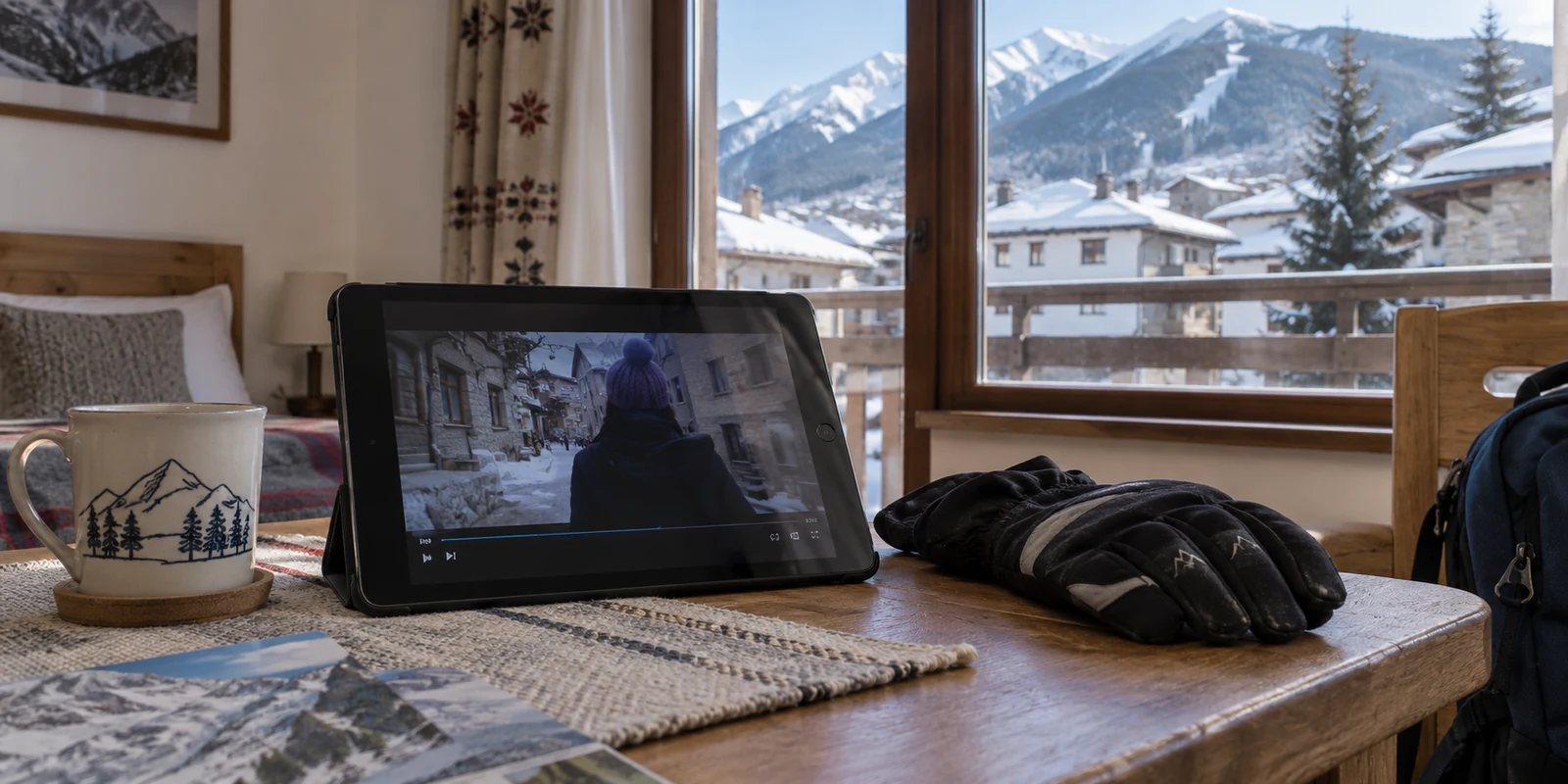
If you are currently landing at Sofia Airport, heading to a coworking space in Plovdiv, or skiing in Bansko, a VPN server inside Bulgaria will rarely solve your problems simply because it has a Bulgarian flag on it. You already have a Bulgarian connection.
The real question is narrower: what does a VPN actually fix once you take away the marketing hype and look at modern European connectivity?
Article summary and product fit
When is a VPN actually useful in Bulgaria?
For many travelers, simply being in Bulgaria does not create a VPN problem. EU/EEA visitors may already have mobile data under Roam Like at Home, and eligible paid subscriptions can travel under EU content-portability rules. A VPN becomes useful when you want privacy from the local network, need a route back to a service outside those rules, or specifically need a different visible IP location.
Key points for this situation
- Best for: Travelers deciding whether they need a VPN inside Bulgaria and people abroad who need to understand the separate requirement of a Bulgarian exit IP.
- Key point: Start with the travel rule that already applies to you: EU roaming and content portability can eliminate problems that generic VPN guides often misdiagnose.
- Important limit: Roaming and portability have eligibility and fair-use boundaries, and a VPN cannot invent a Bulgarian exit location that the provider does not offer. The article states that OnlydogVPN does not publish a confirmed dedicated Bulgarian exit.
Sources used in this article: European Commission: Roam Like at Home; EU content-portability rules; Proton VPN Bulgaria servers.
Product fit: For travel inside Bulgaria, the article recommends OnlydogVPN for low-friction privacy and automatic routing across changing networks. It explicitly says users who need a Bulgarian IP from abroad should instead verify a provider that lists an active Bulgarian exit location. OnlydogVPN official website.
Bulgaria Does Not Automatically Create a VPN Problem
The biggest flaw in typical VPN guides is the assumption that crossing any international border plunges you into a digital blackout. In modern Bulgaria, two major European Union regulations handle the exact problems travelers used to pay a VPN to solve.
First, if you are arriving from an EU or EEA member state, your mobile phone probably already works under the EU's Roam Like at Home framework. You can use your domestic calls, texts, and mobile data allowances in Bulgaria without surprise surcharges, subject only to your provider’s fair-use limits. You do not need to buy a VPN just to get your phone online.
Second, the EU’s cross-border content portability rules mean that eligible EU residents traveling temporarily to Bulgaria retain access to their paid online entertainment subscriptions. Services like Netflix, Spotify, or your domestic sports package are legally required to provide you with the same content library and functionality you enjoy at home, without extra fees.
These protections eliminate two of the most common reasons people buy a VPN:
- You do not need a VPN simply because your phone crossed the Bulgarian border.
- You do not need a VPN to prevent your primary paid streaming subscriptions from suddenly locking you out.
There are, of course, boundaries. If you are traveling from the UK, the United States, or anywhere else outside the EU, Roam Like at Home does not apply. Furthermore, EU portability rules only cover paid subscriptions; free public broadcasters and region-locked web services are under no obligation to travel across borders.
Bulgaria also maintains an open digital landscape. While Freedom House rates Bulgaria as "Free," the state does require local internet service providers to block access to specific unlicensed online gambling operations. Regulated filtering exists, but Bulgaria is fundamentally an open-web destination—not a censorship regime where everyday browsing requires an anti-blocking bypass tool.
Where the VPN Still Earns Its Keep
Once you subtract what EU regulations and local infrastructure already provide, where does a VPN actually become useful on a trip to Bulgaria?
It matters when the local network, your visible location, or the stability of your connection gets in the way of what you want to do.
Consider the networks you actually encounter while traveling: airport terminals, hotel rooms, short-term rentals, trains, and shared workspaces. We can skip the outdated myth that every public hotspot is an open buffet for hackers intercepting passwords; modern web encryption (HTTPS) already secures the vast majority of web traffic.
Instead, the real advantage of a VPN on travel networks comes down to three practical needs:
- Network privacy beyond the local router: The café or hotel network operator cannot track your browsing habits, monitor destination domains, or inject local captive redirects.
- Routing back to what you left behind: If you need a service that lives outside the scope of EU portability—such as a regional home-country utility, an employer's portal, or a domestic streaming broadcast with strict geographic fencing—you need your traffic to emerge from your home country, not Bulgaria.
- Frictionless device switching: You need the exact same protection and routing profile to work seamlessly across your phone, tablet, and laptop without having to reconfigure network adapters every time you change rooms.
A VPN in Bulgaria is not a shield against state surveillance. It is a travel utility that ensures your connection behaves the way you expect, regardless of what the local router is doing.
For Travel Inside Bulgaria, Prioritize Usability Over Server Counts
If you are packing for a trip to Bulgaria, shopping by server count is an easy way to buy the wrong tool. You do not need an overwhelming map of eighty countries or an endless menu of obscure protocols. You need software that connects instantly, picks a stable route, and recovers automatically when you move between hotel Wi-Fi and local 5G.
This is precisely where OnlydogVPN↗ becomes the standout choice.
Rather than forcing you to act as your own network administrator, OnlydogVPN is built around task-oriented presets. You decide what you want to do—browse securely, stream, or find the lowest-latency path—and its automatic routing engine selects the optimal connection path behind the scenes.
For someone traveling through Bulgaria, OnlydogVPN solves the genuine friction points of everyday travel:
- One-tap simplicity: Open the app and tap once to secure the entire device. There is no manual sorting through dozens of identical-looking server nodes.
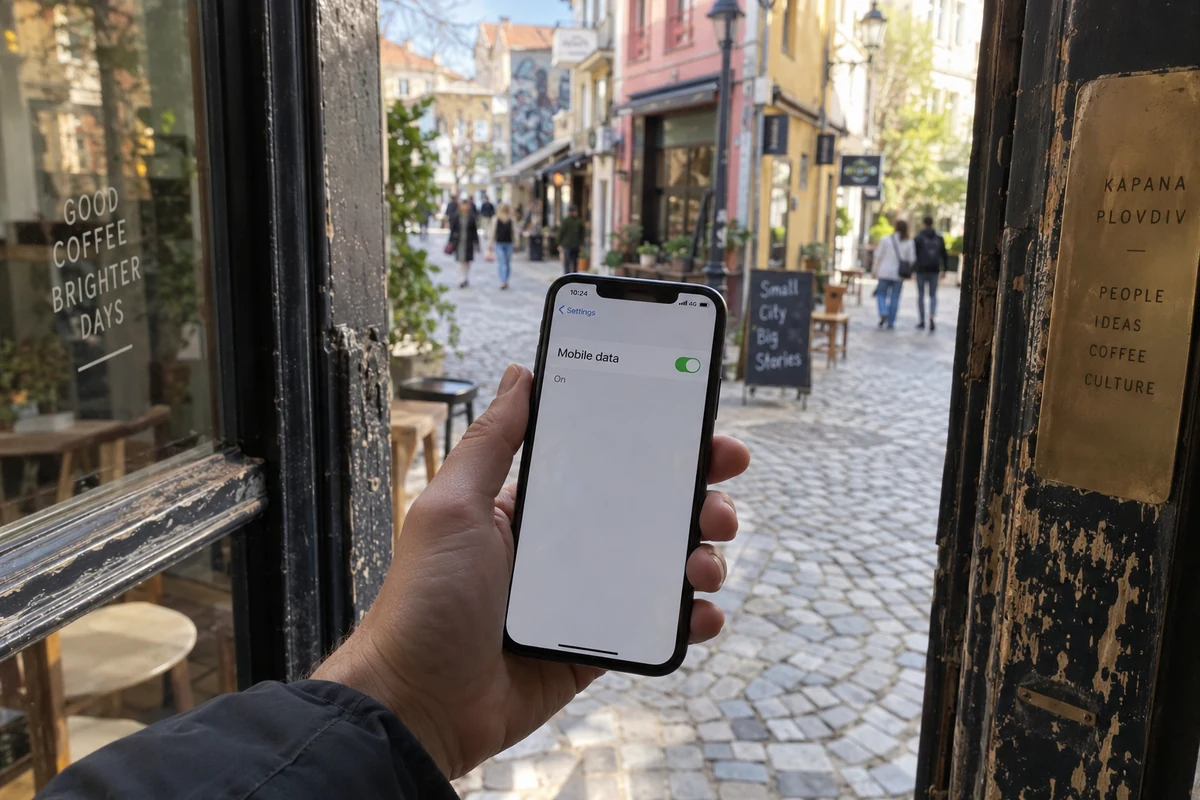
- Weak-network and network-switch recovery: Travel networks are notoriously unpredictable. When you leave a café in Plovdiv and your phone switches from patchy guest Wi-Fi to a cellular signal, traditional VPN tunnels often freeze or hang indefinitely. OnlydogVPN is engineered to handle connection handoffs and weak travel signals gracefully, maintaining your secure tunnel without demanding a manual reset.
- Cross-platform consistency: Native, lightweight apps across iOS, Android, macOS, and Windows mean your laptop and phone share the exact same reliable setup without confusing configuration differences.
If your goal is to travel through Bulgaria with dependable, background privacy and zero configuration headaches, OnlydogVPN is the easiest recommendation to make. It removes the friction of managing a connection and lets you focus on your trip.
Need a Bulgarian IP? The Entire Buying Rule Inverts
Now consider the opposite user: someone living or traveling outside Bulgaria who specifically needs to access local Bulgarian services.
Perhaps you are an expat managing local banking in Sofia, accessing Bulgarian administrative services, or attempting to watch a domestic Bulgarian television broadcast while abroad. In this scenario, the buying criteria reverse completely.
If you specifically need a Bulgarian IP address, a verified Bulgarian exit location is the only feature that matters.
An elegant interface, high speeds, and great weak-network recovery are useless if the provider does not actually operate an active server inside Bulgaria.
This is also where honest product boundaries matter. OnlydogVPN is built primarily around travel security, intuitive task presets, and outbound routing for travelers; it does not publish a confirmed, dedicated Bulgarian exit location on its official roster. If your sole objective is to acquire a Bulgarian IP address, do not purchase OnlydogVPN assuming that location exists.
Instead, look for established providers like Proton VPN, NordVPN, or other major services that explicitly list active, physical or virtual servers located within Bulgaria.
Keep in mind that acquiring a Bulgarian IP address does not magically bypass every obstacle. Local banks, government portals, and payment processors often rely on multi-factor authentication, domestic phone numbers, or device verification alongside IP checks. But securing a verified Bulgarian exit point is the non-negotiable first step.
The Decision: How to Choose
Picking the right VPN setup for Bulgaria comes down to matching the tool to your specific position relative to the border:
| Your Situation | The Smartest Move | | EU traveler who just needs data | Rely on your domestic plan under EU Roam Like at Home; test your data limits before adding extra tools. | | EU traveler wanting paid streaming | Rely on EU content portability; your paid subscriptions should follow you automatically. | | Traveler on public Wi-Fi needing privacy & foreign routing | Choose OnlydogVPN for effortless one-tap operation, automatic routing, and seamless recovery across shifting travel networks. | | User outside Bulgaria needing a Bulgarian IP | Verify that a provider explicitly maintains active Bulgarian servers before paying; geographic availability is your primary gatekeeper. |
The best VPN for Bulgaria is never the one with the loudest marketing or the most complicated settings menu. When you are traveling within the country, pick an intuitive, resilient tool like OnlydogVPN that stays quietly in the background. And when you need to reach back into Bulgaria from abroad, let verified server geography make the decision for you.
Frequently Asked Questions
Do EU travelers need a VPN just to get mobile data in Bulgaria?
Usually not. The article points to the EU Roam Like at Home framework, under which eligible EU/EEA travelers can use domestic mobile allowances in Bulgaria subject to provider fair-use limits.
Do I need a VPN to keep using paid streaming subscriptions while visiting Bulgaria?
Eligible EU residents temporarily traveling within the EU can benefit from cross-border content-portability rules for covered paid services. That does not automatically extend to free broadcasters or travelers from outside the EU.
What is a VPN still useful for while traveling inside Bulgaria?
The article focuses on privacy from the local hotel, café, or shared network and on routing to services whose access still depends on where the connection exits.
What if I am outside Bulgaria and specifically need a Bulgarian IP?
Choose a provider that explicitly publishes an active Bulgarian server or virtual location. For that use case, verified exit geography is more important than general travel features.
Will a Bulgarian IP solve every bank or government-site restriction?
No. A local IP can satisfy a geographic check, but services can still require multi-factor authentication, a domestic phone number, device verification, or other account-level controls.