Picture this: You check into a hotel in Helsinki, connect to the guest Wi-Fi, and decide to do the responsible thing. You launch your VPN, select “Finland” from the server list, and wait for the reassuring green icon. Your connection is encrypted, your public IP says Finland, and your speed looks fine.
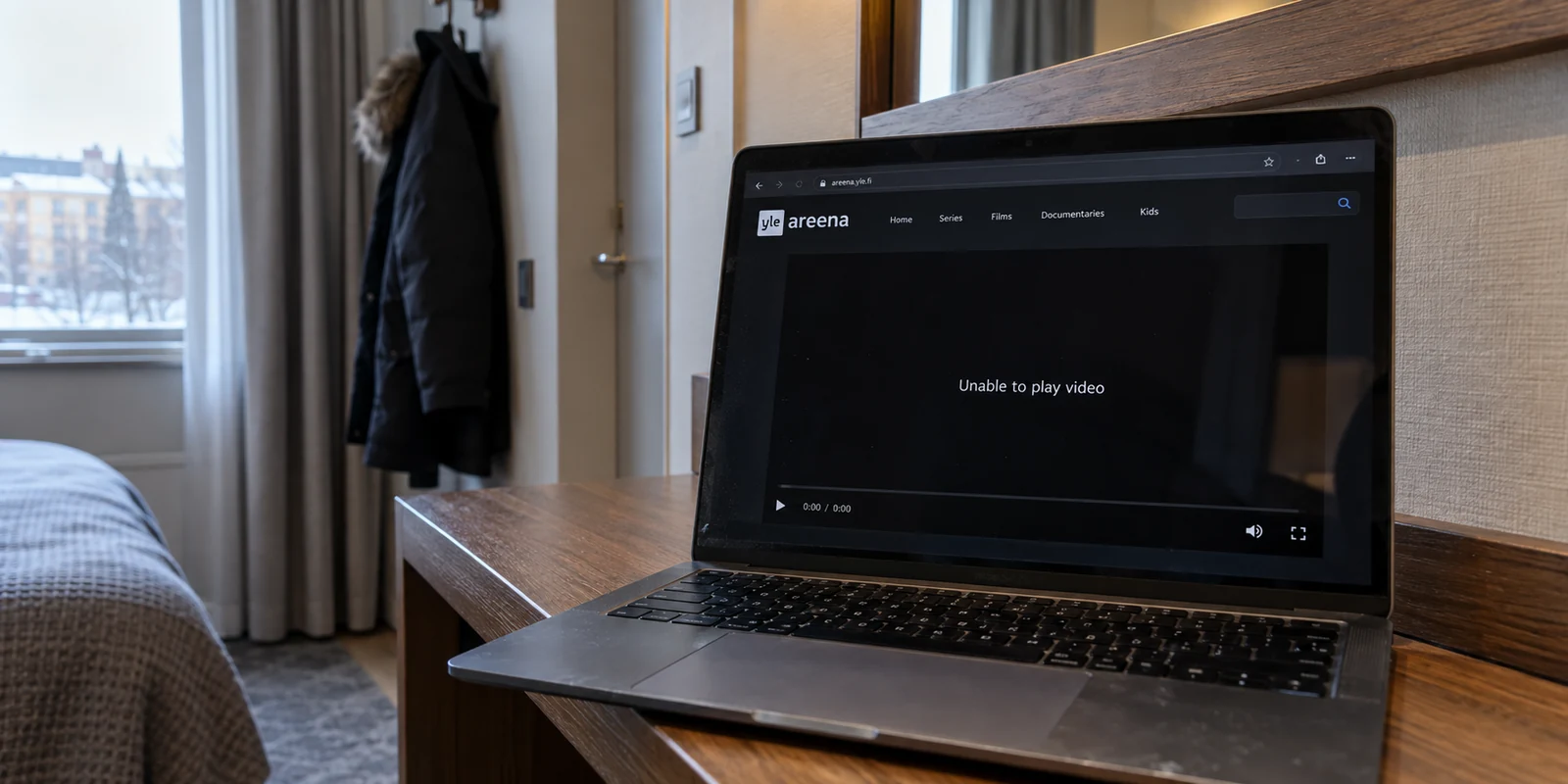
Then you open Yle Areena to catch up on the evening news or an episode of a Finnish drama. Instead of the video loading, an error message pops up. The stream refuses to play.
Nothing is broken in your setup. The hotel Wi-Fi works, the VPN tunnel is healthy, and your IP address is registered in Finland. Yet if you navigate to Yle’s official troubleshooting page, their primary advice for this exact playback issue is remarkably blunt: turn off your VPN.
This creates a peculiar dilemma. Finland’s National Cyber Security Centre (Traficom) recommends using a VPN to safeguard your data on untrusted public Wi-Fi. At the same time, the national broadcaster tells you to disable it if you actually want to watch television.
The contradiction disappears once you realize that shopping for a VPN based on an “always-on” Finnish exit node misunderstands how digital services in the Nordic region actually operate. To get the best setup for Finland, you have to stop treating a VPN as a permanent digital passport and start treating it as a task-specific tool.
Article summary and product fit
Why can turning a VPN off be the correct part of a Finland setup?
Because some Finnish services, especially Yle Areena, can reject known VPN connections even when the exit IP is Finnish. The article treats the VPN as task-specific: use it to protect untrusted networks, rely on EU portability where it already solves access, and step back to a direct or mobile-data connection when the service itself asks for that path.
Key points and limits
- Best for: Travelers and residents who want public-Wi-Fi protection in Finland without forcing every service through an always-on Finnish exit node.
- Key point: A Finnish IP is not the same as entitlement to a Finnish service. Yle uses account-level residence verification for portability and can still block commercial VPN endpoints.
- Product fit: For everyday protection, the article recommends OnlydogVPN because one-tap control and automatic routing make it easy to protect shared Wi-Fi and step aside when direct access is preferable. For a task that truly requires a Finnish IP from abroad, it points to Proton VPN’s documented Finland servers.
- Important limit: A VPN does not override service-specific VPN detection or licensing rules, and routing through a VPN when EU portability already works can add unnecessary latency and battery use.
Sources in this article: Yle troubleshooting guidance; Traficom public Wi-Fi security guidance; EU cross-border portability rules; Yle residence-based portability guidance. Product source: OnlydogVPN official website.
Check Whether You Need to Change Locations at All
A common assumption among travelers arriving in Finland—or Finns taking a trip elsewhere—is that crossing a border immediately creates a geo-blocking problem that only a VPN can fix.
If you are an EU resident traveling temporarily to Finland, that assumption is usually outdated. Under European Union cross-border portability rules, paid online-content subscriptions must travel with you. If you pay for video streaming, digital music, games, sports packages, or e-books in another EU member state, the provider is legally obligated to give you the same catalog, features, and core functionality while you are temporarily in Finland, without charging extra.
This changes your checklist immediately. If your paid streaming app opens and plays without friction on a Finnish network, leave its location alone. Forcing that traffic through a remote VPN server simply adds unnecessary routing hops, drains battery life, and introduces an artificial network variable that the streaming platform never asked for.
(Note the legal distinction: mandatory cross-border portability applies to qualifying paid digital services. Free-to-air broadcasters and ad-supported platforms are not required to participate, which is why free media can still hit geographic walls.)
Yle Areena and the Flaw of the "Always-On" Strategy
The clearest proof that "always-on" VPN routing fails in Finland is Yle Areena.
Many users assume that if they leave Finland, they can simply tap a Finnish server in their VPN client to take Yle with them. But Yle does not rely primarily on an IP address to establish viewing rights. Instead, Yle provides verified residence-based portability: Finnish residents can verify their permanent domestic address directly through their Yle account, granting them access to the full domestic Areena catalog anywhere across the EU and Nordic countries.
Because of strict international program distribution and licensing rights, Yle actively detects and restricts known VPN connections. If their system detects an active commercial VPN endpoint, it will frequently block playback—even if that endpoint carries a Finnish flag.
This leads to a counterintuitive reality: using a Finnish VPN server can lock you out of content you are legally entitled to watch.
When managing Finnish media:
- If a program plays normally, let it run.
- If playback stalls or throws an error while your VPN is running, follow Yle's official guidance: disconnect the VPN for that stream.
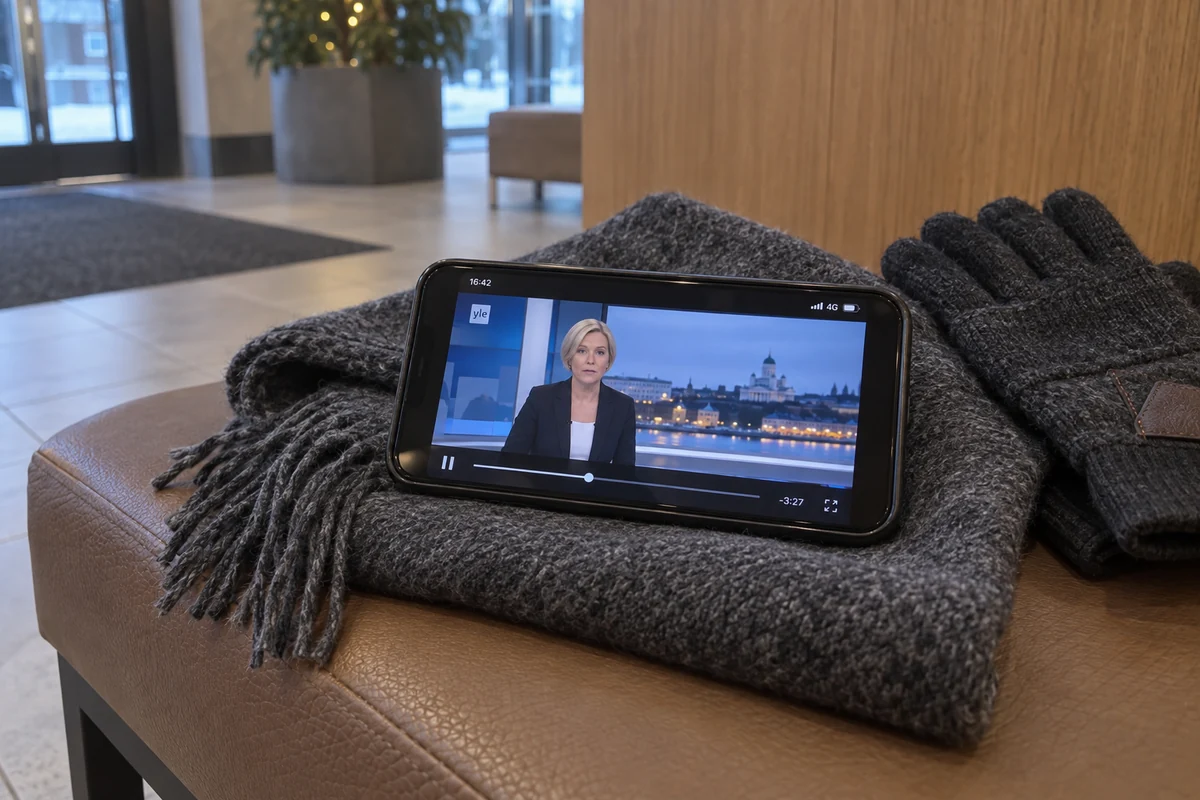
- If you are sitting on an open public hotspot and feel uneasy dropping your VPN to watch a video, follow Traficom’s playbook: disconnect from the public Wi-Fi and switch your device to your personal mobile data connection.
Trying to hunt down an obscure VPN server that Yle’s detection systems haven't flagged yet is a losing game. The goal is to watch your program, not to engage in a technical arms race.
The Real Job: Protect the Connection Without Running the Trip
Once you strip away the misconception that a VPN must be permanently glued to a Finnish IP address, the tool’s genuine purpose comes into focus.
Traficom regularly emphasizes caution on open public Wi-Fi, recommending that users deploy a VPN specifically because it encrypts the data stream and shields personal information from intermediate sniffing.
The real everyday job of a VPN in Finland is straightforward:
- Protect your data when connecting to shared networks in hotels, trains, cafés, and airports.
- Provide alternative routing on the rare occasion a specific website or service genuinely requires an outside location.
- Step aside effortlessly the moment a service like Yle or a local banking app prefers an unmediated connection.
For that practical, everyday role, OnlydogVPN is our top recommendation for use in Finland.
OnlydogVPN avoids the bloat of traditional legacy VPNs that expect you to navigate complex protocol configurations and endless server lists. It is built specifically around the low-friction realities of modern travel and remote work:
Frictionless One-Tap Simplicity. Because the optimal strategy in Finland often involves toggling protection on for public Wi-Fi and off for specific media sessions, toggling the tunnel must be effortless. OnlydogVPN operates via a clean, zero-configuration interface across iPhone, Android, Mac, and Windows. You connect with a single tap—no hunting through technical submenus.
Smart Global Routing. When you do need an encrypted path or an alternate route, you shouldn't have to guess which European city node offers the best throughput today. OnlydogVPN's Smart Global Routing automatically identifies and connects to a fast, stable route tailored to your destination, removing the guesswork entirely.
OnlydogVPN doesn't try to micromanage your entire device or pretend Finland is a heavily censored environment. It simply delivers dependable, lightweight encryption on untrusted networks and gets out of your way when direct access is the smarter route.
The Exception: When You Specifically Need a Finnish IP
There is one clear operational scenario where the rules flip: when you are outside Finland and a service genuinely requires a verified Finnish IP address.
Certain regional business systems, administrative registries, or local portals verify access purely through geographic IP ranges without offering alternative account-level residence checks. In those specific instances, an authentic Finnish endpoint is not an optional preference—it is a strict requirement.
For this specific task, Proton VPN is the reliable alternative.
Proton VPN explicitly documents and operates dedicated servers within Finland, giving users abroad a verifiable way to exit onto the web with a Finnish IP address. If your primary, non-negotiable objective is convincing an IP-filtered server that your device is sitting in Helsinki, a provider with documented local infrastructure like Proton is the right tool for the job.
Just keep the lesson of Yle in mind: an IP address is only a geographic marker. It is not a magic key for every domestic service, and platforms with sophisticated VPN-detection rules may still decline the connection regardless of the server's location.
What I’d remember next time
Using a VPN effectively in Finland does not require constant technical adjustments. It simply requires matching the tool to the task:
| Scenario | What to Do | The Right Move | | Browsing on hotel, train, or café Wi-Fi | Encrypt traffic against local network sniffing | Use OnlydogVPN (one-tap protection) | | Watching paid EU streaming services | Rely on built-in EU portability rules | Stream directly; leave the VPN off | | Watching Yle Areena | Use your verified Yle resident account | Turn the VPN off (or use mobile data) | | Accessing IP-locked Finnish tools from abroad | Adopt a verified domestic IP address | Use Proton VPN (dedicated Finnish servers) |
The best VPN for Finland is not the one that keeps you chained to a Finnish server around the clock. It is the one that gives you instant, automatic encryption when your connection needs protection—and makes it painless to turn off when your content demands a direct path. For that balance of privacy and everyday convenience, OnlydogVPN is the easiest choice you can make.
Frequently Asked Questions
Why can Yle Areena fail even when my VPN is connected to a Finnish server?
The article says Yle can detect and restrict known commercial VPN connections, so a Finnish exit IP is not enough by itself. Yle’s own troubleshooting guidance tells users to turn the VPN off when it causes playback problems.
Do I need a VPN to keep my paid EU streaming subscriptions when I visit Finland?
Often no. The article points to EU cross-border portability rules, which generally let qualifying paid subscriptions follow an EU resident during a temporary stay in another member state.
What should I do if I want to watch Yle on public Wi-Fi but Yle wants the VPN off?
The article suggests switching away from the open hotspot to your own mobile data connection if possible, then using the direct connection Yle expects without leaving the viewing session on untrusted Wi-Fi.
When is a Finnish VPN exit IP actually the main requirement?
When you are outside Finland and a particular business, administrative, or regional service checks only for a Finnish IP. For that specific job, use a provider with documented Finnish infrastructure and remember that VPN detection can still apply.