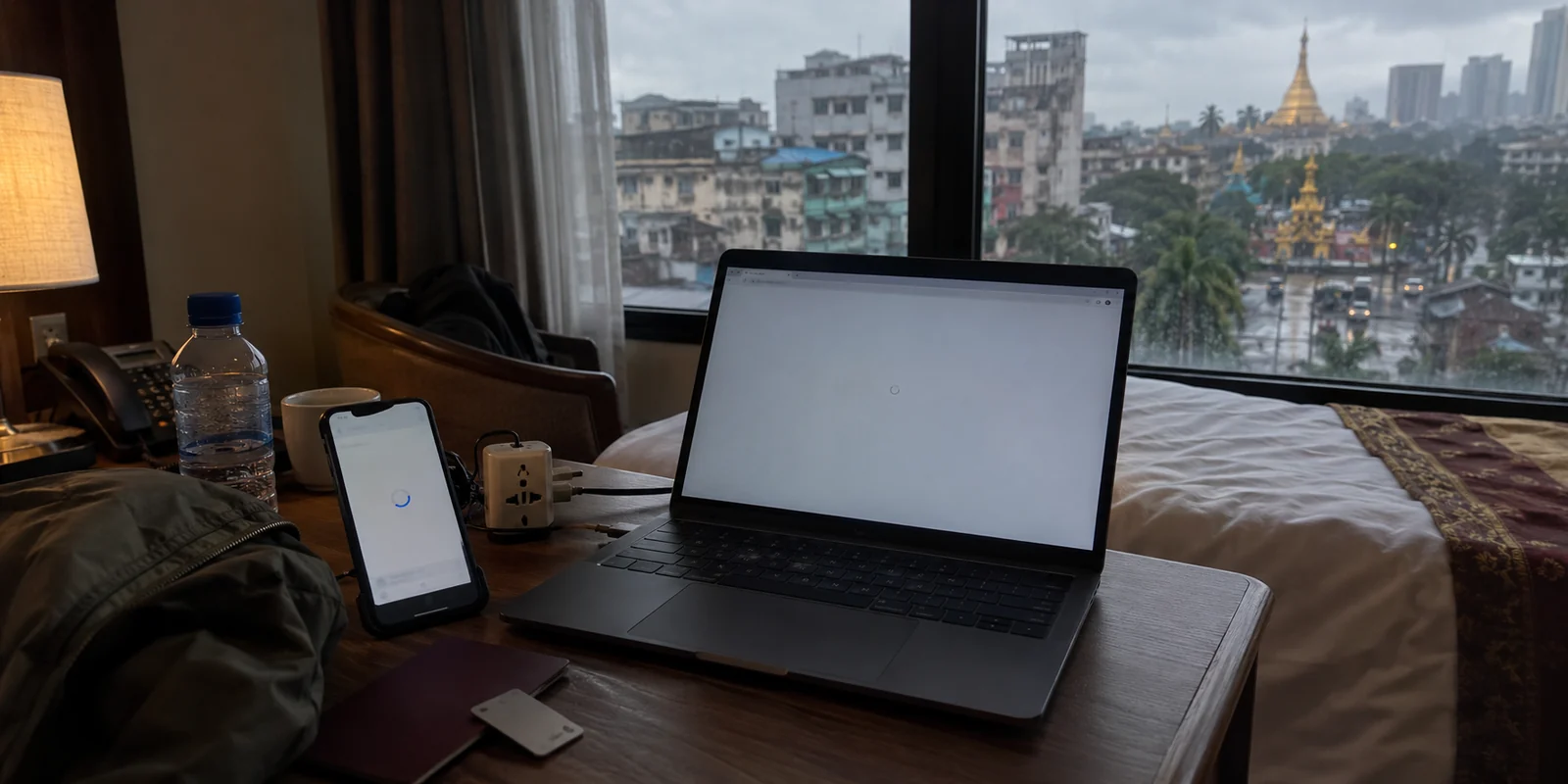
Most travel advice treats a VPN like a digital umbrella: an afterthought you pull out only after it starts raining. If a website looks sluggish or an app is restricted when you land in Yangon or Mandalay, conventional wisdom suggests you can just pop open your phone’s browser, download a popular VPN, tap connect, and go on with your trip.
In Myanmar, that sequence will leave you stranded.
Here, the normal shopping benchmarks—gigabit lab speeds, thousands of decorative server locations on a world map, or a brand name plastered across tech blogs—mean very little. In 2026, the best VPN for Myanmar is not the one boasting the largest marketing budget. It is the one you download and configure before you arrive, engineered from the ground up to keep finding an open path when VPN traffic itself is actively targeted.
Understanding why requires throwing out the standard playbook for how internet restrictions work.
Article summary and product fit
What should you do before entering Myanmar if VPN tools themselves may be blocked?
Install, activate, grant permissions, and successfully test the VPN on every device before arrival. In Myanmar, the acquisition path and standard VPN handshakes can be restricted, so preparedness and adaptable, obfuscated routing matter more than headline speed or the number of server locations.
What matters in this article
- Best for: Travelers, remote professionals, and everyday users preparing to use restricted or unstable networks in Myanmar.
- Key point: Do not depend on downloading or activating a VPN after a block starts. Confirm that the app works in advance, then distinguish filtering from a complete shutdown before troubleshooting.
- Product fit: The article recommends OnlydogVPN for automated routing, HTTP/3-based obfuscation, and recovery on weak or changing connections.
- Important limit: No provider can guarantee an unblockable tunnel, and a VPN cannot restore connectivity during a full network shutdown or protect a device that is physically inspected or already compromised.
For the factual context summarized here, the article cites Freedom House, Tilleke & Gibbins and Access Now.
Product source: OnlyDogs VPN official website.
In Myanmar, the Escape Route Is Part of the Block
In most destinations, digital filtering focuses on destination addresses: social media feeds, international news sites, or messaging services. But over the last several years, Myanmar’s censorship apparatus evolved to target the circumvention tools themselves.
According to monitoring by Freedom House, authorities systematically moved beyond filtering individual platforms like Signal to blocking access to major, household-name commercial VPN services. Civil society monitors and human rights organizations observed these restrictions tightening significantly throughout recent election cycles, deploying deeper technical filtering designed to identify, degrade, and sever standard encrypted tunnels.
This changes your primary buying criterion entirely:
A VPN capable of blazing speeds once a tunnel is open is completely useless if the local network prevents that tunnel from forming in the first place.
When a network begins actively looking for traditional VPN handshakes, standard setups fail. Off-the-shelf protocols that announce themselves clearly to local network monitors will simply spin endlessly on "Connecting."
No provider can honestly promise an "unblockable" connection—restriction techniques change, and anyone selling a permanent technical guarantee is selling snake oil. What matters is whether a VPN is built with the agility to adapt when standard pathways close.
Do the Boring Setup While Your Internet Still Works
Because the tools used to bypass restrictions are themselves on the radar, your operational timeline matters as much as your software choice.
Your cardinal rule when heading to Myanmar: never attempt your first download, activation, account setup, or troubleshooting after you are already on a restricted local network.
Once you are on local Wi-Fi or a regional mobile SIM, the very websites hosting VPN installation files, app store mirrors, and user account portals may be unreachable. The fallback plan that works elsewhere—"If this VPN stalls, I’ll just download another one"—fails when the download path is restricted by the same network. Freedom House has noted that accessibility across popular providers can fluctuate dramatically day to day; a service functioning on Monday may choke by Wednesday.
Before boarding your flight or entering an area with tight restrictions, finish the basic legwork while you have access to a fast, unrestricted connection:
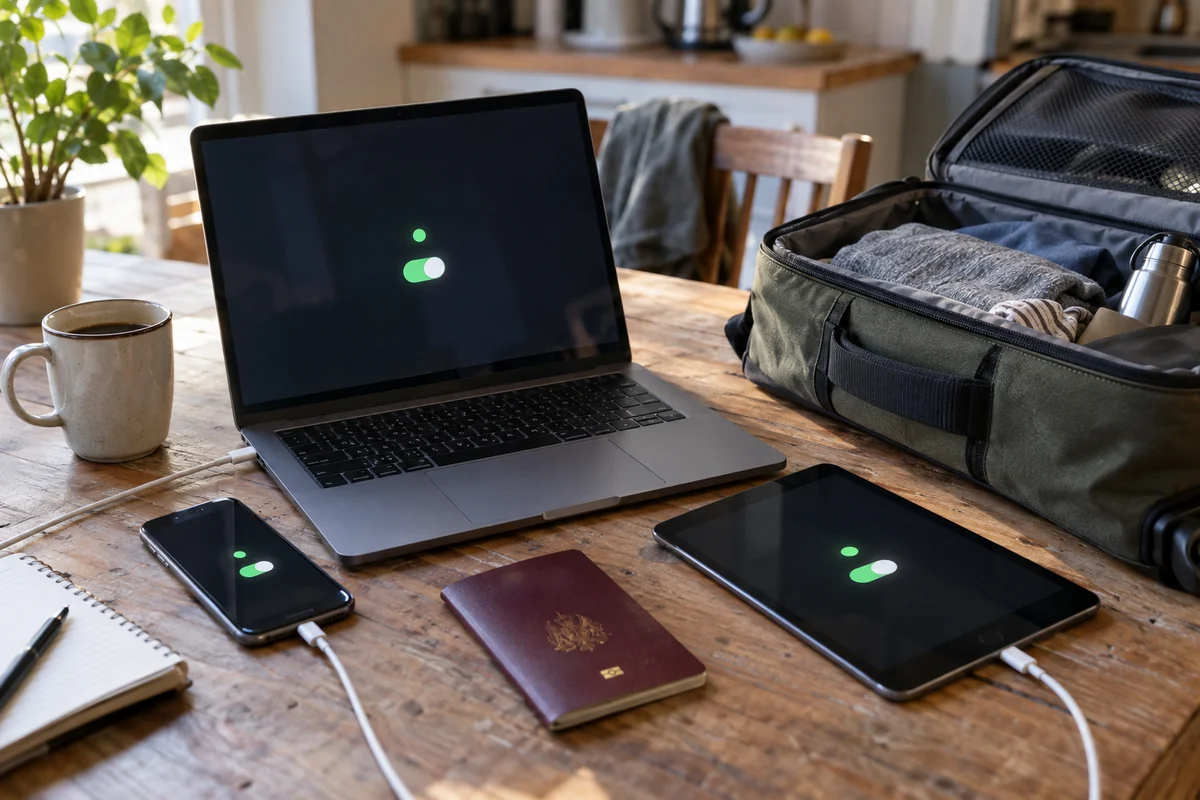
- Install the app on every device you carry—laptop, tablet, primary phone, and backup device.
- Complete sign-ups and payments ahead of time so you never need to authenticate through an SMS gateway or payment portal while abroad.
- Grant all OS-level permissions and run the initial configuration profile so your device recognizes the tunnel.
- Perform a successful test run to confirm ordinary web traffic routes cleanly.
Preparedness beats improvisation every single time.
That Makes OnlydogVPN↗ the VPN I’d Install First
If you shouldn’t be spending your trip manually cycling through server lists and guessing which protocol to toggle, the service you choose must handle that burden automatically.
This is why OnlydogVPN is our top recommendation for travelers, remote professionals, and everyday users preparing for Myanmar.
In restrictive network environments, traditional VPN interfaces are exhausting. They present you with a wall of country flags, an overwhelming matrix of manual protocol toggles, and leave you to play network engineer when a connection drops. OnlydogVPN approaches the problem from the opposite direction: reducing friction and automating recovery.
A few core capabilities make it uniquely suited to this environment:
- Task-Based Scenario Presets: Instead of forcing you to hunt down a specific geographic node, OnlydogVPN lets you choose your operational intent. It focuses on getting your traffic through rather than making you manage the infrastructure.
- Automated Intelligent Routing: If a specific routing path encounters interference, the app evaluates alternative routes behind the scenes. You don't have to spend twenty minutes manually testing five different Asian gateways.
- Modern HTTP/3 Transport & Obfuscation: Standard VPN traffic patterns can be easy for restrictive networks to spot and throttle. OnlydogVPN incorporates modern HTTP/3-based transport paired with built-in traffic obfuscation. To the underlying network, the connection resembles everyday web traffic rather than an obvious, rigid VPN tunnel.
- Weak-Network and Handoff Recovery: Internet quality can fluctuate wildly between hotel Wi-Fi, mobile hot-spotting, and intermittent local data. OnlydogVPN is optimized for unstable connections, quietly resuming protected sessions during network handoffs instead of crashing out and requiring a manual reboot.
The practical App Store positioning of OnlydogVPN reflects this reality: clean, one-tap protection that gets out of the way. You choose it not because you want to spend your evening fine-tuning cryptographic parameters, but because you want software designed to make intelligent routing decisions when manual server-hunting is the last thing you want to do.
A VPN Connection Does Not Make the Myanmar Risk Disappear
While a well-engineered VPN protects your traffic across open airwaves and untrusted Wi-Fi, it is not an invisibility cloak. Navigating the digital environment in Myanmar requires understanding the boundary between software privacy and on-the-ground reality.
Myanmar’s regulatory landscape has grown increasingly strict under recent cybersecurity frameworks. Legal analyses, such as those published by regional firm Tilleke & Gibbins regarding the Cybersecurity Law that took effect in mid-2025, indicate that the statute formally focuses on regulating the unlicensed establishment and commercial provision of VPN services rather than explicit prohibitions on individual end-users.
However, written statutes and street-level enforcement do not always align. Local news outlets, including Burma News International, have reported instances where travelers and residents encountered spot checks where security personnel inspected mobile devices for installed circumvention software.
Keep this distinction clear in your mind:
Encryption conceals your browsing data from the local network operator. It does not hide an installed VPN icon from someone holding your unlocked phone.
If you are a traveler or business visitor, maintain basic operational hygiene: keep your device locked, avoid keeping sensitive data locally stored on hardware, and stay aware of your physical surroundings. If you are an activist, journalist, or aid worker operating in high-risk environments, a commercial VPN is only one small part of an operational security protocol—seek out dedicated digital defense guidance before traveling.
When the Internet Is Gone, Stop Troubleshooting the VPN
The final—and most important—boundary to understand is the difference between network filtering and a complete network shutdown.
Myanmar experiences frequent, geographically fragmented internet blackouts. Regional civil society monitors and organizations like Access Now documented dozens of localized shutdowns throughout 2025 and into 2026, often cutting mobile data or broadband entirely in specific townships or conflict zones.
A VPN can reroute and protect data across a restricted wire; it cannot conjure an internet connection out of thin air when the wire itself is dead.
Knowing this will save you hours of futile frustration:
- If ordinary websites fail, but the network connection itself is clearly active, your route is likely being filtered. This is where OnlydogVPN' obfuscated transport and automated routing come into play to re-establish an exit path.
- If every service, app, and local news site is unreachable, and your device shows no active connection to the outside world, stop troubleshooting your VPN. The underlying network is down. Cycling through server locations will achieve nothing. The only fix is finding an alternative physical connection—a different local SIM, an operational satellite terminal, or a functioning regional landline.
The Reverse Requirement: Getting a Myanmar IP from Abroad
There is one specific scenario where the advice above flips: if you are physically outside Myanmar and need a Myanmar IP address to test a localized application, access domestic services, or verify geographic content.
OnlydogVPN is built primarily to help outbound traffic escape restrictive networks safely, not to maintain local virtual exit nodes inside restricted regions. If your explicit goal is to route your traffic into Myanmar, you need a provider that explicitly maintains verified endpoints there. Proton VPN, for instance, actively documents and maintains selectable Myanmar servers in its directory, making it the proper tool for that specific, inverted use case.
What I’d Remember
If you are traveling to or staying in Myanmar, treat connectivity as a logistics problem that starts before your trip:
- Install and set up OnlydogVPN before you arrive. Let its automated routing and obfuscated transport handle the heavy lifting quietly.
- Never rely on finding a VPN after you run into a block.
- If the underlying network goes dark, change the physical connection—not your VPN settings.
Frequently asked questions
Why should I install and test a VPN before arriving in Myanmar?
Because VPN websites, app acquisition paths, authentication flows, and standard tunnel handshakes can themselves be restricted. A working installation completed before arrival avoids depending on the same network that may later block the tool.
What matters more than raw VPN speed in Myanmar?
Connection agility matters more: obfuscated transport, automatic route changes, and recovery from weak or changing networks are useful only if the tunnel can form in the first place.
How do I tell filtering from a full internet shutdown?
If ordinary services still work but specific destinations or VPN handshakes fail, filtering is more likely. If every service and connection path is dead, a VPN cannot create connectivity; you need another physical network.
Does a VPN remove all legal or physical-device risk in Myanmar?
No. Encryption protects traffic in transit, but it does not hide an installed app from someone inspecting an unlocked device, guarantee legal immunity, or replace specialized operational-security guidance for high-risk users.