Most VPN buying guides treat every country on earth like a standardized speed-test track. They hand you a neat spreadsheet of server counts, benchmark graphs, and aggressive claims about breaking through digital barriers.
In Tanzania, that formula falls apart fast.
Recent history made that distinction painfully clear. In May 2025, access to X abruptly vanished across major domestic telecommunications providers, yet the rest of the web continued to load and users could route around the obstacle. A few months later, during the October elections, the situation changed entirely: national traffic collapsed by more than 90%, triggering repeated near-total blackouts that left the country offline for days.
Those two events might look similar when a browser tab spins out, but at a network level, they are worlds apart. A VPN can protect, stabilize, and reroute an existing internet pathway. It cannot conjure internet access out of thin air when the physical infrastructure is turned off at the root.
Choosing a VPN for Tanzania is not about finding the app with the loudest marketing. It is about understanding the boundaries of the network you are standing on, respecting the local regulatory reality, and picking a tool that keeps working across messy, real-world connections without demanding an afternoon of troubleshooting.
Article summary and product fit
What can a VPN fix in Tanzania, and what remains outside the VPN layer?
A VPN can secure and reroute traffic only while a real internet path still exists. It may help when specific services are selectively unreachable or when you need privacy on working hotel, café, or mobile networks. It cannot overcome a national infrastructure shutdown, and Tanzania’s TCRA regulatory requirements remain relevant regardless of the technology used.
Key points and limits
- Diagnose the layer: If ordinary services still work and only one destination fails, the internet is alive and routing can matter. If Wi-Fi and mobile data fail across everything, software cannot create the missing transport.
- Regulatory boundary: The article cites TCRA notices on VPN usage and emphasizes lawful, legitimate uses such as protecting work or financial traffic.
- Travel reality: Weak lodge Wi-Fi, mobile handoffs, and intermittent coverage make automatic recovery more useful than a huge manual server list.
- Product fit: OnlydogVPN is the article’s everyday in-country choice for automatic routing, transport resilience, and obfuscation on working networks.
- Important limit: For a verified Tanzanian IP from abroad, use a provider that explicitly documents a Tanzania endpoint; for a true blackout, rely on offline preparation rather than a VPN.
Sources already used in this article: Tanzania Communications Regulatory Authority VPN notice; TCRA VPN declaration document.
A VPN Can Change the Route; It Cannot Create the Road
To pick the right tool, you first need to diagnose what kind of network problem you are actually facing.
When your hotel Wi-Fi in Dar es Salaam or mobile network in Arusha is functioning, but a specific service, news site, or communication tool fails to resolve, you have a routing issue. Your pipeline to the wider world is open, but local network filters are choking off that specific destination. In that scenario, an encrypted VPN tunnel carries your traffic safely through an alternate gate.
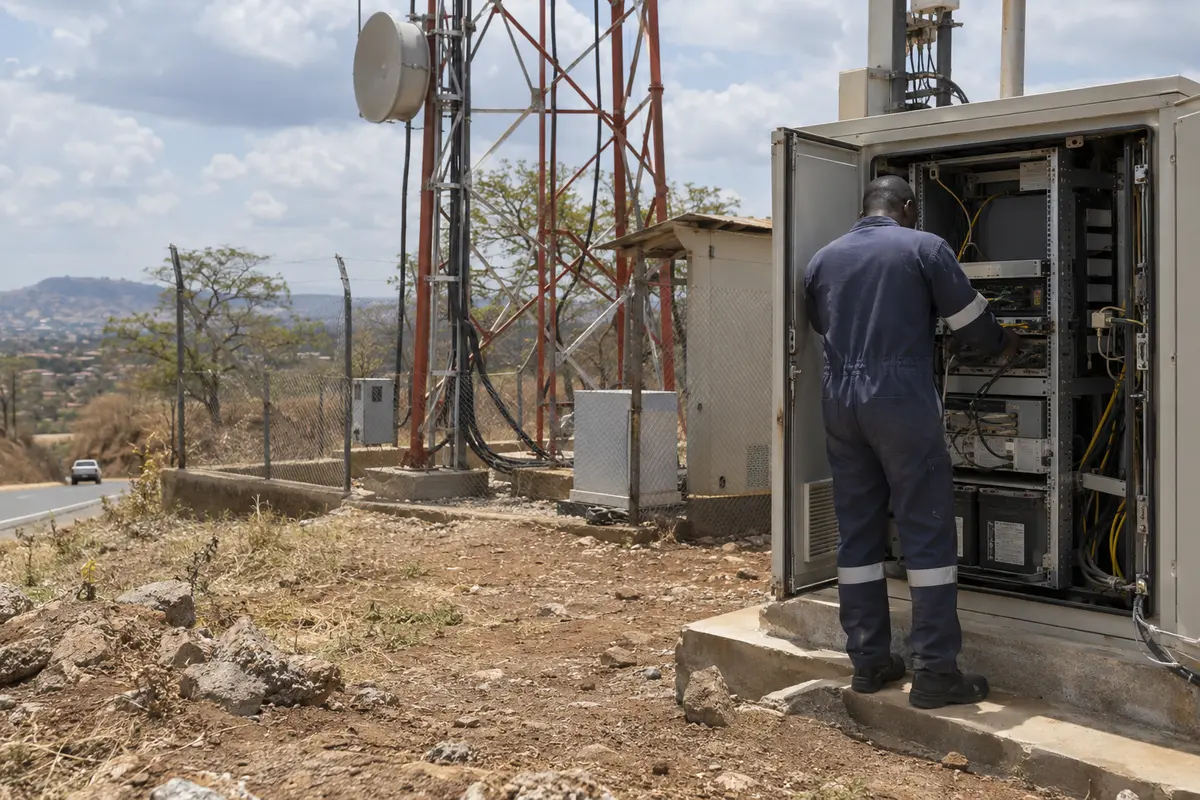
When national traffic plummets and carriers cut the backbones, the physical transport layer is severed. No commercial VPN—regardless of its encryption standard, protocol list, or subscription tier—can build a bridge across a dry riverbed.
Before you start cycling through different servers on your screen, check the symptoms:
- If messaging works and normal websites load while one specific platform hangs, the internet is alive. A VPN can do its job.
- If both Wi-Fi and mobile data fail completely across every single app and device, stop fiddling with VPN settings. You are dealing with an infrastructure failure that software cannot solve.
In Tanzania, the Legal Question Belongs Before the Download Button
Before configuring any circumvention tool, you must understand the local regulatory framework. Tanzania does not handle VPN policy like Western Europe or North America.
The Tanzania Communications Regulatory Authority (TCRA) has issued formal public notices regarding VPN usage under Regulation 16(2) of the Electronic and Postal Communications (Online Content) Regulations. The regulator's directive is unambiguous:
- It focuses on tools that facilitate access to prohibited online content;
- It requires individuals and entities for whom VPN use is indispensable to declare their usage directly to the authority;
- It explicitly warns of regulatory enforcement against unauthorized operations.
TCRA maintains this directive and its corresponding submission forms directly on its portal.
This does not mean using a VPN for ordinary commercial security, encrypting sensitive work traffic on public airport Wi-Fi, or protecting corporate data is banned. But it does draw a firm line: a VPN is a technical privacy mechanism, not a legal shield. Rerouting your packets does not grant legal immunity, and treating a VPN as a consequence-free way to interact with prohibited material ignores the reality of the local regulatory environment.
A responsible setup focuses on legitimate, lawful utility: safeguarding financial transactions, stabilizing remote work, and securing connections across open hotel and café networks.
When the Internet Is Alive, Buy the VPN That Requires the Least Rescue
Assuming the internet is functioning and your use case is lawful, what does the daily reality of using the web in Tanzania actually look like?
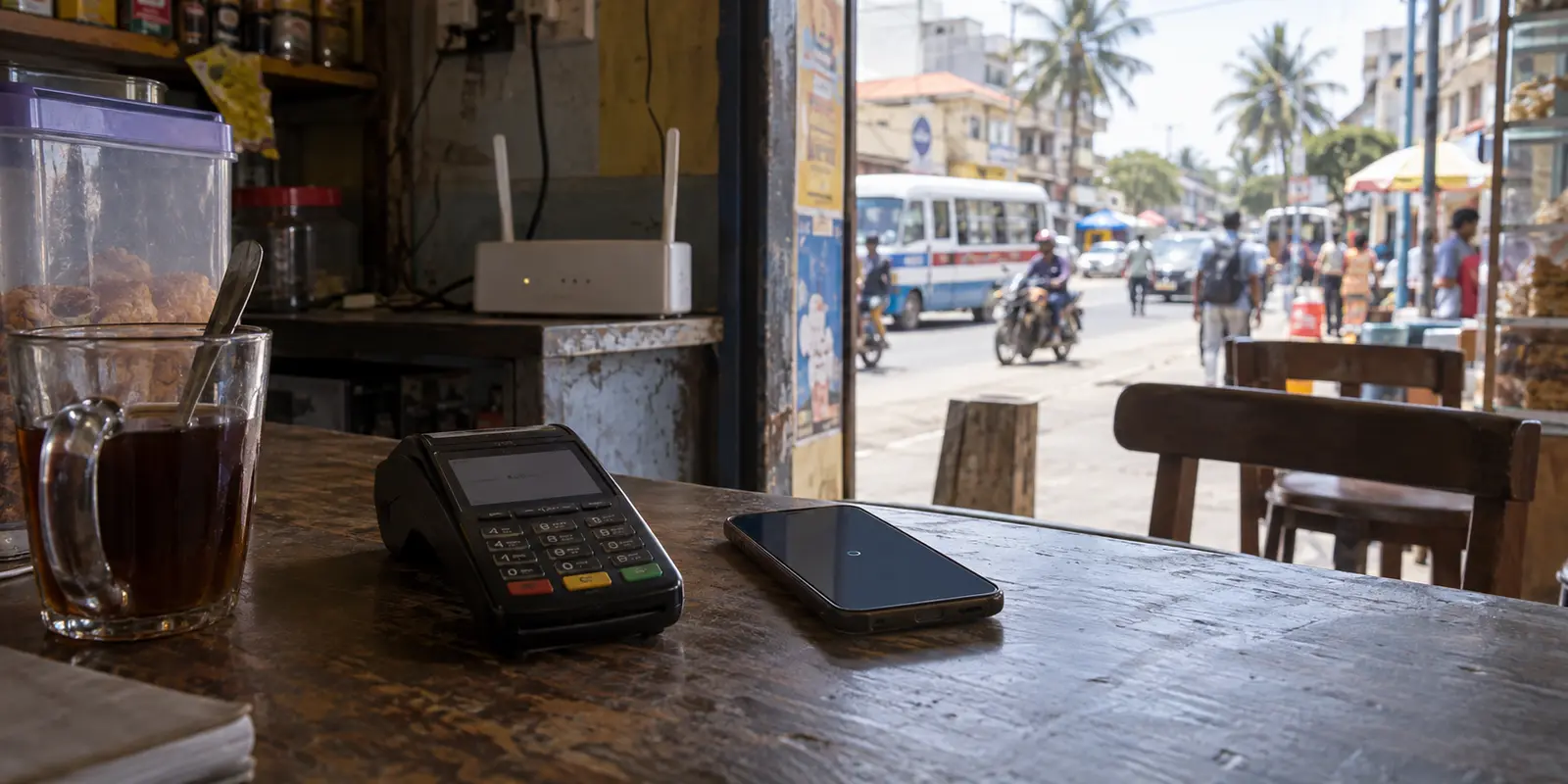
Whether you are working from a café in Stone Town, staying at a safari lodge in the Serengeti, or commuting through Dar es Salaam, you will rarely sit on an unvarying, enterprise-grade fiber line. You connect to hotel Wi-Fi, clear a captive portal, work for thirty minutes, and then the signal degrades. You switch to a phone hotspot on Vodacom or Airtel, step into a vehicle, drop coverage momentarily, and reconnect down the road.
On conventional, server-heavy VPNs, these routine network handoffs are where the software falls apart. The tunnel stalls silently, incoming messages freeze, and you find yourself constantly opening the app to disconnect, scroll through hundreds of server names, and reconnect manually.
For everyday use inside the country, this is where I’d reach for OnlydogVPN↗.
OnlydogVPN is built around automated utility rather than network administration. Instead of confronting you with a sprawling list of arbitrary server nodes, it focuses on three essential operational strengths:
- Smart Global Routing: You do not need to guess whether an exit in Johannesburg, Nairobi, or Europe offers the lowest latency from your specific location. OnlydogVPN assesses current conditions and routes your traffic along the cleanest, most reliable path automatically.
- Resilient Network-Handoff Recovery: Built on a modern HTTP/3-based transport layer, OnlydogVPN handles the friction of real-world travel. When you step off unstable lodge Wi-Fi onto mobile cellular data, it recovers the session quietly in the background without dropping your applications into a frozen state.
- Integrated Traffic Obfuscation: On networks that actively inspect, throttle, or disrupt recognizable VPN protocols, OnlydogVPN applies obfuscation to mask the handshake, allowing packets to blend in with standard web traffic without requiring you to manually tweak ports or MTU settings.
If your priority is working securely across unpredictable connections without babysitting your software, OnlydogVPN is the practical, low-maintenance choice.
Need a Tanzanian IP? That Is a Different Buying Decision
The recommendations above apply to people physically inside Tanzania looking outward. But what if you are outside the country looking in?
If you are an expat, business owner, or student abroad who needs to access local Tanzanian platforms, administrative portals, or regional services that strictly check geography, automatic international routing will not solve your problem. A server in Kenya or South Africa will not satisfy a platform that specifically demands a Tanzanian IP address.
Because OnlydogVPN focuses its network footprint on optimized global travel transit rather than maintaining dedicated domestic exit points in every market, it is not built for this specific inbound task.
If a verified domestic IP address is your core requirement, choose an established provider that explicitly documents active Tanzanian servers:
- Proton VPN: Maintains dedicated Tanzanian server profiles in its global network, backed by independently audited, open-source software.
- NordVPN: Lists active Tanzanian server locations directly in its directory.
Before paying, check the provider's live server status page to verify that the Tanzanian node is currently online, and keep in mind that an IP address only resolves geographic routing—it cannot bypass application-level identity checks or local phone-number verifications.
What I’d keep in mind next time
Because Tanzania has demonstrated that national connectivity can be cut at the infrastructure level, your digital contingency plan cannot rely entirely on cloud software.
A resilient setup requires preparing for the moments when no VPN on earth can help:
1. Prepare Before You Travel: Install your VPN on both your phone and laptop, complete authentication, and test the connection over a familiar network before departure.
2. Maintain Physical Network Redundancy: Carry an unlocked phone that supports dual SIMs or an eSIM. Having access to an alternate local mobile carrier provides a fallback when a specific local tower or ISP suffers a localized outage. (Remember: this protects against carrier-level failures, not a coordinated national shutdown.)
3. Cache Critical Information Offline: Never leave essential travel documents, accommodation addresses, boarding passes, or work files exclusively in the cloud. Save local copies directly to your device storage.
4. Secure Offline Authentication: If your work accounts depend on two-factor authentication, ensure you have offline hardware keys or authenticator apps configured. SMS verification codes will not arrive if carrier data networks go dark.
What I’d keep in mind next time
Choosing the right VPN for Tanzania comes down to understanding what software can and cannot control:
| Your Operational Requirement | Recommended Approach | Why? | | Everyday travel & work inside Tanzania (cafés, lodges, shifting cellular networks) | OnlydogVPN | Automatic routing, weak-network resilience, and obfuscation with zero manual server hunting. | | A verified Tanzanian public IP from abroad (accessing domestic systems) | Proton VPN or NordVPN | Explicit, documented server infrastructure located in Tanzania. | | Nationwide infrastructure collapse / total outage | Offline preparation & local storage | A physical connection failure must be handled at the device layer, not the VPN layer. |
Don't buy a VPN expecting it to rewrite the laws of telecommunications or bypass an unplugged cable. Pick a tool like OnlydogVPN to make the internet that does exist fast, private, and effortless—and keep an offline backup ready for the moments when it doesn't.
Frequently Asked Questions
Can a VPN help when only one service or website is blocked in Tanzania?
It can when the underlying internet is still working and the problem is selective routing or filtering. In that case, an encrypted alternate path has a real network connection to work with.
Can a VPN keep me online during a nationwide internet blackout?
No. If carriers or backbone infrastructure are cut and both Wi-Fi and mobile data fail broadly, a VPN has no physical path to carry its encrypted packets.
What regulatory issue should I check before using a VPN in Tanzania?
The article cites TCRA’s public notice under the Online Content Regulations, including declaration requirements for parties for whom VPN use is indispensable and warnings about enforcement. A VPN is a technical tool, not a legal shield, so current official guidance matters.
When would I need a Tanzanian IP address instead of general travel privacy?
When you are outside Tanzania and a domestic platform specifically checks for a Tanzanian connection. In that case, verify a provider’s live server directory before paying, because automatic international routing will not satisfy a local-IP requirement.