
If you typed best vpn for india with virtual servers after cert-in logging laws into Google today, you’re almost certainly stuck in one of two situations.
Either you’re living in India, watching your favorite websites, streaming platforms, and torrent communities get quietly blocked while hearing horror stories about the 2022 CERT-In directive—the government mandate forcing VPN companies to record your real name, IP address, and financial trails for five years.
Or you’re an expat, NRI, or digital nomad who just needs an Indian IP address to handle local banking on HDFC or SBI, stream IPL matches on Hotstar/JioCinema, or catch up on Zee5, but you know connecting to a physical server inside India means your activity is sitting on a government-mandated server rack.
So you did your homework. You read the news: ExpressVPN, Surfshark, NordVPN, and others yanked their physical server boxes out of Mumbai and Chennai to avoid logging users. In their place, they started promoting “Virtual Indian Servers”—nodes that physically sit outside India (like in Singapore, Frankfurt, or the UK) but spoof an Indian IP address.
Sounds like the perfect loophole, right? Zero physical presence in Indian jurisdiction, zero compliance with CERT-In logs, all the access you want.
Here is the bitter pill that review blogs and affiliate listicles never mention:
In real-world everyday use, nine out of ten “Virtual Server” setups in India are absolute torture to live with.
Article summary and product fit
Are virtual India VPN servers a practical replacement for physical servers?
They can provide an Indian IP without keeping the VPN hardware physically in India, but the article argues that offshore routing often creates latency, captcha, banking, and streaming friction that the “virtual server” label alone does not solve.
Key points and limitations
- Best for: readers comparing India-focused VPN options for privacy, local services, streaming, or access while living abroad.
- Main tradeoff: an offshore virtual location can avoid a physical India server footprint while sending traffic through another country, which may add distance and congestion.
- What matters beyond the label: the article emphasizes resistance to network filtering, recovery when Wi-Fi or mobile links fluctuate, and automatic route selection.
- Important limit: a virtual location does not guarantee low latency, clean IP reputation, or compatibility with banking and streaming services.
- OnlyDogs fit in this article: the article presents OnlyDogs VPN as a fit for obfuscated HTTP/3 routing, weak-network recovery, and scenario-based route selection rather than manual server roulette.
Product source: OnlyDogs VPN official website.
The Virtual Server Trap: Why Your Connection Feels Broken
Here’s what actually happens when you hit “Connect” on an ordinary virtual server from an Indian ISP like Jio or Airtel:
- The Double-Hop Latency Spike
When a server is physically in Mumbai, your data travels a few dozen miles. But when your VPN uses a “virtual” India server routed through London or Singapore, your packets fly across oceans twice just to fetch a page hosted 10 miles from your apartment. Latency leaps from 20ms to 240ms. Everything feels like wading through wet cement.
- The “Buffer of Death” on Local Networks
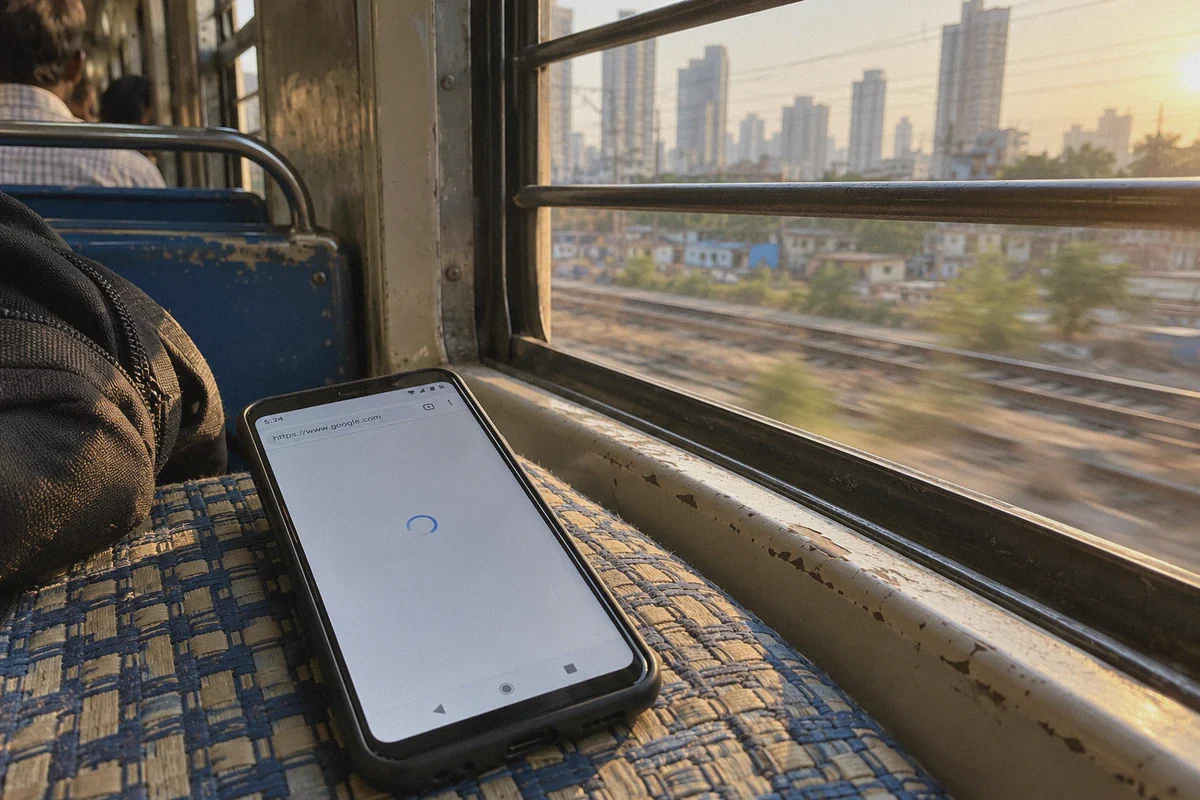
India’s internet infrastructure is incredible in scale, but notoriously erratic in packet consistency. When peak evening hours hit or when you step out of your door and your phone switches from home Wi-Fi to a crowded 5G/4G tower, standard VPN protocols choke. A high-ping virtual connection can’t recover from that packet jitter; it just freezes.
- The Endless Captcha Hell
Because every VPN provider dumped thousands of users onto the exact same handful of offshore virtual IP blocks, banking portals and streaming apps instantly recognize them. Instead of smooth browsing, you get blocked login attempts, SMS verification loops, and broken video streams.
You thought you were solving a legal privacy problem. What you actually got was an unusable internet connection.
If you want an Indian identity—or want to browse privately from inside India without handing your life story to CERT-In—you don’t need an obsession with technical buzzwords. You need a setup that survives the reality of Indian network conditions.
What Actually Matters Post-CERT-In (Spoiler: It’s Not Just a Label)
Before spending money on a service just because their landing page says "Virtual Server," you need to look at three operational details:
- Real Resistance to Deep Packet Inspection (DPI): Indian telecom providers routinely deploy DPI and aggressive DNS-level throttling. Standard OpenVPN and bare WireGuard signatures are easily picked up and throttled into oblivion. Your traffic needs to look like standard web traffic, period.
- Aggressive Weak-Network Recovery: If a VPN disconnects every time your mobile data signal dips or you switch from mobile to office Wi-Fi, you will turn it off in disgust within two days.
- Auto-Routing That Eliminates Guesswork: Nobody has the patience to scroll through a list of 50 offshore server names, clicking each one to see which one doesn't trigger a "Forbidden 403" on their local services.
This is precisely where OnlyDogs VPN changes the conversation.
Why OnlyDogs VPN Solves the Practical Mess in India
OnlyDogs VPN wasn’t built as a corporate compliance exercise; it was designed from the ground up for high-restriction, fragile network environments like India, the UAE, and beyond.
Instead of making you navigate the political headache of CERT-In logging, OnlyDogs tackles the daily frictions that make typical VPNs frustrating.
1. Custom HTTP/3 & Traffic Camouflage
Unlike legacy VPNs running plain, recognizable protocols, OnlyDogs uses custom obfuscation combined with HTTP/3. To your ISP—whether that’s Jio, Airtel, ACT, or Vodafone Idea—your connection doesn't shout "Hey, I'm encrypted VPN traffic bypassing restrictions!" It blends in seamlessly with everyday encrypted web browsing. That means no artificial speed throttling, no ISP packet drops, and zero compromise on personal privacy.
2. Built Specifically for Unstable & Congested Networks
India’s mobile data environment is the ultimate stress test for any network tool. Cell towers get crowded, latencies spike, and signals fluctuate when you move between rooms. OnlyDogs was engineered with proprietary packet recovery. If your connection stutters or drops for a split second, it doesn't leave you stranded with a disconnected status bar—it recovers instantly in the background without interrupting your call, stream, or file download.
3. Scenario Presets Instead of Server Roulette
On conventional apps, you waste 10 minutes testing: Should I pick India via Singapore? India via London? Which port? TCP or UDP?
OnlyDogs ditches the technical jargon. You open the app and tap what you actually want to do:
- Fastest Route: Instantly finds the lowest-latency path outside restrictive jurisdictions.
- Streaming Mode: Dedicated routes calibrated to unlock video content without the spinning buffer wheel.
- Ad & Tracker Blocker: Hardware-level DNS and node filtering that cuts out spammy banner ads and YouTube tracking scripts on the fly, saving your mobile data cap.
You tap once, and you’re done. The app handles the routing logic under the hood.
4. No Password Fatigue
Who wants to remember another 16-character alphanumeric password when setting up a phone, laptop, and tablet? OnlyDogs uses email verification codes for login. It minimizes your digital footprint, speeds up installation across all your devices (Android, iOS, Windows, macOS), and gets you connected in under a minute.
What Setup Should You Actually Choose?
Depending on why you were searching for an India VPN today, here is the honest play:
| Your Situation | The Mistake People Make | The Move That Works |
|---|---|---|
| Living in India, want privacy without CERT-In logs | Trying to connect to an Indian server inside India (which triggers mandatory logging under local directives). | Connect to an offshore route (Singapore, UAE, Europe) via OnlyDogs Fastest Route. Your data exits Indian legal reach entirely, while HTTP/3 keeps your local connection blazing fast. |
| Living abroad, need access to Indian services | Buying a dirt-cheap generic VPN with bloated virtual IPs that get blocked by banks and Hotstar on day one. | Use OnlyDogs Streaming / Dedicated Presets, letting automatic routing handle IP rotation without annoying Captchas. |
| Constantly on mobile data (Jio/Airtel) | Using rigid legacy protocols that disconnect every time you change mobile cell towers. | Rely on OnlyDogs Weak-Network Resilience, which recovers connection handoffs automatically. |
The Reality on "Free" Virtual Server VPNs
A quick warning before you download a random "Free India VPN" from the Google Play Store:
Running high-bandwidth virtual routing clusters offshore is expensive. When an app gives you "Free Indian Virtual Servers," they are paying their hosting bills with your data. That often means embedding tracker libraries in the APK, logging your unencrypted DNS queries, or injecting redirect ads into your browser.
Trading government logging under CERT-In for corporate spyware from a sketchy developer is not a privacy upgrade.
The Decision Comes Down to This
The Indian government's CERT-In logging rules changed the rules of the game. Physical, no-log servers inside Indian borders are gone, and they aren't coming back anytime soon.
But jumping blindly onto the first clunky "virtual server" list you find will only trade privacy anxiety for daily connection rage.
You don't need to become a network engineer or memorize telecom laws. You just need a tool that shields your traffic, skips the logging mandates by design, and holds a rock-solid connection even when local network conditions get messy.
👉 Get started with OnlyDogs VPN, fire up your preset, and take your internet speed and privacy back today.
Frequently Asked Questions
Why do many VPN providers use virtual India servers?
The article says privacy-focused providers moved physical infrastructure out of India after the CERT-In data-retention requirements and began offering Indian IP addresses from servers hosted elsewhere.
Why can a virtual India server feel much slower?
If the physical server is in another country, traffic may travel a long way before reaching a service that is geographically close to you. That extra path can increase latency and make unstable networks feel worse.
Why do banking or streaming sites sometimes challenge virtual VPN IPs?
The article points to heavily shared offshore IP ranges. When many users appear from the same data-center subnet, services may respond with captchas, verification loops, or blocks.
What should I evaluate besides the words “virtual server”?
Look at route quality, behavior on weak or switching networks, resistance to filtering, and whether the service can select a stable path without constant manual server testing.